A capital city is usually the heart of a nation, home to parliament, ministries, and major government offices. Nearly every independent country follows this familiar structure. Yet one small island nation in the Pacific quietly defies this global rule: Nauru .
Nauru holds a unique place in world geography as the only country that has no officially declared capital city. Unlike other nations, it has never designated a capital in law or government tradition. Instead, its administrative functions are concentrated in one district, but without any formal declaration.
Located in Micronesia in the South Pacific, Nauru spans just 21 square kilometres, making it the third smallest country in the world by area. With a population of around 10,000, it is also the second smallest sovereign nation by population. Given its tiny size, the island is divided into districts rather than cities or towns.
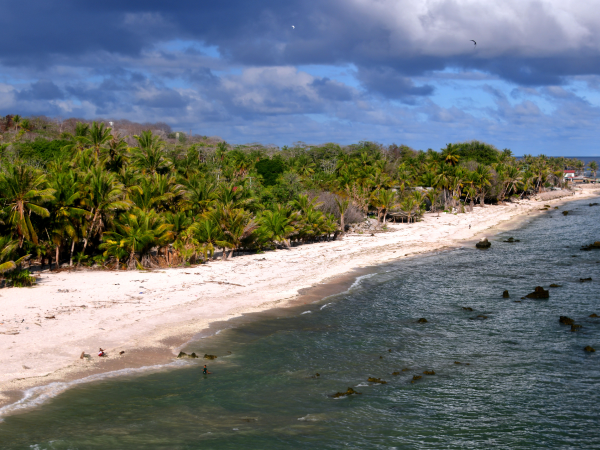
Most government operations take place in Yaren, a district situated near the airport and essential facilities. The parliament house, presidential offices, and key ministries are all located here. For this reason, Yaren is often referred to as the de facto capital—a functional capital used for daily administration—but it has never been formally recognised as one in the constitution.
Read more:
Why doesn’t Nauru have a capital?
The country’s size is the most straightforward reason. With just 21 square kilometres of land, Nauru is too small to justify the creation of a designated capital city. Settlements blend into each other, and distances are so short that a capital, in the traditional sense, serves little practical purpose.
Administrative convenience also plays a role. For decades, government buildings have simply been set up where it was most practical—primarily in Yaren. Because everything is located close together, the absence of a legal declaration has had no impact on the functioning of the state.
Historical identity contributes as well. Once known as “Pleasant Island,” Nauru has long done things its own way. The lack of a capital is one more example of how this island has maintained an unusual administrative structure while still operating effectively as a sovereign nation.
Read more:
Governance and daily Life
Even without an official capital, governance in Nauru runs smoothly. Yaren serves as the country’s administrative hub, housing parliament, courts, and various ministries. For diplomatic communication, global mapping, and general reference, Yaren functions as the capital in almost every practical sense.
Nauru’s economy once boomed due to large deposits of high-grade phosphate. In the 20th century, this brought significant wealth. But as the phosphate reserves diminished, the country had to diversify, turning to limited tourism, visa arrangements, and other services. Despite its challenges, Nauru maintains an active presence internationally, competing in events like the Olympics and the Commonwealth Games. It uses the Australian dollar as its official currency.
With its coral reefs, white-sand coastline, and one-of-a-kind “no-capital” status, Nauru remains a fascinating anomaly. While most nations centre their identity around a defined capital city, Nauru shows that even a tiny island can stand out by simply choosing a different path.
Contact to : xlf550402@gmail.com
Copyright © boyuanhulian 2020 - 2023. All Right Reserved.