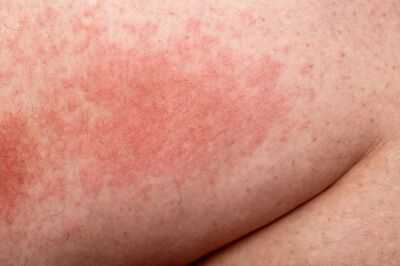
A disease once rampant in the Middle Ages is causing a dramatic health scare across the UK, with a surge in highly contagious skin infections hitting multiple schools in Devon.
Scabies is a skin infection caused by the Sarcoptes scabiei mite, with symptoms typically beginning with an intensely itchy rash caused by tiny mites burrowing under the skin. It spreads through prolonged close skin-to-skin contact and can be easily misdiagnosed as eczema or other rashes.
Recent reports from South Devon College in Torbay confirmed seven cases of scabies among students. However, official sources state that no schools in Devon have been closed due to scabies. A statement from Torbay Council confirmed: "No schools in Torbay have closed because of this."
READ MORE: NHS winter warning as people urged to 'know the symptoms'
READ MORE: 'Turkey tummy tuck nearly killed me - I got sepsis but was ignored by medics'

Doctors and dermatologists have observed a national increase in scabies cases. UK Health Security Agency (UKHSA) data shows diagnoses rising from approximately 1,421 in 2022 to 4,872 in 2024.
GPs report that many people delay seeking treatment, which allows the infection to spread. Experts urge anyone with persistent itching or rashes to consult a healthcare professional.
Scabies symptoms typically appear up to eight weeks after infection. The rash often affects the skin between the fingers, wrists, under the arms, waist, groin, and buttocks. For people with darker skin, the rash may be harder to see, which can make early diagnosis more challenging.
A rare but severe form, crusted scabies, occurs mainly in people with weakened immune systems. It causes a thick, flaky rash on areas such as elbows, knees, hands, and feet, and is highly contagious.
Treatment involves scabicide creams or lotions, usually applied over the whole body, sometimes combined with topical steroid creams to reduce itching. UK guidance emphasizes that all members of a household should be treated simultaneously, even if they show no symptoms.
Children under two should be assessed by a GP before treatment.
To prevent reinfection, the NHS advises:
- Washing all bedding, towels, and clothing at 60°C or higher on the first day of treatment.
- Sealing items that cannot be washed in a bag for at least three days.
- Avoiding sharing clothes, towels, and bedding until the treatment course is complete.
Although generally not serious, untreated scabies can spread quickly through communities. Health authorities urge early treatment to reduce transmission and prevent outbreaks.
Oral ivermectin is now also recommended in certain cases, alongside topical treatments, according to UKHSA guidance. Doctors encourage anyone with persistent itching or suspicious rashes to seek professional care promptly to reduce the risk of spreading the illness.
Contact to : xlf550402@gmail.com
Copyright © boyuanhulian 2020 - 2023. All Right Reserved.