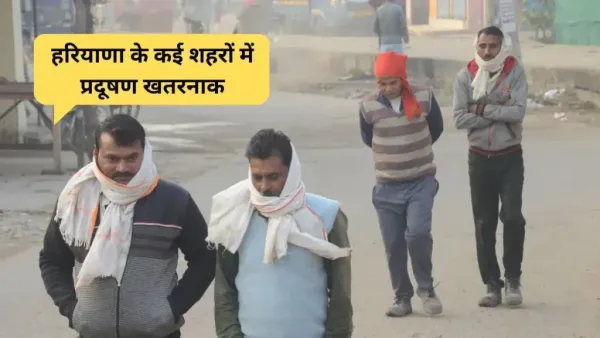
Winter and pollution situation in Haryana
As winter is increasing in various cities of Haryana, the pollution level is also increasing rapidly. Karnal’s air quality index (AQI) has reached 258, the worst in the GT Road corridor from Panipat to Chandigarh. Weather and pollution experts believe that dust particles remain low in winter, due to which the air feels more poisonous in cold weather.
High level of pollution in Karnal
Pollution levels are higher in Karnal compared to other cities. For example, Panchkula’s AQI was 96, Kaithal’s 98, Ambala’s 100 and Panipat’s 172. It is surprising that pollution is more in Karnal compared to the industrial city Panipat, whereas Karnal has more greenery and less industrial activities.
due to pollution
According to environmental expert Dr. Rahul Mehndiratta, traffic pressure, road dust and stagnation of air during winter increases pollution. When people go out between 9 and 11 in the morning, the level of PM 2.5 is highest, which is extremely harmful to health.
Health effects of PM 2.5 and PM 10
On Wednesday, the level of PM 2.5 was recorded at 258 micrograms per cubic meter and the level of PM 10 was recorded at 143 micrograms per cubic meter. PM 2.5 can reach deep into the lungs and increase the risk of asthma, allergies, fatigue and heart disease. Doctors say that the average of these levels is worrying.
Relationship between cold and pollution
According to the Meteorological Department, another degree drop in the minimum temperature is possible from December 4, due to which the night temperature can go up to 6 degrees. As the cold increases, the particles present in the air will settle down, which can cause difficulty in breathing.
pollution control measures
Pollution Control Board SDO Randeep Sindhu has appealed to the citizens not to burn stubble or garbage, not to drive vehicles unnecessarily and to report those who violate the rules.
Effect of winter in Haryana
Along with winter, pollution is also increasing. A drop in temperature is being seen in districts like Kaithal, Kurukshetra, Ambala and Jagadhri. Agricultural scientists believe that this cold is favorable for Rabi crops.
change in weather
According to experts from Hisar Agricultural University, it will be cloudy from 4 to 8 December, which will increase cold and reduce sunshine. After December 8, northern winds may drop the temperature further.
important warning
Lungs, children, elderly and heart patients are at risk from increasing pollution. Climate change has a direct impact on crops, health and lifestyle. Both pollution management and personal precautions are essential in winter.
Contact to : xlf550402@gmail.com
Copyright © boyuanhulian 2020 - 2023. All Right Reserved.