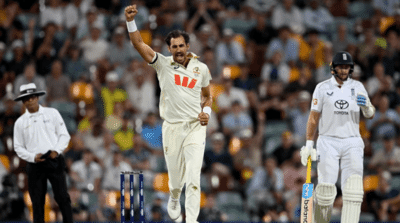
Fast bowling needs the most amount of physical activity. For someone who is bowling consistently from 130 kmph to 150 kmph, it requires immense strength in the shoulders and knees. Even though shorter formats look permeable, longer formats like Test where a bowler is bowling a 10-12-over spell, give the utmost challenges to the body.
Injuries this become a common factor for them, especially for those who bowls regularly touch the 140 kmph bar. Currently, the Australia bowler Mitchell Starc who is playing the Ashes series in Australia, is one such example, maintaining his beast form even at 37 years of age.
Here are five fast bowlers who maintained their prime even after reaching 35:
1 | James Anderson
The English fast bowler James Anderson is the ultimate epitome of longevity of fast bowlers. Anderson closed the doors of his international cricket when he was 41-years old. In his career, he played 188 Test matches and took 704 wickets averaging 26.45.
Meanwhile, after turning 35, Anderson — historically considered a swing‑bowling specialist — played 62 Test matches, taking 220 wickets at an average of 22.86, with a strike rate around 56.6.
Overall, his bowling average since 35 is markedly better than before: from a pre-35 average of around 28 (through first part of his career) to about 21.39 post‑35.
Well, he is still playing, but the league games of of England's domestic tournaments are enough to glorify Anderson's fitness.
2. Mitchell Starc
Starc’s “twilight peak” — his late-career resurgence — is one of the rare cases where a front‑line fast bowler has retained pace, potency and match‑winning potential well beyond 32. Curreny 35, his Test bowling average across his career is 26.42 in the 102 matches he played.
He has 418, and is one of the lethal bowling options that Australia can brag about in any corner of the world. In the ongoing Ashes, there was was a little of hesitation with Starc missing his two friends Pat Cummins and Hazlewood.
However he himself rattled down the England line up in the first Test at Perth, with a fifer for 58 in the first innings and 3/55 in the second. And now at the Gabba, he has 6 in his pockets, his consecutive fifer of the series.
Before the Ashes, he took another six-fer, against West Indies in the third Test at KIngston. What makes Starc special is not just raw pace, but adaptability: even when conditions are unhelpful (flat pitches, less swing), his experience and skill — cutters, seam movement, use of angles — keep him dangerous.
3 | Glenn McGrath
Over his Test career, McGrath played 124 matches and took 563 wickets at a bowling average of 21.64. Even after turning 35, in the final 18 Tests of his career, he took 82 wickets at an average of about 22.89, with a strike rate around 54.8.
A hallmark of his success was consistency: few bowlers worldwide could match him for unerring line, length and relentless pressure across innings. This consistency held even in his late 30s, underscoring fitness and discipline.
Besides Test cricket, McGrath dominated in ODIs: 381 wickets in 250 ODIs at an average of 22.02, helping Australia to multiple world titles. Notably, McGrath retired from internation cricket in 2007, when he was 36 years old
4 | Courtney Walsh
Post‑35, Walsh played 39 Test matches and captured 180 wickets at an average of around 21.61, with a strike rate of about 56.4. Over those matches he claimed nine 5‑wicket hauls, showing he was still a regular match‑winner even in the twilight of his career.
His overall career tally stands at 519 Test wickets, with a career bowling average around 24.44. As a West Indies stalwart, Walsh’s longevity, enduring the physical toll of fast bowling for nearly two decades, speaks volumes about his fitness, resilience and adaptability even when raw pace declined.
5 | Richard Hadlee
In the final phase of his career (post‑35), Richard Hadlee played 23 Tests and took 116 wickets at an average of approximately 21.39, with a strike rate near 48.8 — an outstanding return for a fast bowler in a late career phase.
During those years, he claimed 11 five‑wicket hauls, demonstrating that he was still capable of producing match‑defining spells frequently.
Importantly, Hadlee was also a useful batsman: among bowlers with long careers, he stands out for being an effective all‑rounder — delivering with the ball while also contributing runs lower down the order.
His capacity to combine seam bowling effectiveness with batting reliability, even in his late 30s, made him a critical asset for his national side.
Hadlee played hus last Test on July 5, 1990, when he was 39 years old. He had played 86 Test matches, bagging 431 wickets with an average of 22.29. He was miser with the runs, having an economy of a litle less than 3, and strike rate of 50.8.
Contact to : xlf550402@gmail.com
Copyright © boyuanhulian 2020 - 2023. All Right Reserved.