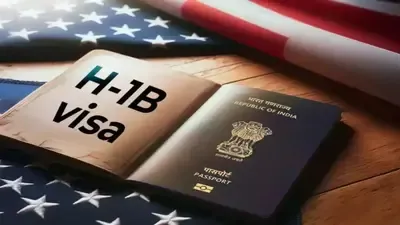
The United States has announced sweeping changes to its vetting procedures for H-1B visa applicants and their dependents, requiring them to make all social media profiles publicly accessible as part of a significantly intensified security review. The move, introduced under the Trump administration’s tightening immigration framework, signals a major shift in how the US evaluates highly skilled foreign workers, particularly from India, which receives the overwhelming majority of H-1B visas each year. The directive has immediate implications for hundreds of thousands of applicants and comes amid increasing scrutiny of the programme, escalating debates over alleged misuse and renewed questions about the future of Indian professionals in America’s workforce.
According to the announcement, the US State Department will expand its online presence reviews to include all H-1B applicants, their H-4 dependents, and non-immigrant visa categories such as F, M and J. Applicants are instructed to switch their social media privacy settings to public so that consular officers can examine posts, associations, employment claims and digital footprints. This enhanced vetting follows earlier measures to scrutinise students and exchange visitors, but now extends even more deeply into the personal and professional lives of skilled workers seeking entry into the United States.
New US Directive Deepens Security Vetting, Social Media Surveillance and Background Checks for Skilled Workers
The State Department stated that a visa is a privilege rather than a right and explained that the new rules are intended to ensure the highest level of national security. Under the updated guidelines, consular officers will review all available online information to determine whether an applicant may pose a security risk, threaten public safety or fail to meet eligibility requirements. The directive says that “every visa adjudication is a national security decision,” underscoring how immigration processing is being increasingly framed through a security-first lens.
The requirement for full public visibility of social media profiles marks one of the most intrusive screening measures ever applied to H-1B applicants. Officers will be checking for any signs of involvement in sectors linked to misinformation, disinformation, content moderation, compliance or online safety—areas the administration now considers potential risk categories. A cable circulated to all US missions on December 2 instructed consular teams to carefully cross-verify applicants’ résumés and LinkedIn histories to detect inconsistencies and evaluate job roles associated with sensitive digital ecosystems.
This expansion into digital surveillance has raised questions about data privacy, personal expression and the potential misinterpretation of online activity. Critics argue that social media often contains satire, political debate or cultural expressions that may not reflect a person’s intentions or professional background. In contrast, supporters of the move say it provides a necessary tool for ensuring transparency, especially in a world where extremist activity and misinformation campaigns increasingly operate in online spaces.
The administration has paired this new directive with broader efforts to tighten the H-1B programme. Officials have repeatedly said the system must prevent abuse and ensure that only individuals who meet strict eligibility criteria are allowed into the country. These measures come at a time when staffing shortages in certain industries, concerns over labour integrity and a broader political push toward “American jobs first” have gained prominence in Washington.
The US decision has particular consequences for Indian applicants because India accounts for approximately 71 percent of all annual H-1B visas. With many of these applicants working in technology, healthcare and engineering sectors, the increased scrutiny may prolong application timelines, increase rejection rates and heighten anxiety among thousands of Indian families navigating the visa system. For the first time, H-4 spouses and children will also undergo rigorous security screening—another departure from previous practice and an added layer of uncertainty for immigrant households.
Growing Debate Around H-1B Programme Misuse, Fee Increases and Immigration Restrictions Raises Concerns in India
The enhanced vetting procedures come on the heels of a renewed political debate in the US about alleged misuse of the H-1B system. In November, former Congressman and economist Dave Brat claimed that the programme was suffering from “industrial-level fraud,” suggesting that foreign workers—especially from India—were displacing American talent. Brat’s allegations intensified after he highlighted discrepancies between visa caps and approval volumes, citing Chennai as an example where approvals reportedly far exceeded the national annual cap. Although these claims remain contested, they have fuelled a narrative that has reshaped immigration discourse.
The Trump administration has also taken several steps to tighten immigration pathways more broadly. A recent presidential proclamation imposed a one-time fee of $100,000 on new H-1B work visas, creating a significant financial barrier for applicants and employers alike. Such measures appear designed to discourage overuse of the system and prioritize domestic hiring, though critics argue they could undermine America’s ability to attract global talent.
For Indian professionals, especially those in technology, the evolving restrictions could have far-reaching consequences. The H-1B visa has long served as a gateway to career advancement and long-term residency for skilled Indian workers. With more stringent background checks, intensified questioning during interviews and increased administrative hurdles, many applicants may face longer delays or higher rejection rates. Indian families already navigating backlogs for green cards and work authorizations may find themselves facing even greater uncertainty under the tightened regulatory regime.
Meanwhile, Washington has also paused the processing of Green Card, citizenship and other immigration applications from nationals of 19 countries designated as “countries of concern,” following a violent incident involving an Afghan national. The policy instructs immigration authorities to place all asylum applications on hold pending further review. Although this pause does not directly affect Indian applicants, it signals a broader environment of caution and restriction in US immigration policy—one that influences the climate in which H-1B adjudications now occur.
As geopolitical tensions, economic considerations and domestic politics shape US immigration strategy, India—whose workforce constitutes the backbone of H-1B employment—stands to feel the impact most acutely. Companies relying on Indian talent may face staffing delays, while workers must carefully navigate an increasingly complex and invasive vetting environment. With social media transparency now mandatory, applicants must reconsider how their digital presence intersects with immigration policy in the United States.
The post US Orders H-1B Visa Applicants to Make Social Media Public, Raising Concerns in India Where Most Work Visas Are Issued | cliQ Latest appeared first on CliQ INDIA.
Contact to : xlf550402@gmail.com
Copyright © boyuanhulian 2020 - 2023. All Right Reserved.