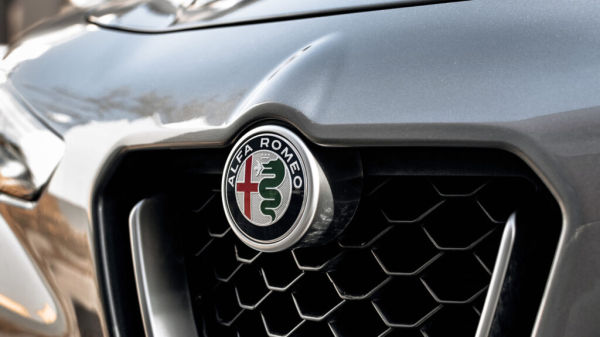
Alfa Romeo has been a fixture in the high-end European automotive market for well over a century now. While the brand has seen its share of ups and downs in that market, as well as in the U.S. and beyond, the Italian automaker has still managed to produce its fair share of celebrated vehicles in the years since its first builds hit the racetracks and roadways of Europe. Given the brand’s current state of affairs, it appears well-positioned to play in that arena for many years to come, with the backing of parent company Stellantis making its staying power even more sustainable.
The automaker has, of course, also continued to earn its place among fellow Italian icons like Fiat, Ferrari and Lamborghini in part due to the high-octane engines that power its vehicles, from its legendary Twin Cam build to more recent additions like the 2.9L Twin-Turbo V6 powering the Guilia Quadrofoglio. While that latter power plant was developed with help from former Ferrari engineers, the bulk of Alfa Romeo’s engines are designed by the automaker’s in-house team. They’re also largely manufactured in facilities bearing the distinctive Alfa Romeo logo.
Given those facts, the Italian automaker is almost entirely responsible for the making of its engines. But since Stellantis now counts Alfa Romeo among its various automotive holdings, one could argue that, from a semantic standpoint, Alfa Romeo’s engines are actually made by Stellantis. Thankfully, the origins of Alfa Romeo’s engines are a little more cut-and-dry.
Alfa Romeo’s engines are fittingly made in Italy
It should hardly come as a surprise that Alfa Romeo — which is one of more than a dozen notable automobile factions currently owned and operated by Stellantis – has, historically, designed and manufactured most of its power plants in-house. That is keeping in the tradition of Italian predecessors like Ferrari and Lamborghini, who have also made their own cars and engines at facilities within the borders of the country. As for Team Alfa Romeo, the company primarily manufactures its vehicles in two Italian production facilities, one of which resides in Cassino and another which is located in Pomigliano, a metropolitan area in Naples.
The engines that power Alfa Romeo’s automobiles are, however, not manufactured in those plants. Rather, Alfa Romeo’s engines originate from one of two facilities, the Termoli and the Pratola Serra factories. Located in Termoli and the Avellino Province, respectively, those production houses actually assemble two different styles of engine, with Termoli focusing mostly on gasoline power plants and the Pratola Serra plant making diesel engines, which remain a popular choice for drivers across Europe and other regions of the world.
For the time being, those Italian production facilities are solely responsible for the building of the engines that end up under the hood of an Alfa Romeo. Once the engines are assembled, they are then transported from their respective plants of origin to either the Cassino or Pomigliano facilities. There, the engines are installed in whichever Alfa Romeo build they’re designed for, including models like the Giulia, the Stelvio, and the Tonale Hybrid.