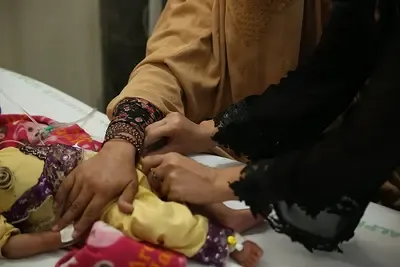
Last Monday’s global health pledging event in Abu Dhabi during Abu Dhabi Finance Week marked more than another milestone in the fight against polio. It signalled the growing influence of the Gulf, and the UAE in particular in driving ambitious, results-focused action on challenges that affect communities far beyond our region.
At the gathering, international partners committed $1.9 billion to support the Global Polio Eradication Initiative (GPEI). This renewed backing will help protect 370 million children every year, while reducing the programme’s funding gap to its lowest level in years. For a disease that once paralysed hundreds of thousands annually, the world is now closer than ever to ending transmission for good.
A regional hub for global action
The UAE has increasingly become the place where global health goals turn into practical commitments. By hosting this year’s pledging moment - as it did in 2013 and 2019 - Abu Dhabi reinforced its role as a powerful convenor capable of uniting governments, philanthropies, and technical experts behind a shared purpose.
What makes this leadership meaningful is not only the scale of the financial support mobilised, but the trust the UAE has built as a partner.
For decades, the UAE has championed polio eradication, standing shoulder-to-shoulder with global partners and supporting vaccination efforts in some of the most challenging regions on earth. This ecosystem of collaboration has become one of the pillars of progress against the virus.
Innovation at the centre of eradication efforts
The fight against polio is also evolving. Technology, from real-time surveillance to breakthrough vaccine research, is reshaping response and preparedness strategies. The UAE has consistently championed these innovations, recognising that smarter tools are essential for finishing the job.
Abu Dhabi’s convening power is particularly important here. By bringing experts together, the Emirates create a space where new approaches can be tested, refined, and deployed at scale. This is not simply diplomacy; it is an investment in the systems that protect global health security.
A moment of momentum and responsibility
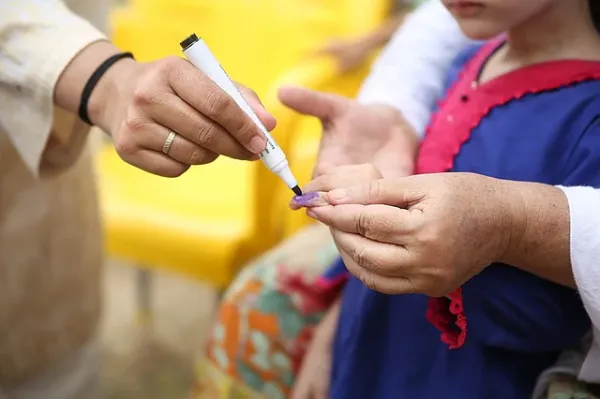
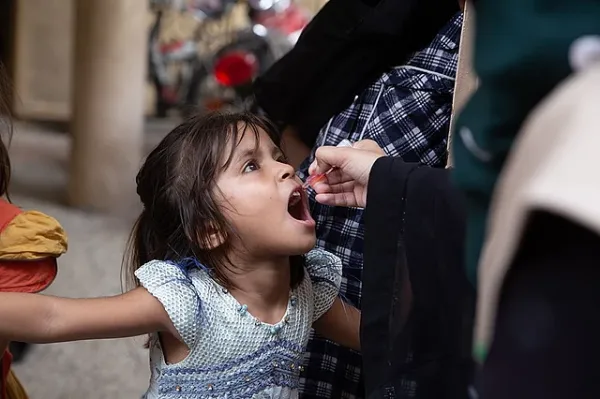
Despite extraordinary progress, the last mile is always the hardest. Fragile settings, fatigue, and fragmented access to health services continue to challenge community health workers who deliver vaccines door-to-door. Yet moments like the one in Abu Dhabi demonstrate that political will remains strong, and that the world has not lost sight of what is achievable with sustained partnership to achieve a shared vision.
As the WHO’s leadership emphasised at the event, the world is on the cusp of making polio the second human disease in history to be eradicated. Achieving that outcome would be a triumph not only for global health, but for the international cooperation that made it possible.
Why It matters for the Gulf
For the UAE and the wider Gulf, this is also a story of regional confidence. By supporting causes with global impact, the Emirates illustrate how middle-sized nations can shape the international agenda in constructive, future-focused ways. The polio pledging moment reflects a broader trend: the Gulf is steadily emerging as a bridge between nations, using diplomacy, investment, and convening power to push forward practical solutions to shared problems.
Polio eradication is within reach. But reaching the finish line depends on maintaining the unity witnessed in Abu Dhabi; unity that shows what is possible when countries commit not just resources, but the determination to solve challenges that transcend borders.
If the world succeeds, it will be because partners across continents, including here in the UAE, chose persistence over complacency. That is a message worth amplifying, and a legacy the region can rightly claim as its own.
- Dr Farida Al Hosani is the Deputy CEO of the Global Institute for Disease Elimination (GLIDE).
Contact to : xlf550402@gmail.com
Copyright © boyuanhulian 2020 - 2023. All Right Reserved.