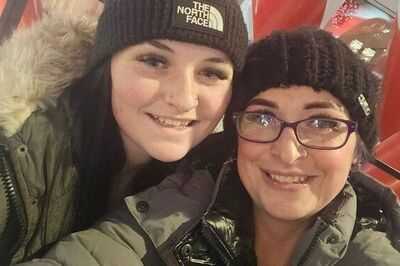
A teenager who was repeatedly told by doctors she was just suffering from “exam stress” was diagnosed with a brain tumour. Katie-Jo Bartlett’s symptoms were dismissed until she lost consciousness in a toilet and was rushed to hospital.
The 19 year old from Newcastle reported experiencing visual disturbances with “colours” appearing on her examination papers that would make her feel sick as well as an unsteady walk and back pain. Multiple consultations with her GP saw her concerns brushed aside as "exam stress" by medical professionals, until she lost consciousness in the bathroom and was taken by emergency ambulance to hospital.
Medical staff at Northumbria Specialist Emergency Care Hospital identified Katie-Jo as suffering from severe hydrocephalus - an unusual accumulation of fluid within the brain. She was immediately transferred to Royal Victoria Infirmary, Newcastle, for drainage procedures.
- New cancer treatment to be made of uranium from nuclear reactors
- Serial killer Dennis Nilsen's ashes scattered near hometown in 'insensitive' sendoff
Follow-up MRI and CT scans revealed that Katie-Jo was living with a brain tumour, which was responsible for the fluid build-up. Subsequently, Katie-Jo has undergone numerous operations to install a shunt device designed to alleviate cranial pressure.
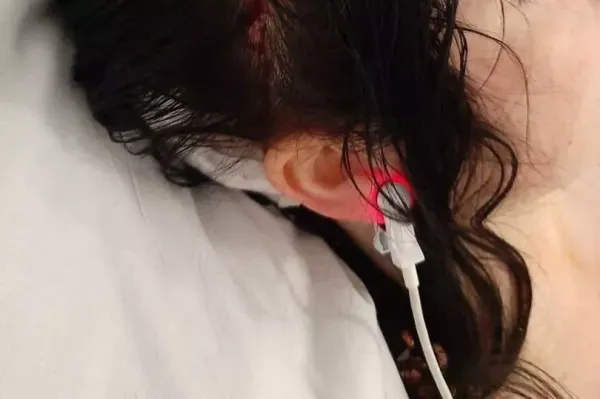
Unfortunately, her tumour cannot be surgically extracted, though Katie-Jo receives MRI examinations every eight months to check for any expansion, and experiences tiredness as a consequence of her shunt.
Katie-Jo, who works in retail, said: "I was in the middle of my GCSE exam, looking at my paper. There were colours all over the page, and I started feeling sick.
"Before that, I would notice that when I walked, I'd walk like a drunk person and lean to one side and never be able to walk straight. I would get awful pain in my back, but everyone thought it was GCSE stress and said I needed vitamins."
The day following an exam in June 2022, Katie-Jo accompanied her mother, Stacey, 43, to a medical appointment. While her mum was consulting with the GP, Katie-Jo visited the toilet and lost consciousness.
Katie-Jo said: "Nobody could get in. Around 25 minutes later, I came back around, and there were lots of people around us."
Discussing the procedure to remove the fluid that was subsequently discovered, she continued: "The doctors told me that if I didn't have that surgery there and then, I wouldn't be here.
"My mum and I were so scared, but we wanted me to be better, so I went in for it as my mum promised she would never leave my side." After receiving the brain tumour diagnosis, Katie-Jo admitted she felt "terrified".
"Being so young, I didn't know what having a brain tumour meant for me,” she said. "I couldn't believe that this was happening to me."
She underwent surgery, which established that the growth was non-cancerous, and on the evening of her school prom, she had a permanent drainage device fitted to reduce cranial pressure.
Katie-Jo said: "Due to the location, they weren't able to remove the tumour, but they told me it was benign. I will live with the tumour forever.
"I have scans every eight months to monitor for any growth. I will forever be grateful to the doctors for fixing me and for basically saving my life.
"Although it is still there and it is going to be for the rest of my life, it's stable."
Shannon Winslade, head of services at The Brain Tumour Charity, commented: "We're really grateful to everyone who shares their - often heart-breaking - story to raise awareness of brain tumours.
"We know that every family deals with a brain tumour diagnosis and its aftermath in their own unique way. That's why The Brain Tumour Charity offers support to anyone who needs it. It's so important for them to know that they are not alone.”
You can find out more by calling the charity’s Support and Information Line on 0808 800 0004 or via its website here.
SymptomsAccording to the NHS, common symptoms of a brain tumour include:
- Headaches
- Seizures (fits)
- Persistently feeling sick (nausea), being sick (vomiting) and drowsiness
- Mental or behavioural changes, such as memory problems or changes in personality
- Progressive weakness or paralysis on one side of the body
- Vision or speech problems
The NHS says: “Sometimes you may not have any symptoms to begin with, or they may develop very slowly over time.” If you experience symptoms of a brain tumour, you should speak to your GP.
Contact to : xlf550402@gmail.com
Copyright © boyuanhulian 2020 - 2023. All Right Reserved.