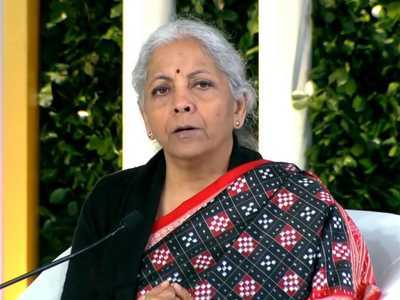
New Delhi [India], December 17 (ANI): Finance Minister Nirmala Sitharaman flagged rising fiscal stress in some Indian states and called for sharper focus on manufacturing, innovation, and strategic trade positioning while addressing the Times Network India Economic Conclave.
She said that India's growth momentum and global aspirations hinge on disciplined fiscal management, competitive manufacturing, and confident policymaking rooted in domestic priorities.
Sitharaman said, "RBI documents and studies show worrisome debt-to-GDP in some states (unnamed here or in Parliament). Unless managed within FRBM limits and high-interest debt reduced, states borrow to service loans, not development, a poor fiscal play. This threatens the 10-year momentum for Viksit Bharat by 2047."
On trade and global economic engagement, the Finance Minister said India must chart its own course amid shifting global norms. "It is important for us to understand that trade is no longer what we used to talk about in global trade norms... countries like India with aspirations must mark their own goalposts... by chalking their own growth story," she said, adding that such an approach builds confidence to meet future challenges
Sitharaman also pushed back against criticism of India's tariff policies, stating, "Globally, trade isn't fair or free. India faces lectures on being inward-looking or a 'tariff king,' but tariffs are weaponized--India safeguards against dumping, yet others face no criticism." She said this reality requires India to negotiate cautiously while leveraging its growing economic strength
The finance Minister said that while India's service sector's contribution of over 60 per cent to GDP is commendable, it cannot substitute for manufacturing-led growth, particularly driven by innovation and research. "Globally 70% [of R&D] is private; in India, just 36%," she noted, stressing the need for greater private sector participation in R&D
Highlighting decentralised manufacturing potential, the Finance Minister cited regional success stories, saying, "You couldn't think of areas like Wayanad, Malappuram, Ernakulam, or Thrissur cashing in on natural rubber supplies to make footballs bought worldwide."
This, she said, reflects the entrepreneurial depth that policy must support at the grassroots level.
Emphasising government support mechanisms, Sitharaman said, "That's why our government, under Prime Minister Modi, focuses on MSMEs and clusters: wherever they are, we'll provide facilities for growth." She linked this to expanded financial inclusion, noting that wider access to credit through initiatives such as Mudra has strengthened individual credit footprints and enabled formal banking access.
Outlining India's long-term ambition, she said, "We can aspire to an India that contributes 25% to world trade; 25% of global trade emanated from India." Achieving this, she added, would require reviving manufacturing and agriculture, strengthening value addition, and sustaining services growth across sectors including tourism and hospitality
On capital markets, Sitharaman said, "Equity gets attention; we're deepening the bond market for funds beyond equity." She also addressed energy security and industrial expansion, stating, "Prime Minister Modi supports corporations for jobs and GDP," while noting that emerging sectors such as GCCs and data centres require reliable power, which explains the policy focus on nuclear energy, small modular reactors, and other clean energy sources alongside renewables. (ANI)
Contact to : xlf550402@gmail.com
Copyright © boyuanhulian 2020 - 2023. All Right Reserved.