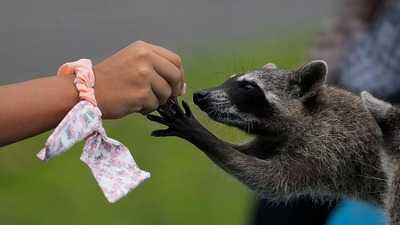
Raccoon roundworm parasite spreading across 9 European countries rapidly
20 Dec 2025
The raccoon roundworm parasite, scientifically known as Baylisascaris procyonis, is spreading across Europe, according to a study.
The parasite was first brought to the continent with raccoons from North America in the early 1900s.
The study by Goethe University Frankfurt reveals a significant rise of this parasite among wild raccoon populations in nine European nations, with Germany being its primary stronghold.
Raccoon roundworm poses risk to humans, especially children
Health threat
Raccoons are the primary hosts of this parasite, but it can also infect humans.
Professor Sven Klimpel from Goethe University Frankfurt said, "This parasite can also infect humans and cause so-called larva migrans, in which migrating larvae damage tissues and organs."
Transmission occurs when people ingest eggs from contaminated soil or water due to raccoon fecal matter.
Raccoon roundworm's life cycle and its impact on children
Lifecycle impact
The parasite's life cycle is relentless, with mature worms producing up to 180,000 eggs daily. These eggs can remain infectious for years.
Young children are especially vulnerable as the larvae can enter their central nervous system, leading to severe consequences.
In North America, infections have resulted in permanent neurological damage or even death.
Study reveals high infection rates among raccoons in Europe
Infection rates
The actual number of infections in Europe is still unclear due to non-specific symptoms leading to misdiagnosis.
However, a study found that 66.4% of tested German raccoons carried the roundworm, with infection rates reaching 77.4% in Hesse.
Wild raccoons with Baylisascaris procyonis have now been found in nine countries, mainly in Central Europe.
Captive raccoons have also tested positive in three more countries.
Urbanization increases risk of raccoon roundworm transmission
Urban threat
The rise of urban raccoon populations increases the risk of soil and object contamination by parasite eggs.
So far, three cases of Baylisascariasis in Europe have led to permanent visual impairment.
Dr Klimpel stressed the need for further research on this parasite in Europe as raccoon populations continue adapting to urban environments.
Improving diagnostics and accurately assessing prevalence are crucial steps toward protecting public health from this emerging threat.
Contact to : xlf550402@gmail.com
Copyright © boyuanhulian 2020 - 2023. All Right Reserved.