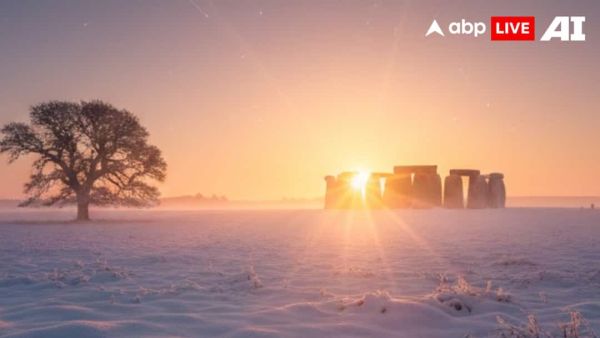
Every year, a single day quietly reshapes the rhythm of life on Earth. Winter Solstice 2025 marks the moment when daylight reaches its minimum and night stretches to its longest length. While it may appear like just another cold December day, this astronomical event carries deep scientific, cultural, and symbolic importance. From ancient civilisations to modern astronomers, the Winter Solstice has long been seen as a turning point, a pause in darkness before the gradual return of light.
But why does this happen, and why has it mattered to humanity for thousands of years? The answers lie in the delicate tilt of our planet and the human need to find meaning in cosmic cycles.
What Is The Winter Solstice?
The Winter Solstice occurs when one hemisphere of the Earth is tilted farthest away from the Sun. In the Northern Hemisphere, this results in the shortest day and the longest night of the year. After this point, daylight hours begin to slowly increase, even though winter temperatures often continue to deepen.
This solstice usually falls between 21 and 22 December each year. In 2025, it marks the official astronomical beginning of winter in the Northern Hemisphere.
The Science Behind The Shortest Day Of The Year
The reason behind the Winter Solstice is Earth’s axial tilt of approximately 23.5 degrees. As the planet orbits the Sun, this tilt causes varying angles of sunlight to reach different parts of the Earth throughout the year.
During the Winter Solstice, the Sun appears at its lowest arc in the sky for Northern Hemisphere observers. This results in fewer daylight hours and longer nights. Importantly, this is not caused by Earth being farther from the Sun, in fact, the planet is relatively close to the Sun around this time, but purely due to its tilt.
The Ancient Significance Of Winter Solstice
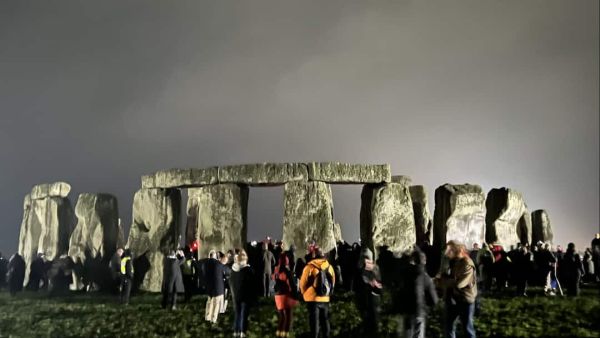
Long before modern science, ancient societies closely tracked the solstice. For early humans, it signalled survival, hope, and renewal. The shortest day represented the peak of darkness, but also the promise that light would return.
Monuments like Stonehenge were aligned with solstice sunrises and sunsets, showing how deeply this event was woven into early calendars, agriculture, and spiritual life. Many cultures viewed the solstice as a symbolic rebirth of the Sun, a cosmic reminder that darkness is temporary.
Cultural And Spiritual Significance
Across civilisations, the Winter Solstice inspired festivals, rituals, and celebrations. In parts of Europe, it became associated with Yule traditions, while in East Asia, it marked balance and harmony in nature. Even today, echoes of solstice symbolism live on in modern winter celebrations centred around light, warmth, and togetherness.
Spiritually, the solstice is often seen as a time for reflection, inner stillness, and setting intentions. As nature slows down, many traditions encourage rest, gratitude, and preparation for renewal.
Contact to : xlf550402@gmail.com
Copyright © boyuanhulian 2020 - 2023. All Right Reserved.