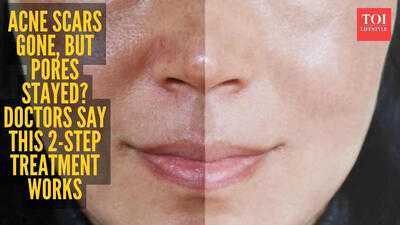
If you’ve ever dealt with acne, you probably know this part too well. The breakouts calm down, but the pores? They stay. And no amount of skincare seems to fully fix them.
Now, a new study suggests there might be a smarter way to deal with acne-related enlarged pores , by combining botulinum toxin A with hyaluronic acid instead of relying on one treatment alone.
And yes, the results sound genuinely promising.
What the study looked at
The research followed 40 people who had acne-prone skin and visibly enlarged pores. They were treated at the dermatology department of the First Affiliated Hospital of Xi’an Jiaotong University. The group included 32 women and 8 men, all between 18 and 40 years old. Most of them had Fitzpatrick skin type IV, which is quite common in Indian and similar skin tones.
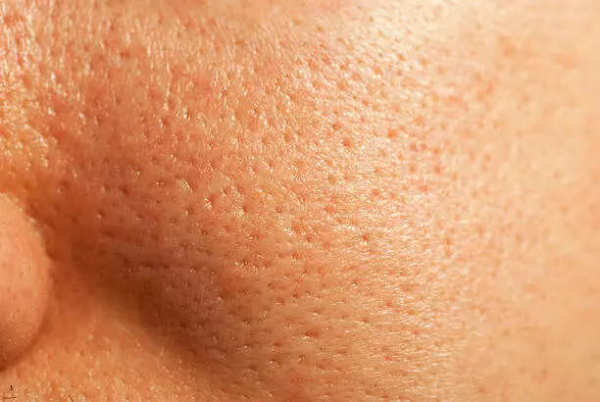
These weren’t extreme cases or experimental subjects. Just regular patients who struggled with pores that wouldn’t shrink, even after acne improved.
What treatment they received
Each patient was given a combination treatment. Doctors injected botulinum toxin A, which helps reduce oil production and relax the muscles around pores, along with non-cross-linked hyaluronic acid, which deeply hydrates the skin and improves how it holds moisture.
The doses were adjusted per person. Botulinum toxin ranged between 30 to 50 units, while 2.5 ml of hyaluronic acid was used across the face. The injections were done using mesotherapy, with very fine microneedles, so the product spread evenly.
It wasn’t about freezing the face or adding volume. The goal was simple: calmer oil glands, better hydration, and smoother-looking skin.
How they measured the results
Doctors didn’t rely on guesswork. They used the VISIA Skin Image Analyzer, which takes detailed images of the face and measures things like pore size, skin texture, and porphyrins (a marker linked to oil and acne bacteria).
Photos were taken before treatment, then again after one month and four months. Lower scores meant the skin was smoother, pores looked smaller, and oil activity was reduced.
They also used the Global Aesthetic Improvement Scale, while patients shared how happy they were with the results through a satisfaction score.
What actually changed
The biggest difference showed up one month after treatment.
Pore size scores dropped noticeably, skin texture became smoother, and oil-related markers reduced significantly. In simple words, skin looked more even and less greasy.
By the four-month mark, some of the effects had softened, which is normal, but the skin was still in much better shape than before treatment. Pores hadn’t gone back to their original size, texture stayed improved, and oil control was still better than baseline.
And when compared to using botulinum toxin alone, the combination clearly worked better and lasted longer.
How effective was it?
After one month, doctors rated the overall improvement at 95% effectiveness. Most patients were marked as “improved” or “much improved.”
At four months, the numbers dipped slightly, but the majority still saw visible benefits. Only two patients didn’t notice much change in their pores, and no one experienced worsening skin.
A few patients - four, to be exact, opted for another session once they felt their pores starting to return. Which honestly makes sense.
Were people happy with it?
Short answer: yes.
Nearly 90% of patients said they were satisfied just one month after treatment. Satisfaction dropped slightly by the four-month mark, but it was still high overall.
For a treatment that doesn’t involve long recovery or daily medication, that’s a solid response.
What about side effects?
The treatment was fairly easy to tolerate. Some people experienced mild redness, bruising, or a tight feeling in the skin. Everyone said the injections stung a bit, but the discomfort faded quickly.
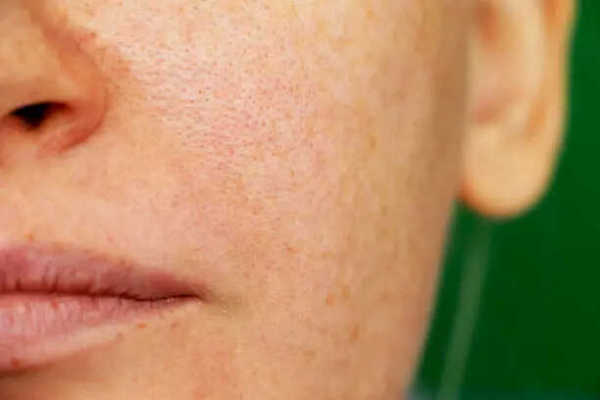
Most importantly, there were no serious side effects. No facial imbalance, no muscle weakness, no allergic reactions, no breathing issues. That’s a big relief when injectables are involved.
Why this matters
Most pore treatments focus on oil control alone. Things like isotretinoin, retinoids, and chemical peels can help, but they often need long-term use and don’t suit everyone.
Botulinum toxin and hyaluronic acid are already widely used in aesthetic treatments - mostly for wrinkles and volume loss. Using them together specifically for enlarged pores hasn’t been talked about much until now.
The logic behind the combo is simple. One controls oil and pore expansion. The other supports hydration and skin structure. Together, they seem to keep results going for longer.
And that’s exactly what the researchers highlighted, the two treatments don’t compete, they support each other.
For anyone tired of chasing pore-shrinking promises, this approach might just be worth watching.
Contact to : xlf550402@gmail.com
Copyright © boyuanhulian 2020 - 2023. All Right Reserved.