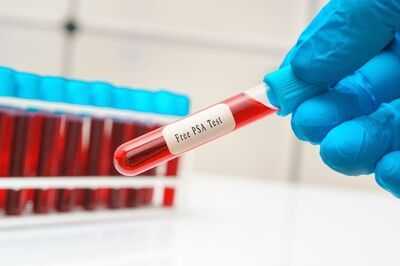
A leading doctor has answered several common questions about prostate cancer in an effort to separate facts from fiction. His insights arrive as more than63,000 menare diagnosed each year, according to Prostate Cancer UK, making it themost prevalent type among men.
While Dr Martin Thornton, Chief Medical Officer at Bluecrest, said that many people feel 'too embarrassed' to research this health issue, he stressed that early intervention is always preferable. In light of this, he's addressed three key queries about symptoms, diagnosis, and treatment to save you from Googling.
Speaking to the Mirror, he said: "Prostate cancer is one of the most common cancers affecting men in the UK. The good news is that when it is found early, treatment is often very successful. The challenge is that many men feel too embarrassed to ask the questions they really want answers to. Here is what you may have been too nervous to Google."
- Baba Vanga's predictions that came true in 2025 and what she got wrong
- Inside 'devastating' mind of man who decapitated himself with chainsaw
1. How does a doctor check for prostate cancer?
PSA tests measure the level of prostate-specific antigen in the blood and are frequently used by the NHS to detect prostate problems. These check-ups are not routinely provided by the health service and are not included in a national screening programme, but will be offered in certain situations.
"Most will find that the best place to start is a PSA blood test," Dr Thornton said. "If the level is raised or if you have symptoms, a doctor may also do a prostate exam. If we need a clearer picture, the next step might be an MRI scan or sometimes a biopsy.
"Many men never need anything beyond the first simple tests because the results are reassuring." Usually, PSA tests take no more than a few minutes and results with the NHS are generally issued within one or two weeks.
Beyond this, a medical professional will sometimes also conduct a rectal examination with their finger, but Dr Thornton insists that it isn't as scary as it sounds. He continued: "The prospect of a digital rectal exam may sound scary or embarrassing, but it is usually over in less than ten seconds. We talked about prostate cancer clues, and sometimes a physical exam can confirm or discount a flag in a PSA test.
"In terms of the process, a doctor puts on a glove, uses a little gel and gently feels the prostate from the back passage to check for anything unusual. Doctors do this every day, and the exam is over quickly."
He added: "A PSA test is a simple blood test that measures a protein made by the prostate. A higher number does not automatically mean cancer but it tells us to look more closely. A prostate exam is a quick physical check to feel whether the prostate is enlarged, tender or has any lumps. They give different information and we sometimes do both."
2. When should someone get tested?
While prostate cancer often has no symptoms at first, there are several red flags that men are advised to look out for. According to the NHS, this may include the following:
- Finding it difficult to start peeing or straining to pee
- Having a weak flow of urine
- 'Stop start' peeing
- Needing to pee urgently or often, or both
- Feeling like you still need to pee when you've just finished
- Peeing during the night
- Erectile dysfunction
- Blood in the urine or semen
- Lower back pain
- Unexplained weight loss
These symptoms do not necessarily mean you have prostate cancer, but they are always worth discussing with a doctor. Dr Thornton also added: "We usually recommend one if your PSA level is higher than expected, if it has changed compared to a previous result, if you have symptoms like peeing more often or a weak stream, if you ever see blood in urine or semen, or if you are in a higher risk group such as Black men or men with a close family history. It is never automatic but based on your symptoms and risk.
"Knowledge is power, if you are 45 or over, it is sensible to start a conversation about having a PSA test. Certain factors may mean you might need to consider these tests earlier, for example, if you are Black, or if your father or brother has had prostate cancer. It’s important to know that you don’t need symptoms to get tested, and many who are diagnosed show no symptoms at all until it’s too late."
3. What is the biggest mistake men make with prostate cancer?
Dr Thornton warned that ignoring symptoms and delaying doctors' appointments are among the worst approaches you can take with potential cancer cases. Even if it feels embarrassing, a straightforward test could potentially avoid a lot of future stress.
The expert added: "Ignoring warning signs, waiting too long or hoping that symptoms disappear is not a long-term health plan. If something feels new or unusual for you, do not sit on it. Early and regular assessments are simple and could save your life."
Official guidance from the NHS also summarises: "You may be offered a PSA test if a doctor thinks you have symptoms that could be prostate cancer. If you're having treatment for a prostate condition you may be offered regular PSA tests to check how the treatment is working.
"Men aged 50 or over can ask their GP for a PSA test, even if they do not have symptoms. Anyone aged 50 or over with a prostate can ask for a PSA test."
Contact to : xlf550402@gmail.com
Copyright © boyuanhulian 2020 - 2023. All Right Reserved.