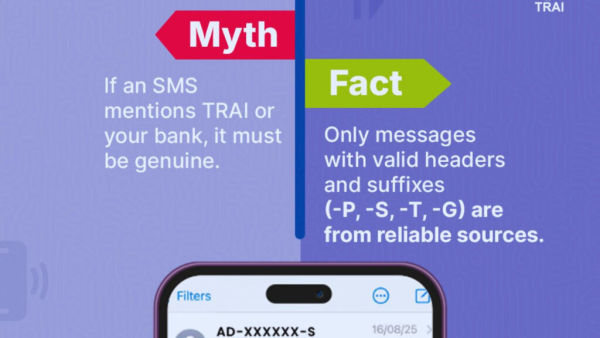
New Delhi: Amidst the increasing cases of fake SMS and cyber fraud in the country, the Telecom Regulatory Authority of India has advised the common people to be cautious. TRAI has made it clear by posting on social media platform X that not every official looking message is genuine and blindly trusting any text message can prove dangerous.
According to TRAI, cyber fraudsters are now sending such messages in the name of government, banks and companies, which look exactly like the real thing. In such a situation, it is important that people understand the difference between real and fake messages, so that they can avoid becoming victims of fraud.
How to identify the real message?
TRAI has said that the genuine message can be identified from its header. If words like P, -S, -T or -G are added at the end of the header sending the message, then that message can be considered valid.
P – Promotional message
S – Service message
T – Transactional message
G – Government message
According to TRAI, with the help of these suffixes, users can easily understand whether the message is official or not.
TRAI gave information on X
TRAI warned people through a post on the X platform that any person or fraudster can write messages in the official language. Therefore, do not trust just the language or name, but do check the headers and suffixes.
This is how cyber thugs send fake SMS
Cyber fraudsters use fear and greed to trap people. They send such messages in which they pretend to be of some emergency or benefit, such as-
Your rewards expire today
Your card has been sent
Lottery has been drawn in your account’s name
Such messages often force people to panic or take hasty decisions.
They prey on fear and greed
Fake SMS often contain language like this-
Update KYC today itself, otherwise your account will be closed
You have won the lottery of ₹10 lakh
A strange link is also given in these messages, which when clicked takes you to a fake website or portal. There, sensitive information like bank details, OTP, PIN or CVV number is asked.
They cheat by pretending to be an emergency
After this, cyber thugs ask the user to contact them again and again through calls, messages or links. Gradually people fall into their trap and share banking details and OTP. Experts and banks constantly warn that never share OTP or banking information with any unknown person or platform.
keep yourself safe like this
To avoid cyber fraud, it is important that people learn to identify real and fake messages. Do not share your bank details and OTP with any unknown number, link or company. Due to a little carelessness, your bank account can become completely empty.
Contact to : xlf550402@gmail.com
Copyright © boyuanhulian 2020 - 2023. All Right Reserved.