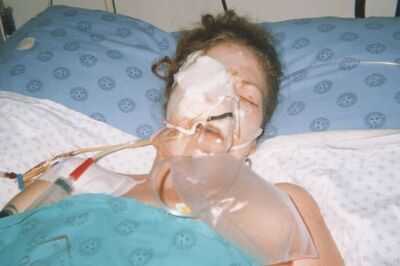
A woman was left needing facial reconstruction after a terrifying car crash, but her horror did not end there as an infection began 'eating her new face'.
Vanessa Carter, 47, faced life changing injuries after the serious collision but years later the woman had an infection in her new prosthetic that was "eating her face". Following the car crash, back in 2004, Vanessa had a broken jaw and nose, smashed cheekbones and loss of her right eye.
The traumatic collision meant the woman, from Torbay, Devon, needed to have her face reconstructed and an artificial eye made for her. She underwent several surgeries but was left in horror when she look her her car's mirror one day.
• Warning issued as sharing towels sees spread of MRSA superbug in UK homes
• 'I slept so much I missed my son's birthday - then I got life-threatening diagnosis'
Vanessa was the passenger in the car when she was involved in the accident back in 2004 in Johannesburg, South Africa. Her hospital recovery took over a month and then required an extensive facial reconstruction surgery and a team of clinical specialists was needed for each specific part of the reconstruction.
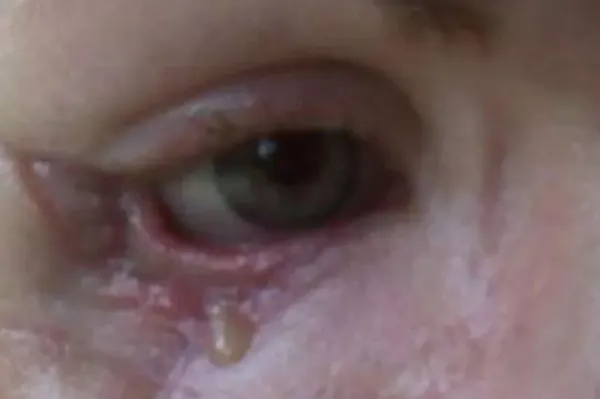
Six years after the accident, during her facial reconstruction journey, a prosthetic implant was placed to bridge a large gap between her broken cheekbone and nose. One day, after she had been discharged, Vanessa felt a wetness seeping down the side of her face. She looked in her car's rearview mirror and saw pus leaking from the cheek where the prosthetic had been inserted.
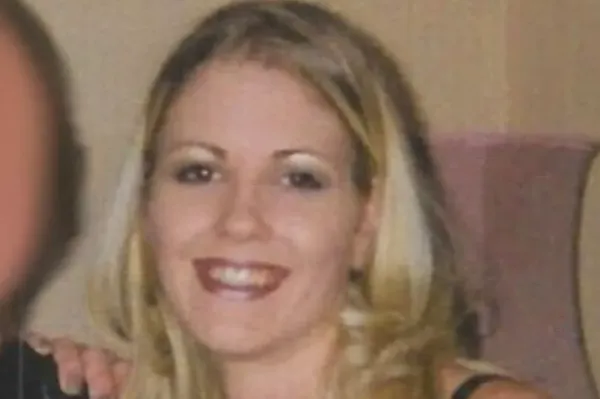
Vanessa said: "I suddenly felt moisture on my face. I looked in my car's rear view mirror and saw pus leaking from my cheek where the prosthetic had been inserted."
The woman was told she had an infection which kept coming back and eat away the skin from the side of her face, leaving her terrified as her skin became thinner and weaker each day. Her plastic surgeon recommended emergency surgery to remove the facial prosthetic and send it to be tested - until she was told she had a dangerous antibiotic-resistant infection.
She said: "When the results arrived, the first thing I saw was the acronym 'MRSA'. When I searched 'MRSA' online, I learned it meant Methicillin-Resistant Staphylococcus aureus - a dangerous antibiotic-resistant infection. I was shocked, especially because no one had ever discussed antibiotic resistance with me."
Vanessa added: "I was really scared. I could see my face being eaten away by this infection. Antibiotics are life-saving medicines, and although I fought to survive antibiotic resistance, it was the last-resort antibiotics that ultimately saved me. I was incredibly fortunate - had the infection been resistant to all available treatments, I might not have survived."
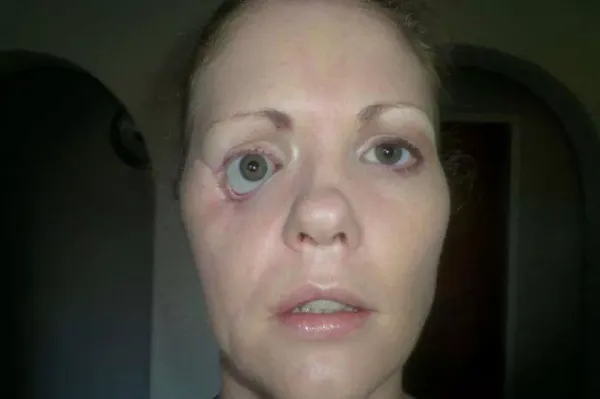
The woman was then put on a last-resort antibiotic called Vancomycin and told that the doctors couldn't attempt any reconstructive surgery for at least a year, until the infection was gone. Vanessa added: "Even then, my doctors didn't sound hopeful because the damage was severe and I was now considered high-risk for infection."
For three years, she battled MRSA and antibiotic resistance, which made her aware of the importance of using antibiotics responsibly. After her infected facial implant was removed and she received treatment for MRSA infection, Vanessa sought guidance from a world-renowned transplant surgeon in Boston who provided her with a treatment plan for her condition.
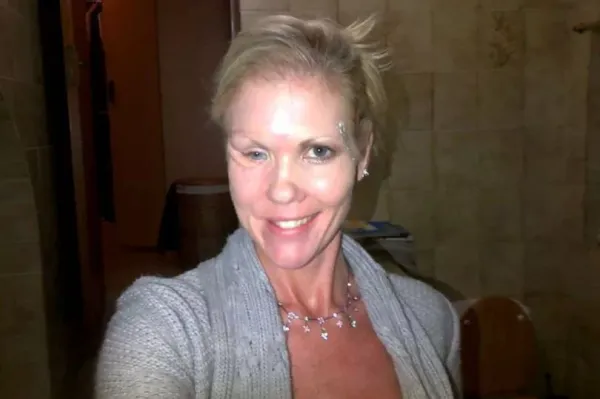
She was then referred to South African doctors who could perform the necessary procedures, and after eight months, two surgeries and a third course of antibiotic called Clindamycin, her decade long fight to complete her facial reconstruction was finished. Vanessa said: "We completed one final surgery on my eyelid, and for the first time in years, I could finally uncover my face. I was simply grateful that I no longer had to look in the mirror and watch my face disappear because of a resistant infection."

The woman shared an important warning to others, saying: "Many people assume antibiotics will quickly cure colds and flu, but these medicines are only effective against bacterial infections. Sharing my story has had a major impact. I have spoken at large medical conferences with doctors who prescribe antimicrobials, taught medical students, nurses, and pharmacists, and participated in high-level policy meetings."
She added: "Unfortunately, millions die annually and by 2050 it has been predicted that more people will die from AMR than cancer. We need to act now."
Contact to : xlf550402@gmail.com
Copyright © boyuanhulian 2020 - 2023. All Right Reserved.