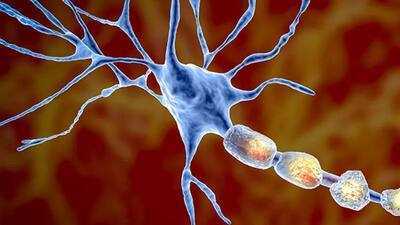
AI breakthrough might lead to better treatments for MS patients
31 Dec 2025
In a major breakthrough, scientists have identified two new subtypes of multiple sclerosis (MS) using artificial intelligence (AI).
The discovery could lead to more personalized treatments and improved patient outcomes.
The research, led by University College London (UCL) and Queen Square Analytics, involved 600 patients and focused on blood levels of a specific protein called serum neurofilament light chain (sNfL).
Serum neurofilament light chain: A marker for nerve cell damage
Protein significance
The sNfL protein is a critical indicator of nerve cell damage and disease activity.
The research team used machine learning model SuStaIn to analyze sNfL levels and MRI scans of patients' brains.
Their findings, published in the medical journal Brain, identified two distinct types of MS: early sNfL and late sNfL.
Distinct characteristics of early and late sNfL MS
Subtype differences
The early sNfL subtype is characterized by high levels of sNfL early in the disease progression, along with visible damage in the corpus callosum region of the brain.
Patients with this type also develop brain lesions quickly.
On the other hand, late sNfL patients show brain shrinkage in areas like limbic cortex and deep gray matter before their sNfL levels rise. This type appears to be slower, with overt damage occurring later.
AI breakthrough could revolutionize MS treatment
Treatment implications
The discovery of these two subtypes using AI and a simple blood test could revolutionize MS treatment worldwide.
It will help doctors better understand which patients are at higher risk of different complications, thus paving the way for more personalized care.
Dr. Arman Eshaghi from UCL, the lead author of the study, emphasized that "MS is not one disease" and current subtypes fail to describe underlying tissue changes needed for effective treatment.
Potential impact on future MS treatments
Future prospects
In the future, an AI tool could flag a patient as having early sNfL MS, making them eligible for higher-efficacy treatments and closer monitoring.
Those having late sNfL may be offered different types of treatments such as personalized therapies to protect the brain cells or neurons.
Caitlin Astbury from the MS Society, a charity, called this research an "exciting development" in understanding MS and its complex biology.
Contact to : xlf550402@gmail.com
Copyright © boyuanhulian 2020 - 2023. All Right Reserved.