
Highlights
- Hybrid cloud gaming splits workloads between local devices and nearby servers to reduce noticeable lag during gameplay.
- Low latency depends heavily on stable networks, edge data centers, and consistent home internet connections.
- India’s 5G rollout and local data hubs are improving feasibility, but uneven connectivity still limits widespread adoption.
Imagine playing heavy, demanding games right on a TV screen without buying an expensive computer or a gaming console. That was the dream for many gamers, but transitioning the idea into reality was often disappointing. Delays, shaky connections, devices struggling mid game, the cloud gaming experience was not fun in general. Now different methods are being tried again. They mix local machines with distant servers doing intense tasks, with close by computers helping to speed things up. Signals travel shorter distances and the cloud experience improves as time passes on
What hybrid gaming actually means
What happens in hybrid gaming? Basically, work gets shared. A user’s machine handles quick jobs, like checking button presses, guessing moves, feeding menus, all things needing instant results. Elsewhere, far-off computers crunch the heavy stuff: sharp textures, light beams bouncing off surfaces, object movements, full scene builds. Those distant systems beam improved visuals or extra layers right back onto the screen.
One method sends setup data to outside renderers, while another adds polished effects onto what is already being drawn. Some even carve up each image, half made here, half there, then stitch everything back together afterwards. These ideas about splitting up gruesome tasks are not exactly new. Experiments had popped up a long time ago, and the concept at large has been developed by a lot of leading names. Now companies slowly gather tools, both physical gear and code, to shape these ideas into something real, usable, and widespread.
Why hybrid lowers latency and where it cannot magic it away
What a player feels when hitting a button in cloud games includes how fast it gets processed far away, plus the delay before their screen shows the proper results. Some setups mix various power sources: nearby hardware jumps in at once with motions or vibrations while the distant server finishes drawing complex scenes moments after. That small head start given by the home device smooths things out in a big way, making lag less obvious despite the graphics being rendered elsewhere.
Still, shaky connections remain the biggest issue, no matter this clever timing trick. Things like dropped packets, uneven speeds, and crowded local networks keep disrupting the smooth feel. Games that require the player to have faster reactions, especially competitive ones needing super high frame rates, need nearly instant back-and-forth signals plus steady flow without even the tiniest hiccup. Most testing shows under thirty to fifty milliseconds round trip is necessary, along with little variation in delay. Because of this, better infrastructure, like nearby servers, tighter carrier cooperation, and solid wired internet at home, is still critical even when using combined on-device and cloud systems.
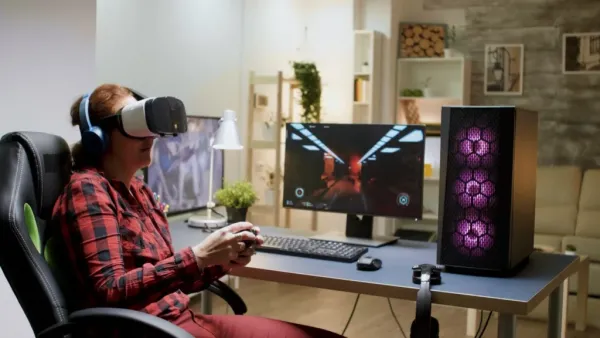
What sits behind walls and wires to let hybrids work
For smooth hybrid gaming, a few tech pieces need to fit in just right. Nearby GPU servers, usually hosted in edge data centers or via Multi Access Edge Computing are used to cut down in-game lag by shrinking the distance signals have to travel. Hardware built for streaming, like server racks packed with powerful GPUs and advanced encoding tools, handles multiple players at once, all the while keeping delays low through tight knit engine links.
Devices at home have to handle timing better as well; newer consoles and controllers use smart methods so button presses and screen response stay aligned all the time, even when visuals are rendered far away. Splitting visuals between cloud and device needs smart handling of scene chunks, consistent updates, plus smooth frame assembly, so nothing comes in the way during gaming. The efforts keep evolving as researchers test different methods through early builds and theoretical papers, aiming to reduce data flow without breaking visual flow.
Where India stands right now: network progress and industry players
Cloud firms and telecom providers in India are putting together parts of a system for mixed-style gaming. Big phone networks now back cloud projects, teaming up with giant tech platforms to plant more servers inside local data hubs. Instead of relying only on distant systems, some companies test computing setups near city populations.
Lately, fast deployment of 5G has handed urban residents faster wireless links, which is ideal for heavy online play. Yet performance still wobbles where connections thin out, especially beyond major towns. For gamers using solid fibre lines or dependable 5G home setups, new trials at the network edge may soon offer smoother runs. Across the country, equal access is not exactly there yet; it hinges on how much gets spent upgrading ground-level tech.

A practical in-home hybrid setup for enthusiasts
If a user is trying out something new with mixed systems right about now, it is a wise idea to start by plugging into Ethernet instead of relying on wireless signals, as it provides less lag, and fewer hiccups. A strong machine nearby, like a recent console or solid desktop, handles quick reactions so everything feels instant.
They can also set up their network gear to favour game data, stopping other tasks from hogging space during play. Its is also good to watch what local internet companies roll out over time, as some may start offering special lanes for gamers that cut delays dramatically when accessible. Smooth blending of local and cloud depends heavily on these backend paths opening up where they live.
When signals drop even briefly, gains vanish just as fast. Gamers looking ahead might plug machines directly into modems, manage which apps get priority online, then watch for special offers linking services to regional computing spots. Progress hides not in grand promises but small choices adding up over time.
Contact to : xlf550402@gmail.com
Copyright © boyuanhulian 2020 - 2023. All Right Reserved.