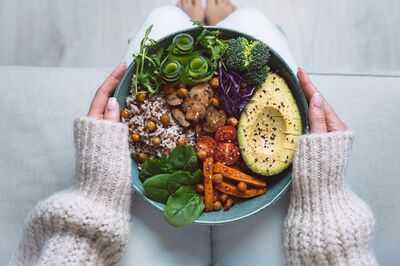
The New Year has arrived, and many people will be contemplating healthier lifestyle adjustments to kick off 2026 on the right foot. For many, this involves participating in Veganuary, a month-long initiative encouraging people to eliminate meat, animal products, and dairy from their meals for 31 days.
For lots of people, this represents a major shift - it involves avoiding all meat, fish, eggs, cheese, yoghurt, milk, or anything containing gelatine. However, the organisation behind Veganuary, which has been operating since 2014, maintains that embracing a plant-based diet offers advantages not just for your health and wellbeing, but also for the environment, as well as animal welfare.
Adopting a vegan lifestyle, even temporarily for the month, might appear daunting. One nutrition specialist has sought to simplify this transition by outlining seven insights she wishes she'd possessed before going vegan.
- I make the same New Year's resolution every year - and it has changed my life
- Unanswered questions over Anthony Joshua's horror car crash that killed two close friends
Sadia Badiei, who boasts more than one million Instagram followers, plus thousands more across various social media channels where she operates as @pickuplimes, recently uploaded a YouTube clip featuring a collection of practical recommendations, reports Essex Live.
1. Don't worry about what you can't eat"Veganism can sound incredibly restrictive," Sadia explained. "No meat, no eggs, no fish, no dairy. When I first learned about it I remember thinking 'ok so what's even left for me to eat?' But if you approach it only as a list of things you're not allowed to have your brain tends to push back."
She suggested focusing on what you can incorporate into your meals instead. Sadia explained: "Plant foods are so diverse: fruits, vegetables, grains, beans, lentils, soy products, nuts, and seeds. As you start to add more of these new foods, the old ones get gently crowded out."
2. Don't become fixated on proteinSadia argued that protein's significance has been "massively overhyped". While acknowledging its necessity, she maintained that protein "isn't something most people need to obsess over, especially if you're not a high-performance athlete or actively trying to build a lot of muscle."
She offered a straightforward method for calculating daily protein requirements: take your body weight in kilograms and consume that equivalent in grams of protein. "The simplest approach is usually just to include a protein source in each meal, and with most snacks or at least some snacks if you can," she advised.
3. Soy ranks amongst the finest vegan protein optionsLots of people have shunned soy-based products recently due to claims they can disrupt hormones, particularly in men. Nevertheless, Sadia dismissed these studies as unreliable, noting that any one person would need to consume an implausible quantity of soy to produce any measurable hormonal impact.
"In reality soy is one of the most practical staples in a plant-based kitchen," she declared. "It's convenient, it's affordable, and, as a bonus, it's a complete protein, meaning it contains all the essential amino acids in one."
4. Plant-based cuisine needn't be tastelessWhile she acknowledged that plant-based food can sometimes fall flat on flavour, Sadia revealed the secret to dodging this pitfall is ensuring every dish packs a punch with fat, acid, salt, and sweetness - and if any are absent, simply chuck them in. "If you balance these four components well, every meal is going to taste amazing," she explained.
5. Your gut will need time to get used to things.A vegan lifestyle typically delivers higher fibre levels compared to diets featuring meat or animal produce, meaning newcomers to plant-based eating might experience some bloating or digestive discomfort initially. Nevertheless, Sadia stressed this is merely your gut bacteria getting accustomed to the fresh approach, and certainly doesn't warrant a return to meat or dairy consumption.
6. There's no requirement to monitor calories or nutrients.Instead of meticulously tracking your calorie intake, Sadia championed the 'plate method' for each serving. This strategy involves filling half your plate with fruit or veg, dedicating a quarter to grains or starchy foods, and reserving the remaining quarter for plant-based proteins like beans, lentils or tofu. A modest helping of wholesome fats can be incorporated alongside this.
7. Don't let self-doubt derail your effortsSadia shared: "Learning a few basics about plant nutrition makes everything easier. Obviously you don't need to be a nutrition expert on day one, but I do think it helps to build the fundamentals so you do feel more confident in your choices and you know things like how do you get enough protein, [and] why does B12 matter."
For further details about Veganuary, including recipes, meal plans, and coaching, visit veganuary.com
Contact to : xlf550402@gmail.com
Copyright © boyuanhulian 2020 - 2023. All Right Reserved.