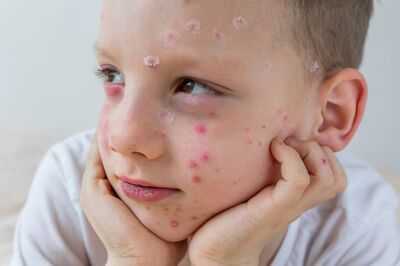
Hundreds of thousands of children will be offered a new vaccination as part of their routine childhood vaccinations. The NHS has confirmed the vaccine will be added to the MMR jab currently given to youngsters in England to protect them against measles, mumps and rubella.
The NHS’s vaccination programme is being expanded to include chickenpox (also known as varicella) for the first time to help shield young children from getting seriously ill. From now on, GP practices will start to offer children a combined MMRV vaccine at 12 months and 18 months of age to add chickenpox to the protections against measles, mumps and rubella.
Chickenpox is a common infection in children which spreads easily. While it is usually mild it can lead to serious complications which need hospitalisation, including chest infections and fits.
- Chickenpox vaccine has officially been launched by NHS in 'historic milestone'
- Tom Kerridge lost '11 stone in three years' with key diet plan - how it works
The move comes following a recommendation from the Joint Committee on Vaccination and Immunisations, which will see a combined MMRV vaccine replacing the MMR vaccine to protect against measles, mumps, rubella and chickenpox. Research shows that chickenpox in childhood results in an estimated £24 million in lost income and productivity every year in the UK and, alongside cutting this, the rollout is expected to save the NHS £15 million a year in costs for treating the common condition.
Dr Claire Fuller, National Medical Director for NHS England, said: “This is a hugely positive moment for children and their families, providing protection against chickenpox for the first time and adding to the arsenal of routine vaccinations we give to children to safeguard them against serious illnesses.
"From now, the combined vaccine to protect against measles, mumps, rubella and chickenpox will be available at children’s routine vaccination appointments to keep children healthier and prevent sickness from these highly contagious viruses. The new vaccine will also help the health service move its focus from sickness to prevention, and keep more children safe and in school.”
The latest data shows half of children will contract chickenpox by the age of four, and nine out of ten by the time they reach the age of ten. Children who catch chickenpox are typically advised to stay off school until all spots have formed a scab, which is usually five days after the spots appear.
The new vaccine means children miss fewer days in nursery or school. This will have the knock-on effect of reducing the time parents need to take off work to care for them.
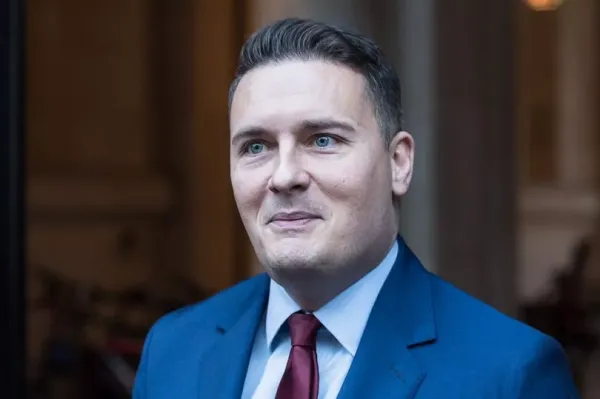
Health Secretary Wes Streeting said: “Today marks a historic milestone in protecting our children's health - for the first time, the NHS is offering chickenpox vaccination as part of our routine childhood immunisation programme.
“Many families have faced the threat of chickenpox, which can cause serious complications. The disease also brings significant worry and disruption, with children missing nursery or school and parents forced to stay home to look after them.
"This new protection will give parents reassurance that their children are protected from a disease that sends thousands to hospital every year. Families will save both time and money - no longer facing lost income from taking time off work or having to fork out for private vaccinations.
"We are determined to give every child the best start in life. I urge all parents to take up this offer when their GP contacts them - vaccines save lives."
Dr Gayatri Amirthalingam, Deputy Director of Immunisation at the UK Health Security Agency, said: “Most parents probably consider chickenpox to be a common and mild illness, but for some babies, young children and even adults, chickenpox can be very serious, leading to hospital admission and tragically, while rare, it can be fatal.
“Beyond the health risks, chickenpox also places a significant burden on families. Parents often need to take time off work to care for their sick child, and children miss valuable time at school or nursery.
“With a vaccine now being introduced into the NHS Childhood Vaccination programme starting today, I hope parents will make it one of their new year resolutions to ensure their child takes up the offer, when invited. As the vaccine is a combined vaccine with MMR, your child will be protected against four serious diseases - measles, mumps, rubella and chickenpox.
“This vaccine has been used extensively for many years in a number of countries and has been shown to be highly effective with a good safety profile. The programme will have a really positive impact on the health of young children.”
What is chickenpox?
According to NHS England Chickenpox is a very infectious disease caused by the varicella zoster virus. It explains: "It is very common in young children and causes a fever and an itchy, spotty rash. These spots can be painful and appear all over the body.
"Some children have serious complications including chest infection, fits, and encephalitis. It is more severe in adults, especially pregnant women and people with weakened immune systems.
"Later in life, the chickenpox virus can re-activate and cause a painful rash. This is called shingles. It is worse in older people and in people with weakened immune systems."
Who will get the vaccine?
Children born on or after 1 January 2025 will be offered two doses of the MMRV vaccine at 12 months and 18 months. Children born between 1 July 2024 and 31 December 2024 will be offered two doses at 18 months and 3 years, 4 months.
Those born between 1 September 2022 and 30 June 2024 will be offered one dose at 3 years 4 months. The NHS is also planning a single-dose catch-up programme later in the year for older children born between 1 January 2020 and 31 August 2022.
Two doses of the MMR vaccine were previously offered to children at 12 months and at 3 years, 4 months of age but the second dose will be brought forward to 18 months for children born on or after 1 July 2024 to provide them with earlier protection.
How safe is it?
According to NHS England the combined MMRV vaccine has been safely used for decades and is already part of the routine vaccine schedules in several countries. These include the United States, Canada, Australia and Germany, which have all seen substantial decreases in cases and related hospital admissions since introducing their vaccination programmes.
Local GP surgeries will be contacting families from Friday, January 2 to let them know when they are due their vaccinations. They will then be able to book their child for their appointment, usually by letter, text message, phone call or email.
The Royal College of Paediatrics and Child Health’s President, Professor Steven Turner, said: “It is welcome news that a chickenpox vaccine is now being rolled out across England and the whole of the UK in order to protect children and young people. Vaccinations are proven to be a very effective way to protect children’s health and prevent serious illness. Making sure your child is vaccinated is a vital step for parents and carers in keeping them safe.”
Contact to : xlf550402@gmail.com
Copyright © boyuanhulian 2020 - 2023. All Right Reserved.