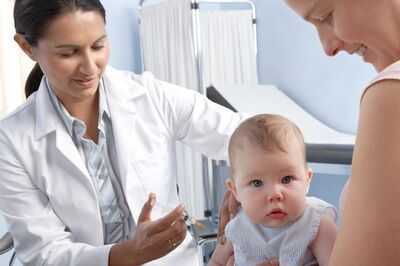
Chickenpox will now be added to the NHS childhood routine vaccination programme in what has been described as a “historic milestone”.
Health chiefs say the move will boost population health, cut hospital admissions and save the NHS millions. Children will miss fewer days in nursery or school and reduce the time parents need to take off work to care for them. But they also point out that chickenpox can cause serious complications and even be fatal in very rare cases.
Here we provide the answers to questions including why chickenpox has now been added to the vaccination programme, who can get the free NHS jab and what to do if you are a parent of a child who is just too old to qualify.
• NHS warning as England 'under threat' from cold snap
• NHS issue major 'super flu' update following H3N2 strain surge
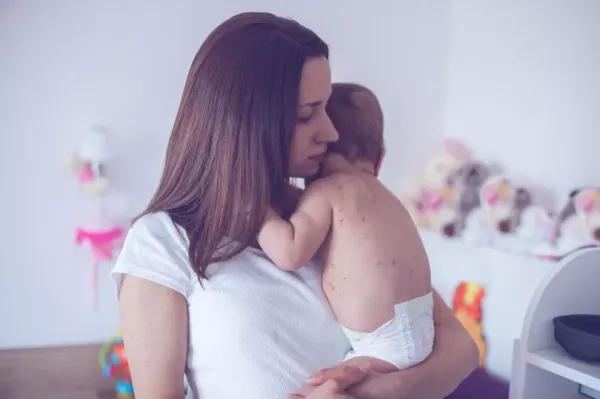
Dr Claire Fuller, national medical director for NHS England, said: "This is a hugely positive moment for children and their families, providing protection against chickenpox for the first time and adding to the arsenal of routine vaccinations we give to children to safeguard them against serious illnesses.”
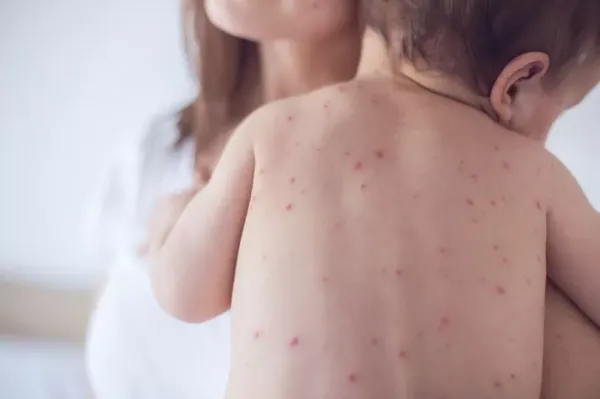
What is chickenpox?Chickenpox is caused by the varicella zoster virus - hence the V being added to the routine childhood MMR vaccine. It mostly affects children but can be caught at any age.
Chickenpox cases dropped during the pandemic due to lockdowns and social distancing meaning natural population immunity to the varicella virus is likely still historically low.
In rare cases chickenpox complications can include bacterial infections such as group A streptococcus, a swelling of the brain called encephalitis, inflammation of the lungs called pneumonitis, and strokes.
Very young infants under four weeks of age are more likely to experience serious illness, as are adults who have never previously had chickenpox.
 Why is the NHS now rolling out a vaccine?
 A chickenpox vaccine has not been offered to all children before now because of concerns about shingles.
Shingles can be serious in adults and is caused by a reactivation of the varicella virus which lies dormant in the nervous system. It can reactivate years later due to a weakened immune system from stress, illness, or age.
In 2009 the JCVI ruled out a UK-wide programme as evidence at the time suggested introducing it might cause increased cases of shingles in middle-aged adults.
It was felt people needed to encounter the natural form of the varicella zoster virus to better protect against shingles in later life. However a more recent US study disproved that theory.
 Which children are eligible and at what age?
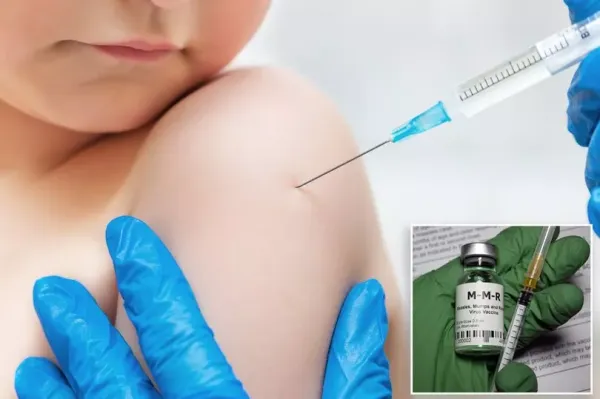
 Children born on or after 1 January 2025 will be offered two doses of the MMRV vaccine at 12 months and 18 months, while children born between 1 July 2024 and 31 December 2024 will be offered two doses at 18 months and 3 years, 4 months.
Children born between 1 September 2022 and 30 June 2024 will be offered one dose at 3 years 4 months, and the NHS is also planning a single-dose catch-up programme later in the year for older children born between 1 January 2020 and 31 August 2022.
Two doses of the MMR vaccine were previously offered to children at 12 months and at 3 years, 4 months of age but the second dose will be brought forward to 18 months for children born on or after 1 July 2024 to provide them with earlier protection.
 What happens next?
 The rollout across the four nations of the UK will see hundreds of thousands of children become eligible for the jab from Friday. Their parents should be contacted by their GP and invited to have the new combined MMRV vaccine.
Dr Claire Fuller, National Medical Director for NHS England, said: "From now the combined vaccine to protect against measles, mumps, rubella and chickenpox will be available at children's routine vaccination appointments to keep children healthier and prevent sickness from these highly contagious viruses.”
Dr Gayatri Amirthalingam, Deputy Director of Immunisation at the UK Health Security Agency, said: “I hope parents will make it one of their new year resolutions to ensure their child takes up the offer, when invited. Your child will be protected against four serious diseases.”
 What about children who are too old to be eligible?
 Parents concerned about chickenpox can still pay privately for their child to be vaccinated at a cost of around £150.
The NHS also offers the jab for children in close contact with someone at risk of getting seriously ill if they catch it, such as a parent with cancer.
However latest data indicates that half of children will have contracted chickenpox by the age of four and 90% by the age of ten.
Children who catch chickenpox are typically advised to stay off school until all spots have formed a scab, which is usually five days after the spots appear.
Contact to : xlf550402@gmail.com
Copyright © boyuanhulian 2020 - 2023. All Right Reserved.