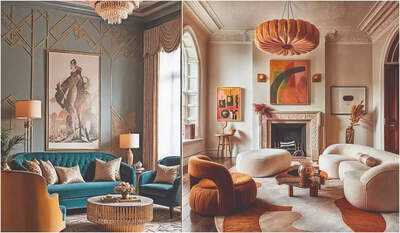
Let your walls speak
A painting that captures a quiet morning, a sculpture that invites conversation, or a print that evokes nostalgia — the art we choose for our homes does more than fill empty walls. It reveals who we are and how we live. The right artwork can transform a space from ordinary to emotionally alive.
“Whether it leans towards modern minimalism, timeless vintage charm, or an eclectic blend of influences, every design choice tells a story,” says interior designer Namrata Saigal, adding, “Colours, materials, furniture, and lighting together create an unspoken language that reflects identity.”
Experts agree that art acts as a visual language — adding depth, character, and individuality. It anchors emotion within a space, making a house not just beautiful, but unmistakably personal — a true reflection of home.
Choosing with emotion
For artist Anoop Srivastava, the emotional connection with art matters more than its monetary value. “Art should first and foremost be chosen for its emotional resonance,” he says, adding, “When a piece truly connects with you, it naturally becomes a wise investment, one with the potential for significant future value.”
He also believes that art should express the owner’s individuality rather than follow fleeting design trends. “Art should always be selected for its aesthetic appeal and personal connection, not merely to follow trends. In an age where AI-generated paintings are readily available, choosing original art becomes even more meaningful. Only a human creation can truly reach the depths of your heart and touch your soul.”
Why art should speak, not just match
“There’s a common misconception that art must match the décor, leading many to pick pieces that complement furniture or wall colours rather than resonate emotionally,” says Aryaman Sethi, a managing director of AnYahh, an art gallery. “Clients often ask for ‘modern art’ without truly understanding the term, choosing works like Anand Dabli’s subtle bird’s-eye cityscapes simply because the tones suit their interiors.”
Experts also advise that homes should feature diverse artworks rather than collections that look uniform. “If you’re investing in art, each piece should have its own character and create a visual dialogue within the space,” Aryaman explains, adding, “When it merely merges with the décor, it loses its individuality. The most striking and authentic displays often come from contrast, not conformity.”
Balancing the colour palette and the artwork
When choosing art, experts suggest considering the story a room is trying to tell and the mood it seeks to create. Saigal explains, “In most cases, colour coordination between the artwork and the room’s palette helps tie together the furniture, lighting, and overall design. A well-chosen piece can blend seamlessly, creating harmony within the space.”
She adds, “However, sometimes the most striking interiors are those that dare to break the rules. A bold painting or an unexpected sculpture can introduce contrast, giving a space its own pulse. The key lies in intention — allowing art to either complement or deliberately disrupt the setting to create visual intrigue.”
TIPS FOR FIRST-TIME ART BUYERS
Follow your instincts: Buy what pleases your eye and makes you feel something. If a piece speaks to you instantly, it belongs in your home.
Don’t chase big names: Emerging artists often create pieces rich in emotion and long-term value.
Start small: Try limited-edition prints or smaller works by known artists to begin your collection.
Buy for yourself: Ignore trends or external opinions. The art you live with should reflect you and lift your spirit every time you see it.
(
as suggested by Aryaman Sethi, art gallerist)
“Whether it leans towards modern minimalism, timeless vintage charm, or an eclectic blend of influences, every design choice tells a story,” says interior designer Namrata Saigal, adding, “Colours, materials, furniture, and lighting together create an unspoken language that reflects identity.”
Experts agree that art acts as a visual language — adding depth, character, and individuality. It anchors emotion within a space, making a house not just beautiful, but unmistakably personal — a true reflection of home.
Choosing with emotion
For artist Anoop Srivastava, the emotional connection with art matters more than its monetary value. “Art should first and foremost be chosen for its emotional resonance,” he says, adding, “When a piece truly connects with you, it naturally becomes a wise investment, one with the potential for significant future value.”
He also believes that art should express the owner’s individuality rather than follow fleeting design trends. “Art should always be selected for its aesthetic appeal and personal connection, not merely to follow trends. In an age where AI-generated paintings are readily available, choosing original art becomes even more meaningful. Only a human creation can truly reach the depths of your heart and touch your soul.”
Why art should speak, not just match
“There’s a common misconception that art must match the décor, leading many to pick pieces that complement furniture or wall colours rather than resonate emotionally,” says Aryaman Sethi, a managing director of AnYahh, an art gallery. “Clients often ask for ‘modern art’ without truly understanding the term, choosing works like Anand Dabli’s subtle bird’s-eye cityscapes simply because the tones suit their interiors.”
Experts also advise that homes should feature diverse artworks rather than collections that look uniform. “If you’re investing in art, each piece should have its own character and create a visual dialogue within the space,” Aryaman explains, adding, “When it merely merges with the décor, it loses its individuality. The most striking and authentic displays often come from contrast, not conformity.”
Balancing the colour palette and the artwork
When choosing art, experts suggest considering the story a room is trying to tell and the mood it seeks to create. Saigal explains, “In most cases, colour coordination between the artwork and the room’s palette helps tie together the furniture, lighting, and overall design. A well-chosen piece can blend seamlessly, creating harmony within the space.”
She adds, “However, sometimes the most striking interiors are those that dare to break the rules. A bold painting or an unexpected sculpture can introduce contrast, giving a space its own pulse. The key lies in intention — allowing art to either complement or deliberately disrupt the setting to create visual intrigue.”
TIPS FOR FIRST-TIME ART BUYERS
Follow your instincts: Buy what pleases your eye and makes you feel something. If a piece speaks to you instantly, it belongs in your home.
Don’t chase big names: Emerging artists often create pieces rich in emotion and long-term value.
Start small: Try limited-edition prints or smaller works by known artists to begin your collection.
Buy for yourself: Ignore trends or external opinions. The art you live with should reflect you and lift your spirit every time you see it.
(
as suggested by Aryaman Sethi, art gallerist)
Contact to : xlf550402@gmail.com
Copyright © boyuanhulian 2020 - 2023. All Right Reserved.