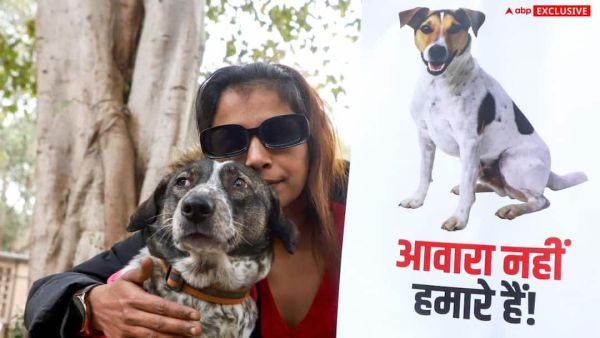
The Supreme Court on Wednesday heard arguments on petitions seeking directions to round up and jail stray dogs, with the matter set to continue on Thursday. During the hearing, animal welfare group PETA India said it had submitted two Roadmaps to the Prime Minister, states and union territories, the Animal Welfare Board of India and the Supreme Court of India. The organisation said its submissions focused on lawful, humane and scientific measures to address community dog and cow populations while balancing public health concerns.
PETA On 'Jailing’ Of Dogs
PETA India said the Roadmaps recommend approaches rooted in existing law, public health policy and animal welfare principles. According to the organisation, these include enforcing the Animal Birth Control Dog Rules, 2023, strengthening rabies vaccination programmes and addressing sources contributing to the growth of community dog and cattle populations.
The recommendations also include shutting down illegal pet shops, breeders and dairies, discouraging the breeding of foreign dog breeds for use in illegal dogfighting, and promoting adoption from shelters and the street. PETA said diverting resources towards jailing dogs could reduce focus on sterilisation and vaccination efforts, which it described as central to managing population control and disease prevention.
Court Examines Public Safety Concerns
The hearing comes amid renewed focus on stray dogs and public safety after recent observations by the Supreme Court questioning the risks posed by animals in public spaces. A three-judge bench comprising Justices Vikram Nath, Sandeep Mehta and N.V. Anjaria examined petitions relating to stray dogs and cattle roaming streets, highways and expressways.
Senior advocate Kapil Sibal, appearing for petitioners, argued that humane treatment and coexistence could reduce incidents involving street dogs, submitting that animals often react defensively when their space is invaded. The bench, however, questioned how ordinary citizens could be expected to judge the behaviour or temperament of stray dogs encountered in public areas.
From Return To Removal
In earlier proceedings, the Supreme Court had allowed sterilised and immunised dogs to be released back into the areas from which they were picked up, except in cases involving aggression or suspected rabies. In its latest observations, however, the court indicated that dogs once removed should not be released back into public areas and directed authorities to ensure that stray cattle and animals are cleared from highways and expressways.
Animal welfare groups also raised concerns about harassment of people who feed stray dogs and allegations of cruelty towards animals. With the matter set to continue, the court’s evolving stance has reignited debate over whether Indian cities should continue with sterilisation-and-return models or move towards stricter removal policies driven by public safety considerations.
Contact to : xlf550402@gmail.com
Copyright © boyuanhulian 2020 - 2023. All Right Reserved.