
Ministers from across the world, global CEOs and policymakers will convene to reinforce energy security, catalyse investment and advance decarbonisation efforts.
Jan 7 – As the world navigates rising energy demand, geopolitical uncertainty and accelerating climate commitments, the critical choices shaping the future of global energy will be at the forefront of India Energy Week (IEW) 2026returning to Goa from 27–30 January 2026.
The first major international energy gathering of the year, IEW 2026 will bring together ministers from around the world, industry leaders, policymakers, financial institutions, academia and technology providers at a decisive moment for international energy markets. The platform will focus on strengthening energy security, mobilising investment and advancing practical, scalable pathways for decarbonisation.
Building on the strong momentum of previous editions, IEW 2026 is expected to welcome participants from 120+ countries. The 2025 edition attracted over 68,000 participants, 570 exhibitors, 5,400 conference delegatesand hosted 100 conference sessions featuring 540+ global speakers. The 2026 edition will expand further, reinforcing IEW’s role among the world’s most influential global energy dialogue platforms.
Confirmed speakers and company representatives include senior ministers from key global energy-producing and consuming nations, alongside chief executives and industry leaders from leading international energy companies and institutions, including:
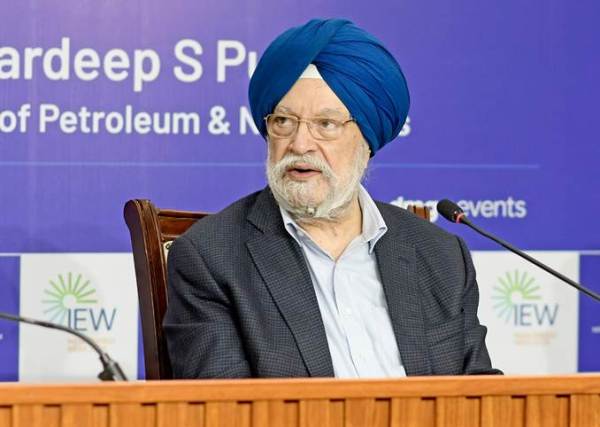
HE Hardeep Singh PuriMinister of Petroleum & Natural Gas, Government of India
H.E. Dr. Sultan Ahmed Al JaberMinister of Industry and Advanced Technology, UAE & Group CEO, ADNOC
Patrick PouyannéChairman & CEO, TotalEnergies
Arun Kumar SinghChairman & CEO, Oil and Natural Gas Corporation Limited
Arvinder Singh SahneyChairman, IndianOil Corporation Ltd.
Vikas KaushalChairman & MD, Hindustan Petroleum Corporation Ltd.
Sumant SinhaFounder, Chairman & CEO, ReNew
Dr. Jennifer HolmgrenChairman & CEO, LanzaTech
Kettle DigreCEO, Aker Solutions
Eric SolheimPresident, International Advisory Board, GH2 India (Green Hydrogen India)
Al Nuimi PathemCEO, ADNOC Gas
William LinEVP, Gas & Low Carbon Energy, bp
Hosted under the patronage of the Ministry of Petroleum & Natural Gas, Government of Indiaand jointly organised by the Federation of Indian Petroleum Industry (FIPI) and dmg eventsIEW 2026 provides a neutral, globally connected forum for cooperation on energy security, affordability and sustainability. Delegations from the Americas, Europe, the Middle East, Africa and Asia-Pacific will underline IEW’s growing role in global energy diplomacy.
The International Energy Agency’s World Energy Outlook 2025 projects that India alone will contribute more than 35% of global incremental energy demand by 2050. Against this backdrop, policymakers and companies face growing pressure to work together to strengthen resilient energy systems and accelerate the clean-energy transition.
Hon’ble Minister for Petroleum and Natural Gas Hardeep Singh Purisaid: “India Energy Week 2026 is a global convening point for the ideas, technologies and partnerships that will define the next phase of the energy transition. The focus now must be on moving from discussion to implementation – advancing practical solutions through collaboration across governments, industry and financial institutions.
“This year’s emphasis on innovation, green finance and scalable clean-energy technologies reflects the urgent need for coordinated global action. By bringing together decision-makers from every region IEW provides the opportunity to turn ambition into impact and strengthen the foundations of a secure, affordable and sustainable energy future for all.
“India has a crucial role to play in shaping the global energy debate. As the world’s third-largest energy consumer and fastest-growing major economy, India sits at the crossroads of global demand, supply and transition. We are expanding our clean-energy leadership while ensuring energy security, affordability and sustainability for our people.”
He added: “The energy transition will define the global economy of the next century – and India intends not only to keep pace with it, but to help guide it.”
India’s Reform-Driven Energy Framework in Focus
As global policymakers and investors seek credible transition pathways, IEW 2026 will spotlight India’s reform-led energy model, one that balances growth, climate responsibility and consumer protection.
India has undertaken landmark legislative and regulatory reforms under the Oilfields (Regulation and Development) Act (ORDA) and the new Petroleum and Natural Gas Rules, 2025, fundamentally strengthening the upstream ecosystem. The reforms introduce:
• Single petroleum leases covering exploration, production, decarbonisation and integrated energy projects.
• Time-bound approvals, with petroleum lease decisions mandated within 180 days.
• Long-term lease stability, with leases of up to 30 years, extendable to the economic life of the field.
• Infrastructure sharing mechanisms to optimise national energy assets.
• Investor risk-mitigation, including robust arbitration frameworks and compensation safeguards.
The new rules also mandate strict environmental safeguards, including a gas-flaring cap of 0.5% of monthly production, backed by enforceable penalties, reinforcing India’s commitment to lowering emissions while maintaining energy security.
A Strategic Platform for International Energy Dialogue
IEW 2026 will showcase technologies shaping the future of energy, including upstream exploration, LNG, biofuels, green hydrogen, renewables, carbon capture, digitalisation, AI-driven optimisation and next-generation energy systems.
Across the four days of expert curated content, IEW 2026 will feature ministerial roundtables, CEO dialogues on global capital flows, public-private sector dialogues, technology showcases from multinationals, national energy companies and high-growth startups, social events and media engagements; along with distinguished exhibitions. Dedicated sessions on hydrogen economies, green finance, sustainable fuels, circularity, digital transformation and workforce development will explore scalable routes to achieving global net-zero goals.
The expanded exhibition will host hundreds of companies across the full energy value chain, supported by record-breaking international participation and country pavilions showcasing national approaches to energy security and transition.
ENDS
BACKGROUND
Clean Energy and Ethanol: Measurable Impact at Scale
India’s ethanol blending programme has emerged as a global benchmark for clean energy transition, delivering outcomes at scale:
• $17.7 billion in cumulative foreign exchange savings since 2014.
• 81 million metric tonnes of CO₂ emissions reduced.
• 27 million metric tonnes of crude oil substituted. $25.8 billion paid to ethanol distillers by Oil Marketing Companies.
• $15.4 billion paid directly to farmers.
Biofuels, green hydrogen, sustainable fuels and emerging low-carbon technologies will feature prominently across IEW 2026 discussions as scalable solutions for global energy transitions.
Infrastructure and Market Expansion
Alongside clean energy, India continues to strengthen domestic exploration and infrastructure to enhance long-term energy security:
• Petrol retail outlets expanded from ~52,000 in 2014 to ~over 100,000 outlets in 2025.
• CNG stations increased over eight-fold, from ~968 to more than 8,477.
• PNG household connections rose more than six-fold, from 2.5 million to over 15.9 million.
• Natural gas pipeline network expanded by ~66%, reaching over 25,923 km.
• City Gas Distribution coverage now extends to 100% of the country. (excluding islands)
This integrated expansion reflects India’s strategy of pursuing an orderly transition balancing hydrocarbons, alternative fuels and future-ready energy systems.
Price Stability and Consumer Protection
Despite sharp global volatility in energy prices, India has demonstrated exceptional price stability for consumers:
• While petrol & diesel prices rose by 22–45% across major global economies since 2021 India recorded a price decrease, with petrol & diesel prices in Delhi lower in 2025 than in 2021.
• Benefits of central excise duty cuts of $0.14 per litre on petrol and $0.18 per litre on diesel were fully passed on to consumers.
• Oil Marketing Companies implemented an additional $0.02 per litre price reduction in March 2024.
• LPG prices for PMUY beneficiaries have been maintained at around $6.15 per cylinder, among the lowest globally, even compared to LPG-producing nations.
Contact to : xlf550402@gmail.com
Copyright © boyuanhulian 2020 - 2023. All Right Reserved.