
Listen to this article in summarized format
Loading...
××
Subscribe to

Unlock AI Briefing and Premium Content
Subscribe NowWhat's Included
- Exclusive Stories
- Daily ePaper Access
- Smart Market Tools
- Curated Investment Ideas
- Ad-lite Experience
Subscription


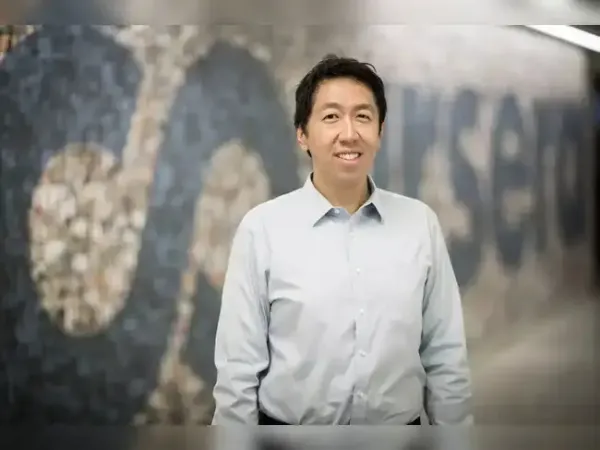
Andrew Ng, cofounder of Coursera, cautioned that exaggerated claims around artificial general intelligence (AGI) are influencing students to avoid certain career paths and prompting CEOs to make investment decisions based on unrealistic expectations.
In a post on X, the leader of the online education platform shared the company's aim to achieve AGI this year.
Ng said the term AGI is leading people to believe AI systems are far more capable and closer to human intelligence than they actually are.
“AGI has turned into a term of hype rather than a term with a precise meaning. A reasonable definition of AGI is AI that can do any intellectual task that a human can,” he said.
One of the most influential voices in AI globally, Ng, who earlier headed Google Brain and was chief scientist at Chinese tech company Baidu, is also the founder of AI learning platform DeepLearning.ai, general partner at AI Fund, and an adjunct professor of computer science at Stanford University.
He further countered the ongoing perspectives on AGI by proposing a new benchmark, which he called the ‘Turing AGI’ test.
Under the proposed test, an AI system would be given access to a standard computer with internet connectivity and common software. A human judge would then design an undisclosed, multi-day work scenario, such as training for and performing a job, and evaluate whether the system can learn, adapt, and complete the work at a human level.
Ng added that the new test is not a revival of the classic Turing Test, which he said has proven inadequate as a measure of genuine intelligence. The original test focussed on whether a machine could fool a human judge in a text-based conversation, rewarding imitation rather than real capability, he said.
Ng said most people believe AGI refers to machines capable of doing the same intellectual work as humans, and that any serious test of AGI should reflect that definition. If current AI systems fail such a test, he said, that would be a positive outcome.
"By contrast, in the Turing Test, judges are free to ask any question to probe a model’s capabilities. Similarly, in the Turing-AGI Test, the judge can design any experience that is not revealed in advance to the AI being tested. This is a better way to measure the generality of AI than a predetermined test set.”
Ng added that the unrealistic applications for AI would increase the risk of an AI bubble, and future investments will represent genuine breakthroughs and innovation over marketing rhetoric.
“One of the few things that could get in the way of AI’s tremendous momentum is unrealistic hype that creates an investment bubble, risking disappointment and a collapse of interest. To avoid this, we need to recalibrate society’s expectations on AI. A test will help.”
In an interview with ET in 2024, Ng talked about AI’s impact on the nature of work and the transformation it would bring.
“The whole world is at an inflexion point. With the rise of generative AI (GenAI), the nature of work is transforming. This creates a lot of pressure for organisations to upskill people. Many jobs will have 20-30% of the tasks that AI can play a material role in. I don't think AI will replace people, but people who use AI will replace people who don't,” he said.
Coursera, which has a valuation of about $1.3 billion as of July 2025, was founded in 2012. Early investors included Kleiner Perkins, New Enterprise Associates (NEA), GSV Ventures, and the Seek Group.
In a post on X, the leader of the online education platform shared the company's aim to achieve AGI this year.
Ng said the term AGI is leading people to believe AI systems are far more capable and closer to human intelligence than they actually are.
“AGI has turned into a term of hype rather than a term with a precise meaning. A reasonable definition of AGI is AI that can do any intellectual task that a human can,” he said.
One of the most influential voices in AI globally, Ng, who earlier headed Google Brain and was chief scientist at Chinese tech company Baidu, is also the founder of AI learning platform DeepLearning.ai, general partner at AI Fund, and an adjunct professor of computer science at Stanford University.
He further countered the ongoing perspectives on AGI by proposing a new benchmark, which he called the ‘Turing AGI’ test.
Under the proposed test, an AI system would be given access to a standard computer with internet connectivity and common software. A human judge would then design an undisclosed, multi-day work scenario, such as training for and performing a job, and evaluate whether the system can learn, adapt, and complete the work at a human level.
Ng added that the new test is not a revival of the classic Turing Test, which he said has proven inadequate as a measure of genuine intelligence. The original test focussed on whether a machine could fool a human judge in a text-based conversation, rewarding imitation rather than real capability, he said.
Ng said most people believe AGI refers to machines capable of doing the same intellectual work as humans, and that any serious test of AGI should reflect that definition. If current AI systems fail such a test, he said, that would be a positive outcome.
"By contrast, in the Turing Test, judges are free to ask any question to probe a model’s capabilities. Similarly, in the Turing-AGI Test, the judge can design any experience that is not revealed in advance to the AI being tested. This is a better way to measure the generality of AI than a predetermined test set.”
Ng added that the unrealistic applications for AI would increase the risk of an AI bubble, and future investments will represent genuine breakthroughs and innovation over marketing rhetoric.
“One of the few things that could get in the way of AI’s tremendous momentum is unrealistic hype that creates an investment bubble, risking disappointment and a collapse of interest. To avoid this, we need to recalibrate society’s expectations on AI. A test will help.”
In an interview with ET in 2024, Ng talked about AI’s impact on the nature of work and the transformation it would bring.
“The whole world is at an inflexion point. With the rise of generative AI (GenAI), the nature of work is transforming. This creates a lot of pressure for organisations to upskill people. Many jobs will have 20-30% of the tasks that AI can play a material role in. I don't think AI will replace people, but people who use AI will replace people who don't,” he said.
Coursera, which has a valuation of about $1.3 billion as of July 2025, was founded in 2012. Early investors included Kleiner Perkins, New Enterprise Associates (NEA), GSV Ventures, and the Seek Group.