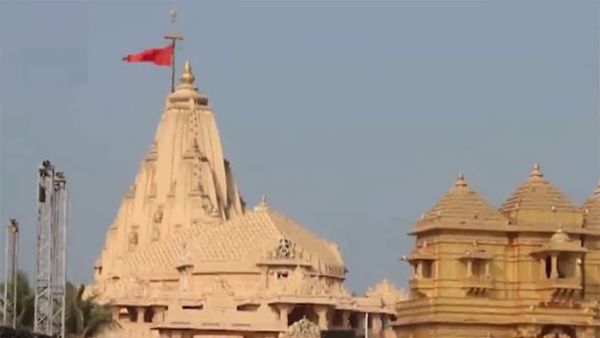
PM Modi's reference to K. M. Munshi's 1951 book 'Somanatha-The Shrine Eternal' has sparked renewed public interest. The book delves into the Somnath Temple's history, destruction, and eventual reconstruction, symbolizing India's cultural resilience.
Prime Minister Narendra Modi, reflecting on the thousand-year history since the invader Mahmud of Ghazni's attack on the Somnath Temple, mentioned a special book in his article, prompting curious readers to search for it on the internet. This book is "Somanatha-The Shrine Eternal", written by K. M. Munshi in 1951. It provides a historical and religious overview of the Somnath Temple. Following the Prime Minister's mention of it, the book has become a focal point of discussion and reading, making it particularly intriguing to explore.

A Beacon of Gujarat's Pride: K. M. Munshi
K. M. Munshi is a beacon of Gujarat's pride. Beyond his role as a political leader, he was an accomplished writer. His works primarily focused on history, culture, and related subjects. Gujaratis are generally not very accustomed to reading books in English, yet even in English, much has been written about Gujarat and its history, and K. M. Munshi stands out as one of the foremost contributors. Reading his works, such as Patan ni Prabhuta, Jai Somnath, Gujarat No Nath, Bhagna Paduka, and Krishnavatara Parts 1 to 7, offers not only insights into Gujarat's history but also fascinating details about religious figures across different periods and regions, as per the Gujarat CMO release.
'Somanatha-The Shrine Eternal': An Overview
In "Somanatha-The Shrine Eternal", K. M. Munshi presents a historical and archaeological account of the Shri Somnath Temple, describing it as a symbol of India's identity. The book explains why this temple holds immense significance as a part of India's cultural heritage. With the Somnath Swabhiman Parv currently being celebrated at Somnath, understanding this book is especially relevant.
The book was published under Bharatiya Vidya Bhavan's 'Books University' series, with the primary objective of blending the fundamental values of Indian culture with modern knowledge Munshiji wrote the first edition of this book in May 1951 on the occasion of the temple's reconstruction and the consecration of the Jyotirlinga. The author himself acknowledges that, without claiming scholarly expertise, he completed the book in a very short time as a deeply devoted individual and a seeker of history, to present the history of Somnath to the people.
The Book's Four-Part Structure
The purpose of this book is to impart higher learning and instil values. Through it, an effort is made to uphold human dignity and establish a moral order, enabling individuals to truly embody the divine. The book is primarily divided into four parts. The first part covers the mythological narratives and history of Somnath; the second part, Romance in Stone, explores architecture carved in stone; the third part presents evidence uncovered through archaeological excavations; and the fourth part provides details from the writings of Muslim historians and various inscriptions.
The author describes Somnath as the Lord of the Soma and discusses the historical significance of the Prabhas region. Like a phoenix rising from the ashes, the temple, rebuilt repeatedly after destruction, has remained invincible. The book also mentions the sacred site associated with Lord Krishna's cremation. The book provides a detailed account of the invasions on Somnath, from the destruction by Mahmud of Ghazni in 1025 to the turbulent periods under Alauddin Khilji and Aurangzeb. Munshi portrays this devastation not merely as the ruin of a structure, but as a blow A significant portion of the book focuses on Somnath's modern revival.
Rebuilding a Nation's Pride
On November 13, 1947, Sardar Vallabhbhai Patel took a solemn vow at the sea-facing ruins of the temple, which K. M. Munshi described as the restoration of India's pride.
Archaeological Findings and a New Temple
The book also includes reports of scientific excavations conducted by B. K. Thapar. This section connects the layers of ancient temples, inscriptions, and sculptures uncovered from the earth, offering valuable insights into the temple's ancient architecture, making it highly useful for students of history.
The new editions of the book describe the progress of the construction of the new temple, now known as Kailash Mahameru Prasad, which stands 155 feet tall. The book includes numerous sketches and photographs that vividly showcase Somnath's artistic grandeur.
A Symbol of Eternal Faith
"Somanatha-The Shrine Eternal" is not merely a history book; it symbolises the unbroken faith of the Indian people. According to Munshiji, Somnath is the Anant Jyoti, connecting India to its cultural roots across generations and inspiring a life lived with pride.
Just as the Ganga River rises in the mountains, flows through countless bends, and reaches the sea while preserving its sanctity, the history of Somnath, despite enduring struggles, has upheld its dignity and remained eternal, a truth vividly portrayed in this book.
(Except for the headline, this story has not been edited by Asianet Newsable English staff and is published from a syndicated feed.)Contact to : xlf550402@gmail.com
Copyright © boyuanhulian 2020 - 2023. All Right Reserved.