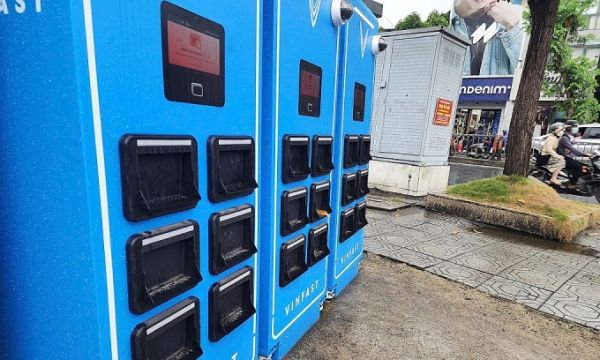
The initiative, aimed at accelerating the city’s transition toward green transportation, seeks to address the shortage of charging infrastructure that currently hampers the widespread adoption of electric vehicles in Vietnam’s largest metropolis.
Under the directive of city leaders, the Department of Construction has been tasked with establishing a robust post-investment management framework.
This includes defining the specific responsibilities of the participating enterprises during the operational phase and conducting rigorous assessments of electrical safety, fire prevention, and environmental impact.
To ensure a seamless rollout, the Construction Department will coordinate with the local police, the Department of Industry and Trade, and the city’s Power Corporation to oversee the installation and security of the system.
The proposal was initially submitted by two companies, Great Wealth and V-Green, which intend to place the cabinets near public lighting poles or on eligible sidewalk sections. Each unit is designed to hold six to 12 battery slots with a capacity ranging from 6 kW to 12 kW. Notably, these stations are intended to serve a variety of popular electric motorbike brands, including Honda, Yadea, Yamaha, and VinFast.
The investors have committed to fully financing, operating, and maintaining the system with their own capital, with an ambitious goal to complete the installation across the city by the first quarter of 2026.
The move comes at a time when HCMC’s infrastructure is struggling to keep pace with the growing number of electric vehicles on the road. While there are more than 100,000 electric motorbikes in the city, there are currently only about 300 fast-charging stations.
This deficit has forced most users to charge their vehicles at home or within apartment complexes, raising significant concerns regarding fire safety and electrical overloads.
The issue has become a point of contention in many residential buildings, where some landlords have banned the charging of electric vehicles entirely.
Experts and residents alike have expressed support for the battery-swapping model, noting its potential to eliminate long charging wait times and mitigate safety risks in high-density living areas. By providing a decentralized network of battery exchanges, the city hopes to provide a practical alternative for commuters while reducing the friction caused by the lack of dedicated charging points in older apartment buildings.
Contact to : xlf550402@gmail.com
Copyright © boyuanhulian 2020 - 2023. All Right Reserved.