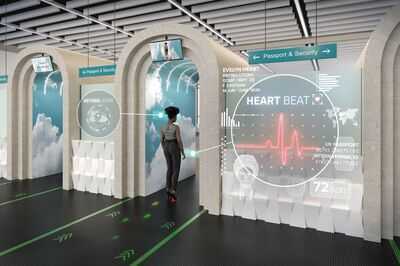
British low-cost airline easyJet recently released an exciting report about how travel in a few decades' time could differ significantly from what holidaymakers experience today. Predictions have been made in easyJet 2070: The Future Travel Report about what travel might look like in 50 years' time, from choosing and booking your holiday, to how the airport and flight experience may be revolutionised.
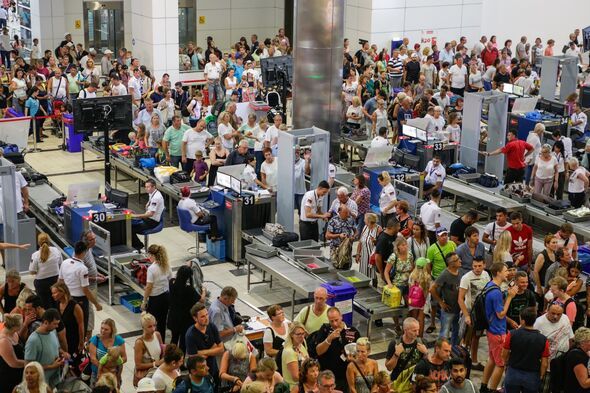
Commissioned by the airline and authored by a panel of leading futurists and academics, the report also looked into the potential types of accommodations available and activities that could be enjoyed while travelling in the 2070s. Among the report's highlights are the potential for heartbeat and biometric passports to replace traditional passports, which could slash queueing times and make travel through the airport a breeze compared to today's logistical nightmares.
Much like fingerprints and the retina, every person's cardiac signature is unique. Passengers' heartbeat signatures and biometric details will be logged on a global system in the same way fingerprint scanning technology is used today, which has already been employed in the EU's new Entry/Exit System (EES).
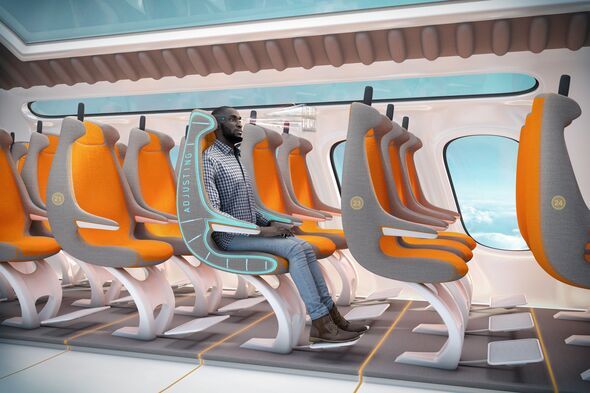
Ergonomic and biomimetic sensory plane seats could also become the norm, with smart materials adapting to passengers' body shape, height, weight and temperature, providing the ultimate tailored comfort flying experience, outside of business and first-class cabins. Bulky back seats that reduce legroom will disappear, as in-flight entertainment will be beamed directly in front of passengers' eyes, via optoelectronic devices, replacing the need for onboard screens or downloading movies before you fly.
Electric Vertical Take-off and Landing (e-VTOL) aircraft will replace car park shuttles and taxis, whisking passengers from their homes directly to the airport terminal.
To eliminate the need for heavy suitcases, travellers will be able to 3D-print recyclable clothing in their hotel rooms based on their exact measurements. These clothes can then be recycled for the next guest. Hotel buffets will allow guests to 3D-print exactly what they want to eat, such as specific omelettes or pastries, significantly reducing food waste.
Hotels will become subterranean to increase their energy efficiency. Rooms will be "smart," pre-configuring themselves to a guest's preferred bed firmness, ambient temperature, and music before they arrive. Speaking of hotels, before booking, wannabe holidaymakers will use VR and the metaverse to virtually explore destinations, hotels and even aircraft cabins to ensure they like the experience.
A holographic personal holiday concierge will accompany holidaymakers to provide up-to-date destination information and assistance throughout their stay. Buildings will also harvest energy from guests' footsteps as they walk around to generate power for the facility.
Finally, to remove a major foreign holiday anxiety that many face, in-ear devices will provide real-time translation, allowing travellers to speak the local language fluently as they interact with residents.
The report, which highlights a shift toward highly personalised, smoother and sustainable travel experiences, was compiled by experts, including Professor Birgitte Andersen, CEO of Big Innovation Centre, Dr Melissa Sterry of Design Scientist and futurists Shivvy Jervis and Dr Patrick Dixon.
Contact to : xlf550402@gmail.com
Copyright © boyuanhulian 2020 - 2023. All Right Reserved.