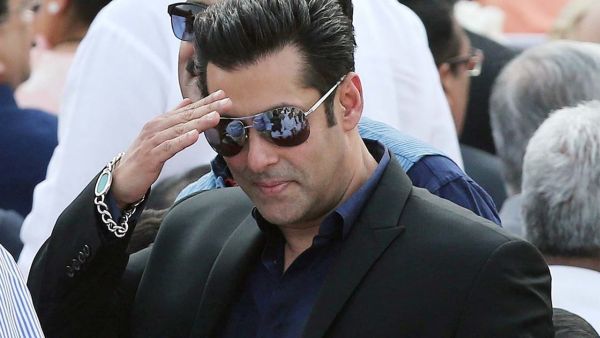
At 60, Salman Khan has redefined ageing in Indian cinema. From Sultan to Sikander, this feature explores how his presence, masculinity and screen command have made age irrelevant for male stardom.
Salman Khan turning sixty does not register the way ageing usually does in Indian cinema. There is no collective shock rooted in visible decline, no public mourning for a fading star, no narrative of reinvention forced by time. Instead, there is a strange suspension of disbelief. Audiences know the number, but they do not quite believe it. And that gap between fact and perception is where Salman Khan has quietly rewritten the rules of ageing for male stardom in India.

For decades, Indian cinema has associated age with transition. Actors either soften into character roles or reinvent themselves as elder statesmen of the screen. Salman Khan did neither. He stayed exactly where he was. And in doing so, he changed what sixty is allowed to look like.
From his early years as the boyish romantic lead in Maine Pyar Kiya and Hum Aapke Hain Koun, Salman’s appeal was rooted in innocence and physicality. The industry expected that image to fade with time. Instead, it evolved into something far more durable. Films like Wanted and Dabangg marked a turning point, not because they made him younger, but because they gave him a masculinity that did not depend on age. Chulbul Pandey was not youthful. He was authoritative, physical, unapologetic and rooted in swagger rather than softness.
That persona carried forward into Ek Tha Tiger, Tiger Zinda Hai and Sultan. In Sultan, Salman did something most male superstars avoid as they grow older. He allowed his body to look battered, tired and heavy, without surrendering dominance. The transformation was not cosmetic. It was narrative driven. He played a wrestler past his prime, struggling with loss, responsibility and relevance. Yet even in vulnerability, the screen presence never diminished. The audience did not see an ageing actor trying to keep up. They saw a man carrying his years with weight.
What Salman Khan understood early, and perhaps instinctively, is that Indian audiences do not measure male stars by youth. They measure them by command. As long as that command remains intact, age becomes irrelevant. Films like Bajrangi Bhaijaan reinforced this further. There was no overt aggression, no muscle flexing, no romantic fantasy built on physical perfection. Instead, there was emotional authority. He played a man whose strength came from restraint and sincerity, proving that masculinity could expand without losing power.
Even when his recent films have received mixed responses, the central fact remains unchanged. Salman Khan’s presence still shapes the frame. In Antim, where he played a Sikh police officer, he did not attempt to dominate the narrative with heroics. He let his stillness do the work. The character carried age, experience and moral certainty, not spectacle. That is not a man fighting time. That is a star who has made peace with it.
What makes Salman Khan’s ageing particularly significant is the contrast it highlights. Actresses of his generation are routinely asked about relevance, appearance and longevity. Men rarely are. Salman Khan stands at the centre of that imbalance. He is allowed to age without explanation. He is not expected to justify his presence. The industry bends around him rather than demanding that he bend with it.
This is not accidental. Salman Khan’s body has always been part of his stardom, but it was never just about looking fit. It was about discipline, routine and repetition. His association with physical training, long before fitness culture became mainstream, created a visual continuity that audiences internalised. When they see him today, they are not looking for youth. They are looking for familiarity. The same walk. The same posture. The same unshakeable confidence.
At sixty, Salman Khan does not represent denial of age. He represents a different relationship with it. He has not tried to appear younger. He has simply refused to recede. That distinction matters. His stardom exists outside the usual lifecycle of rise, peak and decline. It operates more like a constant, shifting slightly in form but never in intensity.
Indian cinema has always relied on myth making. Salman Khan became one of its most enduring myths by staying recognisable across decades. When audiences say he does not look sixty, what they are really saying is that he does not behave like the idea of sixty they were taught to expect.
In redefining what sixty looks like, Salman Khan has done something few stars manage. He has made age irrelevant without making it invisible. And in a film industry obsessed with youth, that may be his most radical act yet.
Contact to : xlf550402@gmail.com
Copyright © boyuanhulian 2020 - 2023. All Right Reserved.