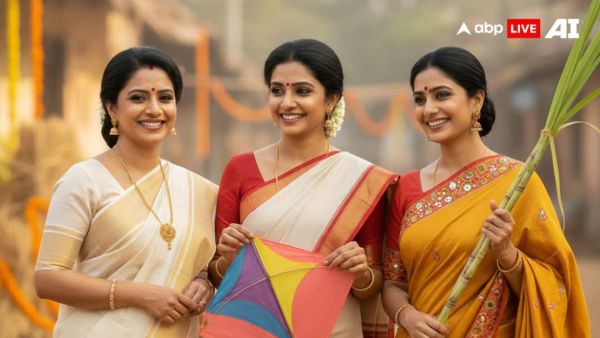
(Mr. Darshan Dudhoria)
Across India, harvest season marks a shift that is both cosmic and cultural. Makar Sankranti is among the few festivals that travel seamlessly across the country, unified in spirit yet deeply regional in expression. Known by different names, Pongal in Tamil Nadu, Magh Bihu in Assam, Sankranti in West Bengal, and celebrated alongside Lohri in Punjab, the festival is rooted in gratitude, renewal, and abundance.
While rituals, food, and customs vary across states, what people choose to wear during this time carries deep significance. The saree, worn with intention during harvest celebrations, becomes a reflection of the region it belongs to. Each drape becomes a bridge between contemporary wardrobes and ancestral customs, between modern life and age-old ritual. Its fabric, colour and weave mirror agrarian rhythms, spiritual beliefs and community life, making it as much a cultural marker as a ceremonial garment.
Assam: Magh Bihu And The Beauty Of Simplicity
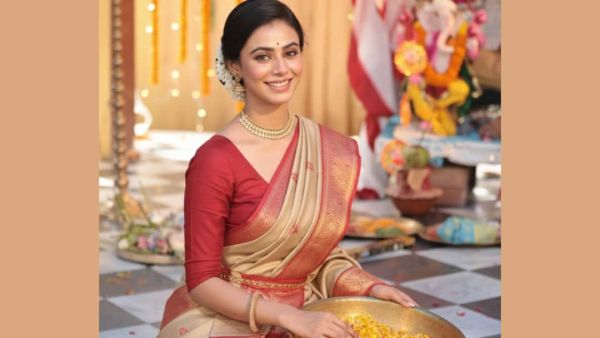
Magh Bihu marks the close of the harvesting season in Assam and is celebrated with community feasts, bonfires and joy. The sarees worn here are lighter, reflecting the region’s agrarian simplicity and warmth. Soft silks and handwoven drapes dominate, mirroring the understated elegance of Assamese culture. These sarees are meant for movement, gathering and togetherness, celebrating shared abundance.
West Bengal: Poush Sankranti And The Handloom Tradition
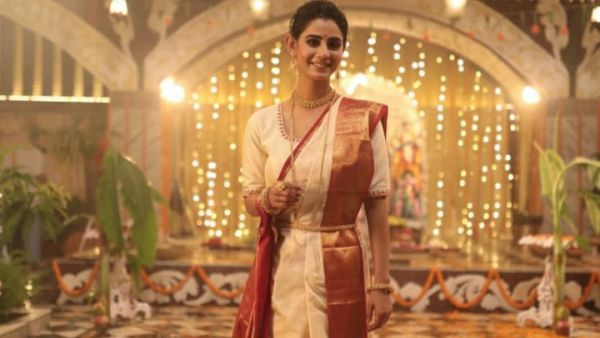
In West Bengal, Poush Sankranti unfolds through ritual observances, river-side prayers and village fairs. Handwoven sarees take precedence, carrying the intimacy of craft and the authority of tradition. Worn during early morning pujas or while moving through seasonal melas, these drapes reflect Bengal’s enduring relationship with its weaving heritage, where every motif and texture is deeply interwoven with memory, ritual and place.
Gujarat: Uttarayan And The Spirit Of Celebration
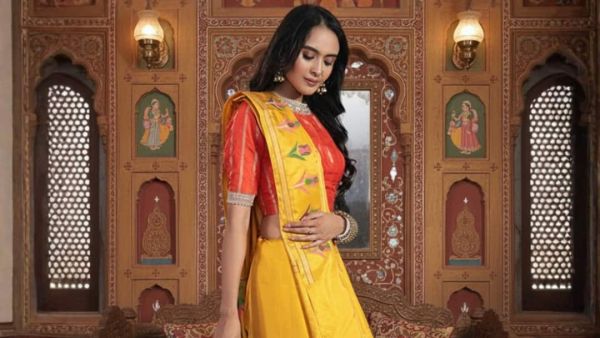
In Gujarat, Makar Sankranti is celebrated as Uttarayan, marked by large-scale kite flying that fills the skies with colour and movement. The festival is social and vibrant, spilling onto terraces and public spaces. Sarees worn during Uttarayan are festive yet practical, chosen for ease of movement while retaining celebratory flair. Bright hues, lightweight fabrics and expressive pallus reflect the energy of the day, blending tradition with the exhilaration of communal celebration.
Tamil Nadu: Pongal And tThe Language Of Silk
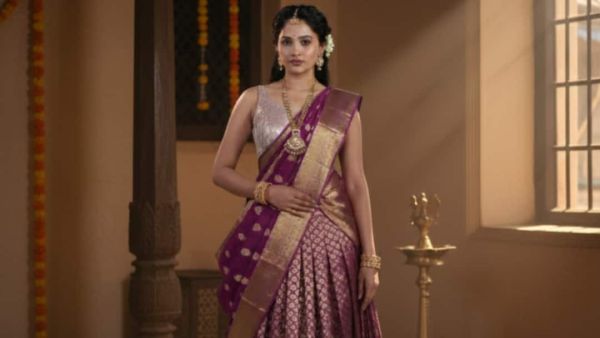
In Tamil Nadu, Pongal is both a harvest thanksgiving and a deeply spiritual observance. Homes are cleansed, kolams adorn thresholds, and temples become the centre of community life. Women traditionally wear temple-ready silk sarees, often in auspicious shades, symbolising renewal and abundance. With their luminous texture and ceremonial presence, these silks align seamlessly with the sacred rhythm of the festival
Kerala: Makara Vilakku And The Language Of Devotion
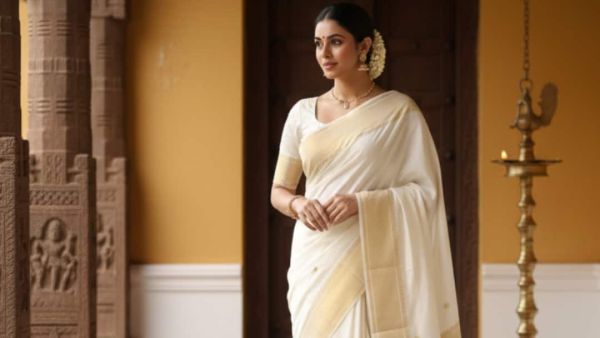
In Kerala, the Sankranti period aligns with Makara Vilakku, associated with the Sabarimala pilgrimage and spiritual observance. Traditional attire during this time is defined by white and off-white drapes, often edged with subtle gold borders, reflecting ideals of purity, restraint and devotion. These understated silks and cottons mirror the discipline of the pilgrimage and the contemplative spirit of the season, reinforcing the sacred undertone that marks Makara Vilakku celebrations.
As Makar Sankranti is celebrated across the country, the saree remains a constant. Draped differently in every state and worn for different ceremonies, yet bound by the same spirit of gratitude and renewal, it tells a shared story of India’s harvest. In these threads of silk and handloom lies the essence of the festival itself, diverse, grounded and enduring.
Mr. Darshan Dudhoria is the CEO of Indian Silk House Agencies
Contact to : xlf550402@gmail.com
Copyright © boyuanhulian 2020 - 2023. All Right Reserved.