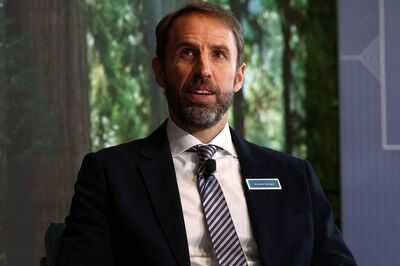
Gareth Southgate has said he has no concerns about directors of football undermining a manager's power following Manchester United's decision to part ways with Ruben Amorim. The former England manager believes the fundamental reason behind Amorim's downfall was a battle for control with senior club officials.
United's director of football, Jason Wilcox, a former England colleague of Southgate's, ultimately prevailed in the dispute. Whilst discussing the distinction between a manager and a head coach, Southgate - who was previously touted as a potential United appointment - disclosed that he demanded his job title be changed from head coach to manager when offered the England position.
He now describes himself as a 'leader, manager, coach - in that order'. An extensive LinkedIn article entitled 'Manager v Head Coach', which Southgate characterises as his "thoughts on the importance of the title of manager as opposed to head coach", adds his voice to the conversation.
• Carlo Ancelotti's brutal pop at the Glazers as Man Utd linked with legendary boss
• Man Utd co-owner Sir Jim Ratcliffe cuts asking price of owned club to attempt sale
It reads: "In the last fortnight, three of Europe's biggest football clubs, Real Madrid, Manchester United and Chelsea, have parted company with their head coaches. Of the three, Enzo Maresca served the longest period at 18 months.
"Although each coach left under slightly different circumstances and for more than one reason, power struggles either with club executives (Amorim), club employees (Maresca) or players (Alonso) were ultimately the root cause of the end of each tenure.
"The erosion of a manager's authority has been a gradual process over many years. It has accelerated with the widespread introduction of football, technical, or sporting directors, who now oversee long-term football strategy, report directly to CEOs or owners (or both), and sit structurally above the head coach. Personally, I have no issue with this evolution.
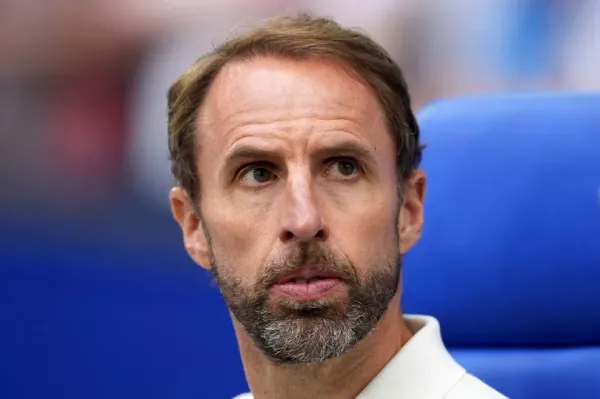
"Strategy, culture, planning, and continuity are critical to success in any organisation - and a football club is no different. A head coach neither has the time nor, in many cases, the specialist expertise to manage complex player contracts, oversee global scouting networks, or run sophisticated data operations. Equally, it makes little sense to dismantle medical or sports science departments every time there is a change of head coach.
"However, in a classic example of Parkinson's Law (where time saved by reducing responsibilities is quickly filled by something else), the modern head coach now finds themselves managing larger squads, bigger backroom teams, far greater analytical demands, and ever-increasing media and commercial obligations."
Southgate's remarks about backroom staff emerge just days after the revelation that his former England number two, Steve Holland, would be joining Michael Carrick at United temporarily until the campaign concludes. The ex-Chelsea assistant forms part of a coaching setup that also features Craig Mawson, Jonathan Woodgate, Jonny Evans and Travis Binnion.
Southgate's post goes on to say: "Contrary to the belief of some fans that the role has become simpler ("they just need to coach"), the opposite is true. Add to this the complexity of managing modern-day players (many of whom are effectively individual brands), alongside the financial stakes for clubs, and the relentless scrutiny of both traditional and social media, and you have a significant melting pot of problems and pressure. This is not helped by the subtle, sometimes unintentional, shift in power and status implied by moving from the title of manager to head coach.
"People may argue that 'it's just a title', or merely semantics. From personal experience, it's not. So much so that when I was offered the role of head coach for the England National team, I insisted on changing the title to manager. Even though I consider myself calm, collaborative and confident, I understood the importance of authority, influence and control when leading a football operation.
"You may have noticed that my current LinkedIn title reads 'leader, manager, coach' - in that order. That is entirely intentional. It reflects the hierarchy of skills I believed were required to run the England team effectively.
"The leader operates in the public eye, engaging fans, setting the vision, shaping the culture, and championing and protecting the players and staff.
"The manager is 'managing' stakeholders, departments and people, maximising collaboration and making plans stay on track. Oh, and don't forget the role of persuading 25 financially independent elite performers to put collective purpose ahead of their ego.
"Finally, the coach works on the pitch, setting the style of play, preparing tactics to exploit opponents, and developing the technical abilities of individual players.
"My belief is that we should embrace a modernised version of the traditional manager, where we recognise the people they lead, manage and coach. As I once said to my bosses at England: players are not magnets on a tactics board that can simply be moved around. They are human beings. And managing that reality is at the heart of modern football leadership."
Contact to : xlf550402@gmail.com
Copyright © boyuanhulian 2020 - 2023. All Right Reserved.