
When you're in the market for a car, the price tag is only the start of the story. For countless motorists grappling with tight household finances, what truly counts is the ongoing expense of keeping that vehicle on the road year in, year out.
While insurance costs, petrol prices and the general cost of living have all climbed sharply, there's one outgoing that frequently flies under the radar until it hits hard: long-term upkeep.
"A lot of buyers focus on the upfront cost or monthly payments, but the real financial impact comes from how easy and affordable it is to keep your car on the road for the next decade," said Kazimieras Urbonas, supplier excellence manager at Ovoko, an online marketplace for used car parts. "Some brands are simply cheaper to maintain and less likely to end up written off after an accident, and that makes a huge difference to your wallet over time."
- England gets four bins from March 31 - 37 banned items you can't put in them
- Ex-bin man shares big difference between collecting rich and poor people's rubbish
Ovoko examined figures on typical maintenance expenses and write-off probability across 20 leading car manufacturers available in the UK to pinpoint which models deliver the strongest long-term durability. The findings throw up some eye-opening revelations, with well-known marques faring considerably worse than more affordable options.
Easiest car makes to keep on the roadRank | Car brand | Average maintenance costs | Likelihood of being written off | Long-term maintenance score |
1 | MINI | £425 | 63.16% | 100 |
2 | Hyundai | £425 | 64.29% | 95 |
3 | Volkswagen | £425 | 64.85% | 92.6 |
4 | Toyota | £425 | 65.54% | 89.4 |
5 | Skoda | £425 | 66.13% | 86.9 |
6 | Ford | £400 | 71.88% | 78 |
7 | Mercedes-Benz | £625 | 39.49% | 74.1 |
8 | Nissan | £425 | 69.80% | 70.9 |
9 | SEAT | £425 | 71.76% | 62.4 |
10 | Audi | £550 | 55.41% | 53.2 |
11 | Fiat | £400 | 78.95% | 47.2 |
12 | Peugeot | £425 | 77.69% | 36.5 |
13 | Honda | £425 | 78.10% | 34.8 |
14 | Vauxhall | £425 | 79.30% | 29.4 |
15 | Citroen | £425 | 79.56% | 28.4 |
16 | Renault | £425 | 80.18% | 25.9 |
17 | Volvo | £550 | 61.83% | 25.2 |
18 | Land Rover | £675 | 43.91% | 22.7 |
19 | Jaguar | £550 | 62.65% | 21.6 |
20 | BMW | £625 | 56.51% | 0 |
MINI has clinched the top spot with a flawless score of 100, pairing reasonable annual maintenance costs of £425 with the lowest write-off rate among all brands analysed at 63.16%. The British-built favourite strikes an ideal balance: it's affordable to service and built solidly enough to survive accidents that would see other cars scrapped.
HyundaiHyundai takes second place with a score of 95, demonstrating that budget-friendly doesn't equate to high maintenance. The Korean manufacturer has earned a reputation for reliability that the figures support, with the same £425 annual maintenance cost as MINI and only a marginally higher write-off likelihood at 64.29%.
VolkswagenVolkswagen completes the top three with a score of 92.6. With maintenance costs of £425 and a write-off likelihood of 64.85%, the German brand has clearly invested in parts availability and standardised components across their model range, keeping repair bills manageable.
Toyota secures the fourth spot with a score of 89.4, upholding its long-standing reputation for reliability. With maintenance costs pegged at £425 and a write-off rate of 65.54%, the Japanese brand delivers exactly what buyers anticipate.
SkodaRounding out the top five is Skoda, scoring 86.9. The brand benefits from shared engineering with Volkswagen, often offering a more affordable purchase price. Maintenance costs are on par with the leaders at £425, and there's a 66.13% chance of a write-off.
Notable standoutsOne unexpected result in the rankings is Honda, which finds itself in 13th place with a mere score of 34.8, despite the Japanese brand's renowned reliability. With a high write-off likelihood of 78.10%, one of the study's highest, Honda's position contradicts its famed reputation for producing durable vehicles.
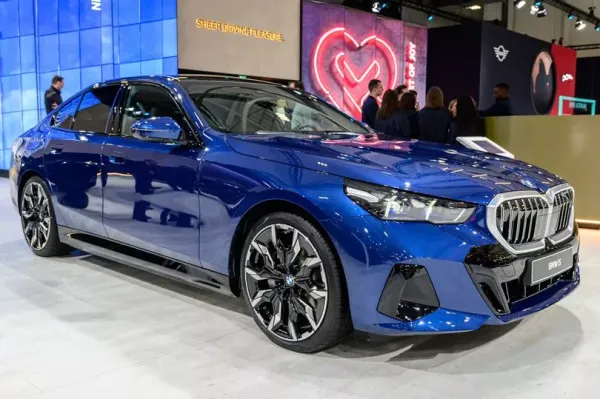
At the other end of the spectrum, BMW scores zero points despite its premium pricing. Annual maintenance costs of £625 coupled with a write-off likelihood of 56.51% make it the most challenging brand to maintain on the road long-term.
 Why some brands survive longer than others
 The longevity of a car versus one that ends up scrapped often boils down to three factors: availability of parts, cost-effectiveness of repairs, and design philosophy.
The availability of spare parts matters far more than many motorists appreciate. Manufacturers such as Volkswagen, Skoda, and SEAT share components throughout their model line-ups, generating economies of scale that maintain parts at reasonable prices and ensure swift availability.
When a garage can obtain a replacement component rapidly and inexpensively, repairs are completed more quickly and cost-effectively.
"If a part has to be ordered from abroad or if it's unique to a specific model, that drives up costs," Urbonas said. "We see this with some premium brands where even minor repairs can take weeks because the parts simply aren't stocked in the UK."
The financial logic of repairs also dictates whether a damaged vehicle gets mended or sent to the scrapyard. Insurers declare cars total losses when repair expenses surpass a particular proportion of the vehicle's worth.
This clarifies why certain budget marques perform poorly in rankings despite modest servicing expenses. The vehicles themselves might be economical to maintain during normal operation, but following a collision, the valuation arithmetic works against them.
"Premium brands like Mercedes often use higher-quality materials and more robust construction," said Urbonas. "They cost more to maintain, but they're engineered to survive impacts that would write off cheaper vehicles. That's why Mercedes sits at seventh despite having maintenance costs of £625. The low write-off rate of just 39.49% tells you the engineering quality is there."
Design philosophy plays a crucial role as wellManufacturers that place emphasis on durability and collision protection produce vehicles capable of enduring greater impact before being written off. Whilst this results in steeper maintenance expenses, for motorists intending to retain their vehicles for a decade or longer, the outlay can prove worthwhile.
What steps can motorists take to extend their car's longevity?Urbonas provides the following guidance:
Select the appropriate brand from the outset. "Regular servicing is the obvious one, but choosing the right brand from the start makes a massive difference," said Urbonas. "Do your research, look at the data, and think long-term."
Verify parts availability before purchasing second-hand. "If you're buying used, check parts availability before you commit. A car might look like a bargain, but if you can't get parts when something breaks, you'll end up paying through the nose or scrapping it prematurely."
Evaluate total ownership costs, not merely the initial price. "A cheaper car with high maintenance costs and poor survivability can end up costing you more over five or ten years than a slightly pricier model that's easier to keep running," Urbonas added.
MethodologyThis analysis ranks car brands sold in the UK by long-term maintenance ease and survivability. Ovoko used two core factors:average maintenance costs (GBP) andlikelihood of being written off (%). Brands missing data in either factor were removed to ensure comparability. Each factor was pre-normalised using min-max scaling (lower values score higher) and then combined to create a pre-normalised score. To make the results more interpretable, the pre-normalised score was stretched to a 0-100 Long-Term Maintenance Score, with higher values indicating brands that are easier and cheaper to maintain over time.
Data was collected for the UK market covering the period 2019-2025.Average maintenance costs represent the typical yearly cost of routine maintenance for a brand's vehicles in GBP, sourced from UK-specific vehicle maintenance guides. Thelikelihood of being written off represents the percentage of vehicles by brand that are written off due to accidents or repair costs. Lower percentages indicate more survivable, durable brands and improve the overall score.
Contact to : xlf550402@gmail.com
Copyright © boyuanhulian 2020 - 2023. All Right Reserved.