
From the time she began the Hamsadhwani tune Vathapi Ganapathim, ace violinist A Kanyakumari held the St Andrew’s auditorium audience in thrall. In her 90-minute set, she played the melodic Raghuvansa Sudha in ragam Kadhana Kuthuhalan, her own creation Ganga and other gems. Just the previous night, violinists Lalgudi G.J.R. Krishnan and Lalgudi Vijayalakshmi, children of the great Lalgudi Jayaraman, mesmerised with renditions of Yamuna Kalyani, Kumudakriya and Sindhubhairavi.
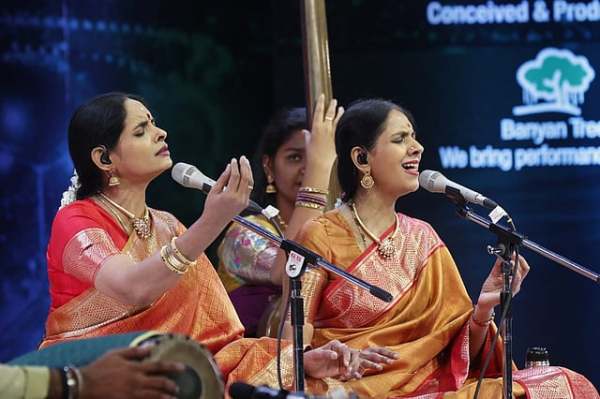
For the city’s Carnatic music lovers, the two-day Mumbai Marghazi Mahotsavam was a real treat, as they were also exposed to marvellous vocals, nadaswaram, flute and guitar. Vocalists Trichur Brothers, Ranjani-Gayatri, Nityashree Mahadevan and Bharat Sunder, flautist Sruthi Sagar, nadaswaram exponent Yelapanam P.S. Balamurugan and guitarist R. Prasanna were part of the line-up, and the discourse by orator Dushyant Sridhar received a great response.
Organisers Banyan Tree tried to create an experience similar to the Marghazi season in Chennai, though obviously for a much shorter duration. To add to the experience, special counters served south Indian delicacies. This festival is an extension of Dakshinayan, which the agency curated.
Just a few days earlier, over 75 musicians participated in the aradhana festival of composer Thyagaraja at the Shanmukhananda. For the Carnatic genre, the year has clearly begun with the bang. Great news, but the question is: will the pace continue in Mumbai during the rest of the year?
On its own, this may be an adequate number, but compared to the number of Hindustani classical events, it’s fairly low. This is despite the fact that Mumbai is cosmopolitan by nature, and has a large number of south Indians who appreciate Carnatic music. Yes, venues like Shanmukhananda, Fine Arts Society, National Centre for the Performing Arts, Nita Mukesh Ambani Cultural Centre and G5A, besides many smaller sabhas, have events intermittently, but fall short compared to the northern cousin.
One isn’t trying to compare the streams, as both have their own charm. But it’s stating the obvious that Hindustani music has a larger demand in Mumbai, with many musicians also residing here. Most of the Carnatic musicians are based in Chennai, and since the average size of an ensemble is larger (normally four or more people), transportation and hotel costs become involved. Add to this the fact that corporate sponsors back a select group of star musicians, most of whom belong to the Hindustani genre.
The second factor is the audience profile. Among Tamilian families, children get early exposure, and often accompany their parents to kutcheris (concerts). As such, the understanding of the nuances and development happens from an early age. North Indians and Maharashtrians residing in Mumbai don’t get that exposure to Carnatic music, and stay away from the genre. Thus, a large proportion of visitors to Carnatic concerts naturally comprises south Indians, who have been brought up on that music.
The third issue relates to the popularity of certain artistes who are involved in experimental and innovative music. Though they also play a lot of traditional music, a good number of Carnatic musicians also do fusion concerts and albums. Their aim, understandably so, is to reach out to newer and younger listeners, but are recognised more for their experiments.
Veteran Singer Hariharan Talks About Upcoming Show, Album Releases, Pongal & MoreFinally, there is the factor of simultaneous events, and this is something organisers have little control over. The Marghazi Mahotsav clashed head-on with the Gaanprabha Hridayesh festival in Vile Parle, which attracted known Hindustani artistes. For those open to both genres, it would have been a tough choice.
What Mumbai’s Carnatic music scene requires is more events and more corporate backing, and in the case of smaller sabhas, better sound and infrastructure. One would welcome creation of awareness through introductory lecture-demonstrations, workshops and seminars – at affordable rates. Local media coverage should extend beyond popular artistes like T.M. Krishna, L. Subramaniam and Aruna Sairam.
Of course, all this doesn’t mean that there should be over-activity in Carnatic music. One doesn’t want a scenario where the same names are repeated at every second festival, as is the case with the northern counterpart.
Contact to : xlf550402@gmail.com
Copyright © boyuanhulian 2020 - 2023. All Right Reserved.