
Even with a family history of dementia, your dietary choices could play a crucial role in keeping the condition at bay. Alzheimer's Research UK has outlined practical steps to potentially lower your risk.
"We're helping to educate and empower the public about the steps they can take to look after their brains and reduce their risk of developing dementia," the charity explained.
Brain cells depend on a steady flow of oxygen-rich blood carrying vital nutrients to function properly; that's why maintaining healthy blood vessels is absolutely critical - any disruption can spell trouble.
- Expert on subtle dementia symptom in everyday life – it's not memory loss
- Red drink can help prevent most heart problems and 'clear arteries'
Alzheimer's Research UK noted: "Research has now shown a clear link between problems like high blood pressure, a stroke or damaged blood vessels, and a higher risk of developing dementia.
"So, things that lower the risk of heart and blood vessel diseases have an added benefit of helping to keep our brains fighting fit too."
Evidence points to the Mediterranean diet as a potential shield against dementia, featuring delicious options like mackerel. Indeed, oily fish forms a cornerstone of a brain-friendly eating plan that may help protect against cellular damage.
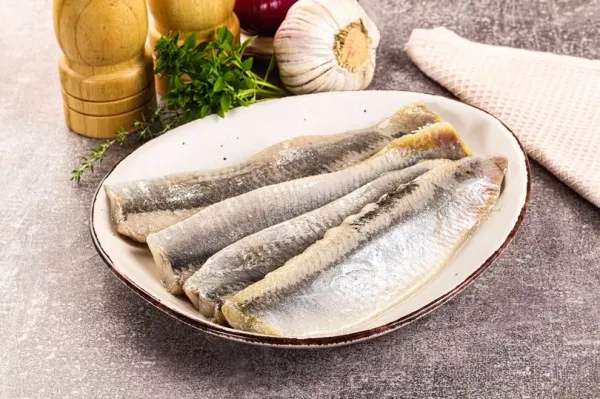 Oily fish
 As reported by the Express, senior BHF ( British Heart Foundation ) dietitian Tracy Parker said: "Oily fish are high in omega-3 polyunsaturated fats, particularly EPA (eicosapentaenoic acid) and DHA (docosahexaenoic acid).
"These are essential fats, meaning your body cannot make them on its own - you need to get them from your diet."
Oily fish
- Mackerel
- Pilchards
- Salmon
- Sardines
- Herring
- Sprats
- Trout
- Whitebait
- Carp
- Eel
- Anchovies
When faced with the option, it's advisable to go for fresh or frozen fish; if opting for tinned varieties, select those preserved in spring water instead of salty brine. Individuals should target consuming one serving of oily fish weekly as part of a well-balanced diet.
Recipe suggestions
- Tinned salmon or mackerel (stored in spring water) mixed into a risotto
- Fish pies
- Fish cakes (potatoes and tinned oily fish mixed together)
- Flaked trout in scrambled eggs
Fish substitutes
Parker explained: "Plant sources contain a type of omega-3 called ALA (alpha-linolenic acid)... your body can convert a small amount of ALA into the more active forms DHA and EPA."
This can be obtained through consuming flaxseeds, walnuts, soya beans, tofu, and dark green vegetables.
Contact to : xlf550402@gmail.com
Copyright © boyuanhulian 2020 - 2023. All Right Reserved.