
An alert has been issued for the Canary Islands after experts warned of "unacceptable" health risks.
Spain in general and the island chain in particular have been condemned by the Court of Justice of the European Union (CJEU) for failing to properly control urban wastewater discharges. The Canary Islands, and Tenerife in particular, have been identified as major areas of concern.
Beaches have been shut due to pollution, and thousands of holidaymakers may continue putting their health at risk in 2026. The court found that there had not been proper sewage collection systems in several parts of Tenerife, including areas of Adeje, Arona, Candelaria, San Isidro, Puerto de Santiago, Playa la Arena, the Orotava Valley and other parts of the south and metropolitan area of the island.
The recent judgment by the CJEU for breaching the Urban Wastewater Directive identifies 12 critical locations in Tenerife due to insufficient collectors, treatment and monitoring of discharges into the ocean. Whilst the judgment evaluates the circumstances in 2020 and doesn't yet impose a penalty, the Commission may impose sanctions if the situation isn't urgently rectified.
The Tenerife Association of Friends of Nature (ATAN) is now sounding the alarm over a health scandal, alleging that Tenerife has been subjecting locals and tourists to an unacceptable health threat for years.
• Seven 'red list' destinations Brits should not travel to in 2026
• Warning to Brits as Canary Islands placed on 'no travel' list
Throughout 2025, renowned beaches have been shut down due to faecal contamination, such as Playa Jardín (Puerto de la Cruz), closed for nearly a year due to E. coli levels significantly exceeding the limits, with fractures in the discharge pipes and shortcomings in municipal sanitation.
Anyone who went for a dip in the north of Tenerife during these months may have done so in polluted waters, without clear, real-time, multilingual information.
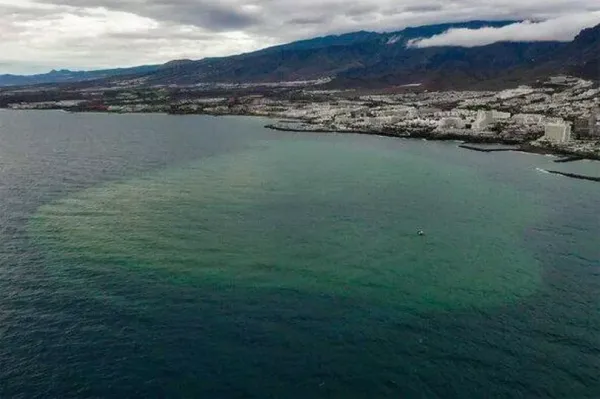
The shocking situation persists, with no apparent intervention by the relevant authorities. At the start of 2026, storms and torrential downpours have thrust the issue back into the spotlight: overflowing drainage systems and outlets have rendered sewage visible across multiple sections of the Tenerife coastline, with stains, foam and discharges that anyone can spot immediately.
Back in 2019, Europe slapped Spain with a €12million (£10.4million) penalty, plus an extra €10.9million (£9.4million) every six months for ongoing breaches, with Valle de Güímar (Tenerife) amongst the locations mentioned; the total bill reached approximately €22million (£19million) twelve months later.
The recurring European condemnation demonstrates that sewerage and processing facilities have fallen short of requirements, despite pledges of funding. The official statistics themselves expose the scale of the predicament.
The terrestrial and marine outfall register updated by the Canary Islands Government in 2025 records 403 discharge locations, 216 of which are unlicensed (exceeding 50%); Tenerife represents the majority of these.
The Canary Islands face water scarcity, extreme pressure on infrastructure, and heavy reliance on imported food, which some estimates put at 80 to 92% of the total. These factors contributed to the islands being included in the Fodor’s No List 2026, which highlights destinations suffering from unsustainable tourism pressures.
Cherished by Brits due to a microclimate that has made them a prime winter sun destination, with nearly 18 million visitors last year, tourism is at the core of the Canaries.
Indeed, the islands had had their fair share of issues and negative press last year, from overtourism protests in the summer to reports of delays at airports due to new EU passport checks. Thousands marched through the streets of Tenerife, Gran Canaria, and Lanzarote in May under the banner, “Canarias tiene un límite” (“The Canaries have a limit”). Their message is hard to miss - tourism is killing the Canary Islands.
ATAN and other groups are demanding a temporary halt to further tourism expansion, as well as urgent investment in sewage treatment infrastructure, independent audits of discharge points, and new residency rules to limit population growth,Canarian Weekly reports.
Island officials have stressed that the court decision looks at the situation as it was in 2020, based on data collected up to April of that year. They argue that it does not reflect current conditions and that investment in sewage and wastewater treatment on Tenerife is now at its highest level ever, with many treatment plants and pipelines already finished, under construction or fully funded.
Contact to : xlf550402@gmail.com
Copyright © boyuanhulian 2020 - 2023. All Right Reserved.