
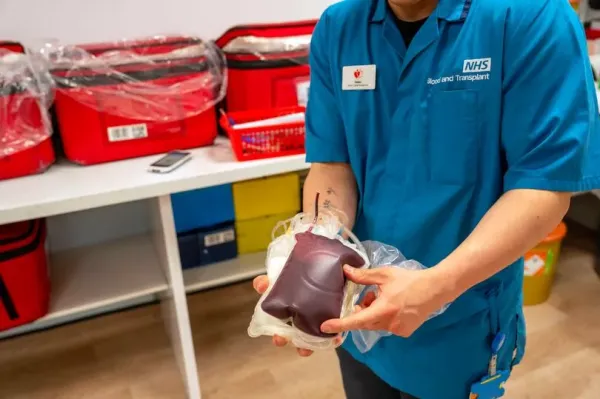
More than 50,000 lives have been saved in just one year thanks to the success of one of London’s newest blood donor centres, according to new figures fromNHS Blood and Transplant (NHSBT).
TheBrixton Donor Centre has seen more than 17,000 Londoners give blood, helping to boost supplies and ensure hospitals and emergency services across the capital have the lifesaving blood they need. The milestone comes at a critical time, following the worst national blood shortage on record lasting from 2024 to 2025
The centre has once again outperformed national trends, with 38% of donors making their first-ever donation at Brixton, compared with the national average of 18%. It has also played a key role in increasing the number of Black heritage donors, who currently make up just 3% of blood donors nationally.
This was one of the main reasons the centre was permanently based in Brixton, which has a large Black population, rather than operating as a temporary pop-up.
• 'I was treated like drug addict after 12 hours in A&E with devastating disease'
• Blood donor breakthrough as trailblazing centre breaks records in saving lives
Situated on the busy high street, the site is highly visible and its size has enabled it to host regular blood drive events, publicising the need for blood and boosting donor numbers.
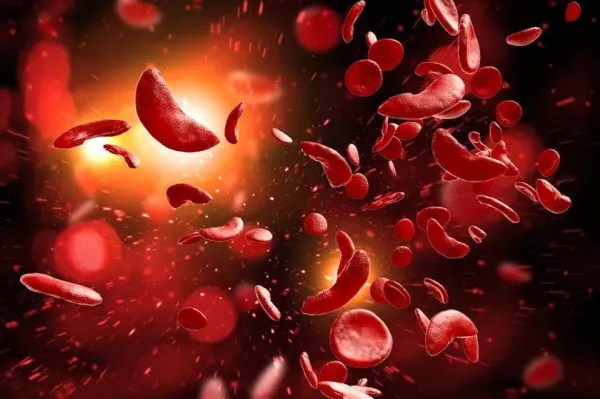
The urgent need for more Black heritage donors is linked to the demand for Ro blood, a rare subtype that is crucial for treating certain conditions, including sickle cell disease - an inherited blood disorder that predominantly affects people of Black African and Black Caribbean heritage. Closely matched blood helps minimise adverse reactions, yet Ro blood has long been in short supply with serious consequences for those living with the condition.
Black heritage donors are 47% more likely to carry the Ro blood subtype than white donors, and the Brixton centre has accounted for 19% of all Ro blood donations across London - more than double the national average.
One patient who knows first-hand the impact of not having closely matched blood is Calvin Campbell, 61, an NHS Senior Community Ambassador living with sickle cell disease. Following a recent pain crisis, Calvin lost the sight in his left eye.
He tells The Mirror: “One day I woke up and looked, I couldn't see. I lost the sight completely in my left eye and then my right eye. I was seeing triple. “It took about four months for the sight to come back.”
“I couldn't do any of the things that I do if it wasn't for blood donations. Blood and having a ton of exchanges actually helps to repair some of the damage.”
In December 2025, Calvin attended his regular 10–12 unit blood exchange, but due to the lack of a close enough match, he suffered a severe reaction.
He says: “It [the blood exchange] wasn't matched properly or close enough and I had a huge reaction. Suddenly I couldn’t breathe, my face and throat swelled up.”
For people living with sickle cell, transfusions can become increasingly complex over time, as repeated exchanges cause the body to build up antibodies, making it harder to find compatible blood.
Sarah Tucker, who has been donating blood for more than a decade, recently marked her 15th donation. Her commitment began after watching her mother donate blood for years, before she was forced to stop due to new medication. A donation only takes 5 to 10 minutes - with the whole experience taking about an hour.
She says: “My mum wanted to give back. She didn’t grow up with a lot of money and she’s a very giving person, so that was her one thing she could think of to give back.
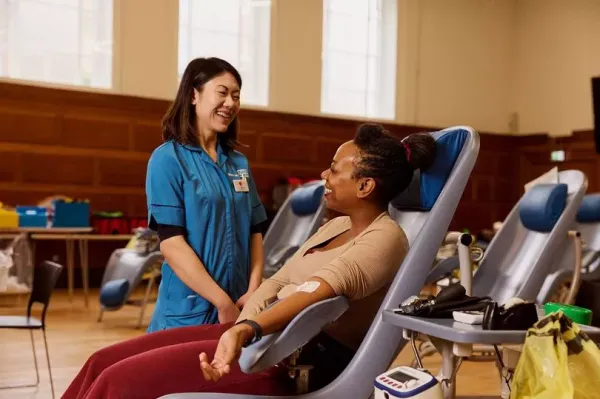
“Giving blood is a super-quick, rewarding experience that makes a real difference to people’s lives, especially since I have a rare blood subtype, Ro, which is really needed in my community.”
Sarah, urges others to give blood, says women can donate blood up to three times a year, while men can donate up to four times annually.
NHS Blood and Transplant has praised the success of the Brixton centre and the commitment of its donors.
NHSBT Director of Donor Experience Mark Chambers, says: “Without their backing, many lives would be lost or diminished, and many patients who need lifesaving treatments - be they sickle cell patients, those undergoing cancer treatment or women receiving maternity care, wouldn’t receive the treatments they need.”
Rexford Osei-Bonsu, Manager of the Brixton Donor Centre, says the centre’s ability to attract younger donors has been particularly encouraging, adding: “I've seen both ends as I now work in the collection side of it and I've also seen the transfusion side and the most fascinating thing here is that more than 50% falls below or around 35 years which is a massive and means that in the long run, they'll be in a position to donate for longer years, which is a success story for me.”
Contact to : xlf550402@gmail.com
Copyright © boyuanhulian 2020 - 2023. All Right Reserved.