A beautiful market town with a thriving independent high street has one big problem that officials are finding hard to tackle.
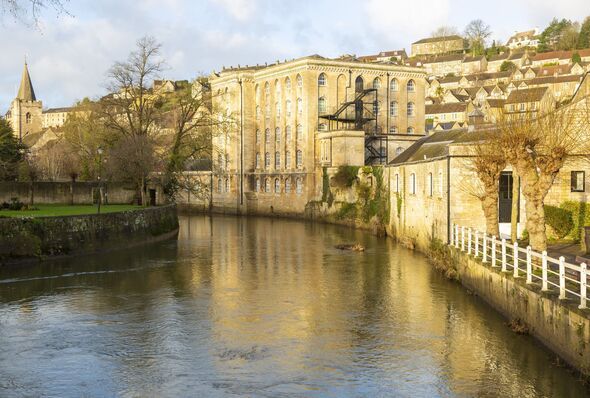
Bradford-on-Avon's history is clear to see in its buildings. From tiny medieval weavers' cottages clinging to the hillside that offer brilliant views of the Wiltshire countryside beyond, to grand Georgian clothiers' houses and converted industrial mills along the river, it is a place befitting an ancient county that is also home to Avebury Henge and West Kennet Long Barrow.
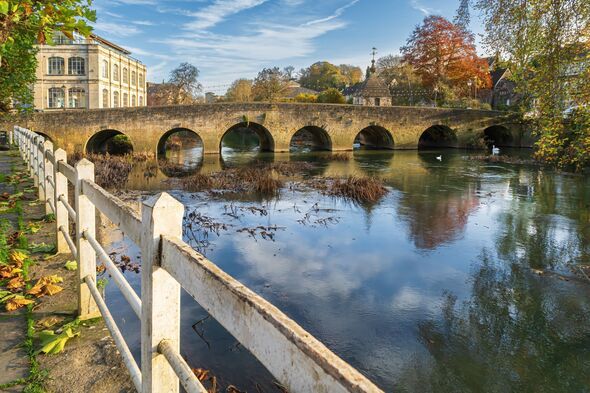
A particularly lovely feature of the town of 10,000, which dates back to Roman times, is how both the River Avon and the Kennet and Avon Canal run through it, providing many miles of scenic walks, and the chance to cycle along the towpath. If getting on the water is more your thing, boats and canoes can be hired.
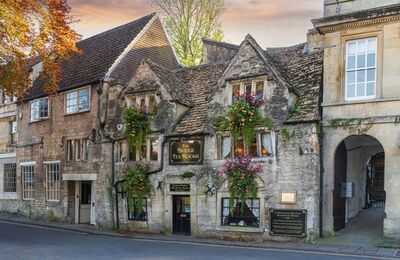
Bradford-on-Avon has a strong independent retail scene, particularly along the quaint, cobbled street called The Shambles. It boasts numerous cafes, pubs (many dog-friendly), and award-winning restaurants and tearooms, such as the famous Bridge Tea Rooms.
The commercial centre of the town is the Shambles, a cobbled street which connects Market Street and Silver Street. The Shambles was once the site of Bradford-on-Avon's medieval market, but it's now a quaint British high street home to Bloomfield Fruit and Veg, book shop Ex Libris, and pet supplies outlet The Dog Shop.
One of the oldest buildings in the town is The Swan, a pub and hotel set in the centre. The building is 17th century and retains many original features, in particular the stone flag floors. Records show that there has been a public house on the same site since the 1500s.
Bradford-on-Avon has a particular rugby pedigree. Not only is it the birthplace of England's great Will Carling, but flanker Lewis Moody has also made the Wiltshire town his home in more recent years.
The town's situation on the River Avon made it an important centre for wool and weaving, leading to its prosperity from the 14th century onwards. It was during a boom in the industry in the 1700s that many of the grand houses along the river and in the Shambles were built.
It's difficult to overstate how dominant the textile trade was at this time. More than 30 mills operated at one point in the 18th century, using river water to power their looms. However, the cloth trade deserted the town in the following century as Yorkshire's dominance of the industry took over. The last mill in Bradford-on-Avon closed down in 1905.
The legacy of Bradford-on-Avon's history as a market town and a centre of industry is still being felt today. Some of the old mill buildings were used as a rubber factory until the 1990s, and have since been turned into waterside homes. Another relates to the layout of the town and has proved difficult to tackle.
"Market towns are pathetically ill-equipped to deal with 21st-century traffic. Traffic is forced to wind through ancient trackways, competing all the time with the needs of pedestrians. Workable solutions are devilishly difficult and planners have little room for manoeuvre," South Wiltshire MP Dr Andrew Murrison said inParliament back in 2003.
"I recommend that the Minister pay a visit at any time, but particularly to look at the problem that I describe today. Were he to take his life into his hands, he could walk up Mason's lane in Bradford-on-Avon. There, fumes from traffic that climbs a steep incline are retained by high structures on either side that produce a canyon effect. That road, which is in the middle of one of the most delightful towns in England, has one of the poorest air qualities in the country."
Two years before Dr Murrison's speech, parts of Bradford-on-Avon were declared Air Quality Management Zones, due to high levels of nitrogen dioxide and particulate matter. The issue of heavy traffic in old towns, and the pollution it causes, is no small one.
Such is the rural nature of the community, many in Bradford-on-Avon rely on cars to get about. This can cause congestion in an old town that reached its pomp hundreds of years before the combustion engine was invented. The most recent National Travel Survey shows how much more people in rural people drive than those in cities.
"People living in rural areas in England made more trips and travelled further than those living in urban conurbation areas in 2021. People living in rural villages, hamlets and isolated dwellings made the most trips on average with 769 trips per person, and travelled the furthest distance on average with 6,449 miles per person in 2021. People living in urban conurbations made the fewest trips on average with 748 trips per person and travelled the shortest distance on average compared with those living in other rural and urban areas with 3,661 miles per person in 2021," the Survey notes.
"Households living in rural areas are more likely to own a car than urban residents. In 2021, 33% of households living in urban conurbations have no car, however, only 5% of households living in rural villages, hamlets and isolated dwellings have no car."
The issue of poor air quality in rural communities is not one that gains as much attention as pollution in larger cities such as London and Birmingham. However, it is widespread problem. As of 2023, around 300 local authorities had active AQMAs within their boroughs, including many in Essex such as Brentwood, Uttlesford, Epping Forest, Southend, Thurrock, Chelmsford and Colchester.
Wiltshire Council is attemtping to tackle the air quality issue in Bradford-on-Avon, but the pollution problem persists. A statement from its most recent Air Quality Action Plan read: "The objective of the action plan is to improve health outcomes and wellbeing for those in more polluted areas so reducing health disparities. It is estimated that the annual mortality of manmade air pollution in the UK is roughly equivalent to between 28,000 and 36,000 deaths every year. It is estimated that between 2017 and 2025 the total cost to the NHS and social care system of air pollutants (fine particulate matter and nitrogen dioxide), for which there is more robust evidence for an association, will be £1.6 billion."
Although improvements have been made in recent years, the Council has been unable to get pollution levels below the legally required limit. Wiltshire Council was contacted for further comment.
Contact to : xlf550402@gmail.com
Copyright © boyuanhulian 2020 - 2023. All Right Reserved.