United States: of America has officially withdrawn its membership from the World Health Organization, marking a significant shift in global public health diplomacy. The decision was announced through a joint statement by the US Secretary of State Marco Rubio and Health Secretary Kennedy, who cited long-standing concerns over bureaucratic inefficiency, political bias, and the organization’s handling of the COVID-19 pandemic. According to the statement, the withdrawal is aimed at protecting American interests and restructuring how the United States engages with global health initiatives in the future.
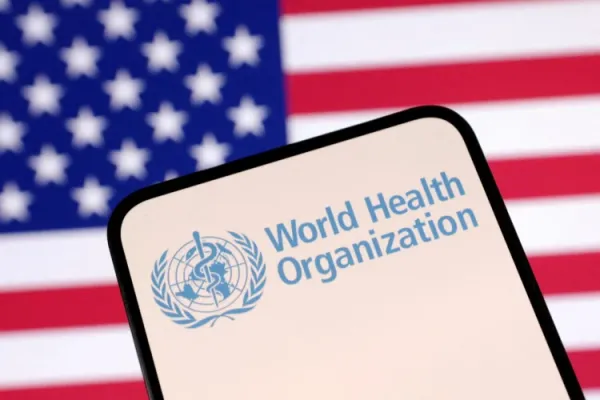
Background Of The US Decision To Exit WHO
The US government stated that its relationship with the World Health Organization will now be limited solely to facilitating an orderly withdrawal and ensuring the health and safety of the American population. Officials emphasized that all US funding and staffing support for WHO-led initiatives have been terminated with immediate effect. The administration argued that despite being a founding member and the largest financial contributor, the United States was consistently sidelined in decision-making processes.
Allegations Of Bureaucracy And Pandemic Mismanagement
A major justification for the withdrawal centers on allegations that the World Health Organization failed to respond effectively during the COVID-19 crisis. The US leadership accused the organization of delaying the sharing of critical health information and allowing political considerations to interfere with transparent public health responses. According to the statement, these failures contributed to avoidable loss of life and economic hardship within the United States.
The administration further claimed that the organization concealed its shortcomings under the guise of public health advocacy, rather than acknowledging mistakes and implementing corrective reforms.
Shift Toward Bilateral And Results-Driven Health Partnerships
US officials stressed that withdrawing from the World Health Organization does not signal a retreat from global health leadership. Instead, the United States intends to pursue direct, bilateral, and results-driven partnerships with countries and trusted health institutions. The new approach is expected to focus on disease prevention, preparedness, and rapid response mechanisms without what officials described as excessive bureaucracy.
The statement reaffirmed that the United States will continue sharing best practices, supporting global health security, and preventing infectious disease threats from reaching American borders through more transparent and accountable frameworks.
Executive Action And Political Commitments
The withdrawal fulfills a campaign promise made by President Donald Trump, who signed Executive Order 14155 on his first day back in office. Administration officials framed the move as part of a broader effort to reassess international commitments deemed inconsistent with US national interests. The decision was portrayed as a fulfillment of electoral assurances, underscored by the phrase “promises made, promises kept.”
Disputes And Symbolic Controversies
Adding to tensions, the US government accused the World Health Organization of symbolic hostility during the withdrawal process. Officials claimed that the organization refused to return the American flag that had been displayed at its headquarters, arguing that the withdrawal was not formally approved and that compensation was owed. US leaders described this as emblematic of what they view as continued disrespect toward American contributions.
Broader Withdrawal From International Bodies
The exit from the World Health Organization aligns with a broader policy directive issued earlier in January, when President Trump signed a memorandum ordering withdrawal from international organizations, conventions, and treaties considered contrary to US interests. According to the White House, this includes disengagement from 35 non-UN organizations and 31 United Nations entities.
Key UN-related bodies affected by this decision include the Department of Economic and Social Affairs, the International Law Commission, the International Trade Centre, the Peacebuilding Commission, UN Energy, the UN Population Fund, and UN Water. The administration stated that these withdrawals are part of a strategic realignment rather than isolationism.
Implications For Global Health Governance
The US withdrawal from the World Health Organization is expected to have far-reaching implications for global health governance, funding structures, and international cooperation. As one of the largest donors, the absence of US support may challenge existing programs, while also prompting debates on reform, accountability, and the future role of multilateral institutions in managing global health crises.
Contact to : xlf550402@gmail.com
Copyright © boyuanhulian 2020 - 2023. All Right Reserved.