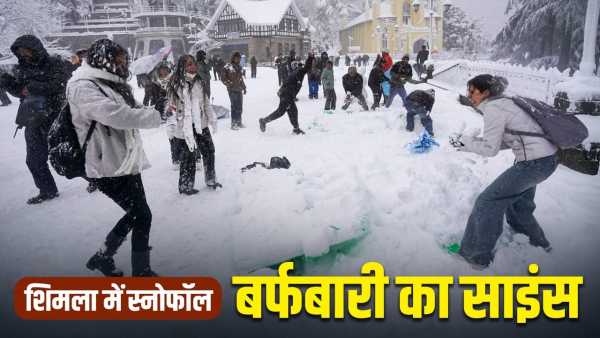
Tourists enjoying snowfall in Shimla.
Be it Shimla-Manali or Kashmir, snowfall has started everywhere. There is a blanket of snow in the hilly areas. The biggest impact is visible in Kashmir where people are facing many problems. The biggest impact was seen on road and air traffic. 26 flights have been canceled at Srinagar Airport. Jammu-Kashmir National Highway has been closed. Snowfall and strong winds have affected the power system in parts of Anantnag. Vaishno Devi Yatra has been stopped in Katra due to heavy rain and snowfall.
Half of the winter season has passed and now pictures of snowfall are going viral. Now the question is, how does ice form in the air, what does the science say about it?
How is ice made?
Why and how does snowfall occur? If we understand in simple language, this happens when wind, moisture and cold, all three are together in the right combination. It is also necessary for there to be clouds first for snowfall. Let us first understand how clouds are formed.Hot air rises from the earth and cools down in the atmosphere. The water vapor present in the air turns into small droplets. These drops together form clouds.
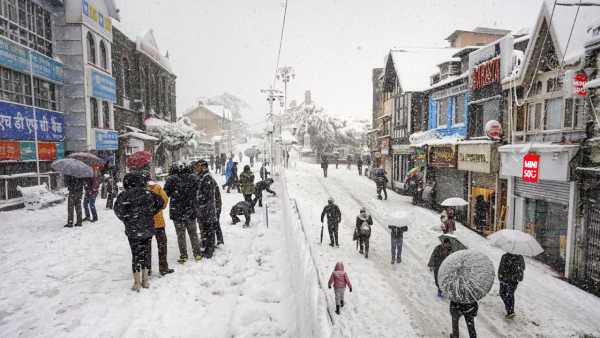
Snowfall in Shimla.
America's National Snow and Ice Data Center says, moisture in the atmosphere is necessary for snow to fall. It also depends to a great extent on the temperature, but it is not necessary that it is the same temperature that we feel on the ground. Ice forms when the atmospheric temperature is at or below the freezing point (0°C or 32°F). If the ground temperature is at or below the freezing point (0°C or 32°F), water droplets freeze into ice particles andSnow starts reaching the ground.
Vaishno Devi Yatra in Jammu & Kashmir has been suspended after heavy rainfall at Katra and snowfall at Bhawan. Beautiful pictures from Bhawan. Jai Mata Di! pic.twitter.com/QVQxzDeVAF
— Aditya Raj Kaul (@AdityaRajKaul) January 23, 2026
However, if conditions are favorable, snow can reach the ground even at temperatures above the freezing point. In this situation, the ice particles start melting as soon as they reach this high temperature layer. Melting causes evaporation and increases cooling. Which instantly cools the air around the ice particles.
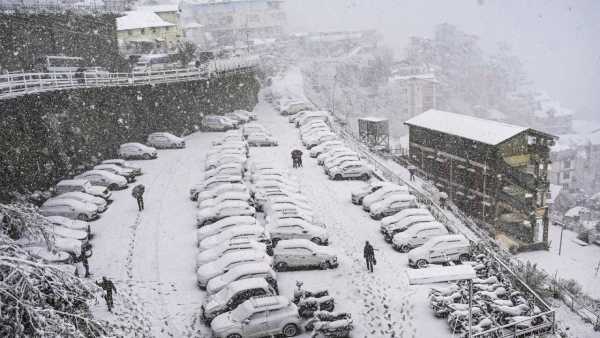
Snowfall situation in the mountains.
Science says that snow does not form if the ground temperature is at least 5°C (41°F). Although there can be weather too hot for snowfall, there cannot be weather too cold for snowfall. Snow can fall even at extremely low temperatures, provided there is a source of moisture. The Dry Valleys of Antarctica are the largest ice-free part of the continent. The Dry Valleys are quite cool, but the humidity is very low, and strong winds can suck any remaining moisture from the air. As a result, there is very little snowfall in this extremely cold region.
Contact to : xlf550402@gmail.com
Copyright © boyuanhulian 2020 - 2023. All Right Reserved.