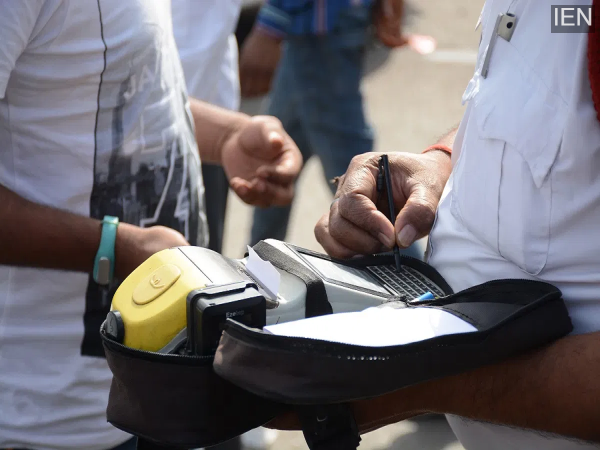
Receiving a traffic challan message without breaking any rule can be confusing and frustrating. Many vehicle owners have experienced situations where they were not even present at the location mentioned in the challan, yet a fine was generated in their name. Earlier, people often ignored such challans, assuming the system would correct itself. However, the government has now clarified that citizens have the full right to challenge a wrongly issued challan through an official process.
The Ministry of Road Transport and Highways (MoRTH) has introduced a structured system to handle disputes related to traffic and e-challans. This process clearly explains where, how, and within what time frame a challan can be challenged.
Can You Dispute a Traffic Challan?
Yes, you can. If you believe the challan issued against your vehicle is incorrect, you are allowed to challenge it. After receiving the challan, you get 45 days to take action. During this period, you must visit the central e-challan portal and either accept the challan or formally dispute it.
If you choose to dispute the challan, you must upload documentary evidence to support your claim. This could include GPS proof, vehicle location records, dashcam footage, or any other relevant documents. If no action is taken within 45 days, the system will automatically consider that you have accepted the challan.
When Is Payment Mandatory?
If you do not dispute the challan within the first 45 days, it will be treated as accepted. In such cases, you must pay the fine within the next 30 days, meaning the total deadline becomes 75 days from the date of issue.
Payment can be made either online or offline. Earlier, challans were automatically transferred to virtual courts if unpaid for 90 days. Due to heavy court backlogs, authorities were unable to block services related to vehicle registration and driving licenses. This loophole encouraged many people to ignore challans.
Under the new system, challans will no longer be transferred automatically to courts.
What Happens After You Dispute a Challan?
Once you submit a dispute on the portal, the concerned authority must review your case within 30 days. Officials will examine your evidence and explanation before arriving at a decision.
If the authority finds your claim valid, the challan will be cancelled and the decision will be uploaded in writing on the portal.
If your objection is rejected, the reason will also be provided in writing. After rejection, you must pay the challan amount within the next 30 days.
What If You Are Not Satisfied With the Decision?
If you disagree with the authority’s verdict, you can approach the court. However, to do so, you must first deposit 50% of the challan amount.
If neither payment nor a court challenge is made, the order will be treated as final and the remaining amount must be paid within 15 days.
Penalty for Not Paying the Challan
Failure to pay the challan within the given timeline will result in daily reminders being issued. Continued non-payment can lead to your driving license or vehicle registration being marked as “Not to be Transacted.”
This means services such as RC transfer, license renewal, or issuance of duplicate documents will be blocked. However, tax-related services will not be affected.
Do These Rules Apply to All Challans?
These provisions apply only to compoundable offences, meaning challans that can be settled directly through payment at the spot or via the portal.
Non-compoundable offences will still require court proceedings. However, under the proposed Jan Vishwas Bill 2.0, the government aims to convert many non-compoundable offences into compoundable ones.
States With Slow and Fast Disposal Rates
According to official data, the disposal rate of e-challans varies widely across states.
Delhi has resolved only about 23% of issued challans.
Goa and Jammu & Kashmir have achieved nearly 94% resolution rates.
Bihar stands at 23%, Uttar Pradesh at 25%, and Arunachal Pradesh at just 14%.
Since January 2015, over 41 crore challans have been issued nationwide, amounting to more than ₹62,212 crore. Out of these, only 15.6 crore challans have been settled so far.
Final Takeaway
If you receive a challan that you believe is wrong, do not ignore it. The government has provided a clear and legal route to challenge it. Acting within the deadline, uploading valid proof, and tracking your case on the portal can save you from unnecessary fines and future restrictions on your driving documents.
Contact to : xlf550402@gmail.com
Copyright © boyuanhulian 2020 - 2023. All Right Reserved.