New plans announced today to increase the sensitivity of bowel cancer screening are expected to reduce late-stage diagnoses and deaths from the disease - which currently claims around 17,500 lives a year - by six per cent.
From next month, NHS England will be lowering the threshold for a home screening kit, known as the faecal immunochemical test (FIT). Offered to all people over 50, it checks for blood in a small stool sample, which can be a sign of bowel cancer.
By reducing the level at which traces of blood in a FIT test trigger further investigation from 120mcg of blood per gram of the sample to 80, the NHS will offer 35% more screening colonoscopies a year, used to diagnose or rule out the disease.
Digital alerts will also be sent out telling those eligible that a screening test is coming, to boost uptake, as part of the National Cancer Care plan being published by Government next week, to transform cancer care by 2035.
• Horror warning over 'unsafe' vitamin supplements which ignore NHS guidelines
Peter Johnson, National Clinical Director for Cancer at NHS England, stresses the importance of FIT tests, explaining: “Earlier detection can mean less intensive treatment and ensures the best chance of survival. In many cases people could avoid facing cancer altogether by having dangerous polyps removed before they cause harm.”
GPs can also arrange FIT tests for younger symptomatic patients, but one in four people are still being diagnosed in emergency settings, such as A&E departments, by which time the cancer is likely to be more advanced, according to charity Bowel Cancer UK.
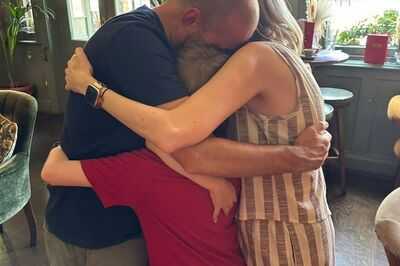
Mum Charlie O’Brien was 43 when she was diagnosed with stage 3 bowel cancer in January 2025, after going to her local A&E, having failed to use the FIT test given to her by her GP.
Married to Heart radio presenter Jason King (JK), 51, also a former presenter-turned counsellor and therapist, she had a history of irritable bowel syndrome (IBS) and had been experiencing acute constipation over the previous few months.
Making several visits to her GP, she was given laxatives, but had been given a FIT test by her GP a few years earlier when experiencing “niggly” bowels. London hospitals near her home were under cyber attack at the time, so she was told to take the test when they stopped.

Her symptoms subsided, so she didn’t bother. But by New Year 2025 things intensified. Charlie, who has a son, Noah, 10, and daughter, Luna, eight, says: “After 12 days of not even being able to pass wind, my husband drove me to A&E. I was sent straight for a CT scan and told I had a large mass and obstruction in my bowel, which would need surgery.”
Further investigations followed, but when stents were inserted they perforated her bowel, leaving Charlie with four-quadrant peritonitis - a life-threatening inflammation of the abdominal lining. She says: “I spent the next 24 hours septic and have never felt so unwell in all my life. I was taken into emergency surgery, where my surgeon performed a complex bowel resection, gave me a colostomy, and ultimately saved my life.”
She also discovered she had stage 3 bowel cancer with a T4 tumour - meaning it had grown through the outer lining of the bowel wall. Told she had a 40% chance of dying during the operation, she says: “I was so exhausted from surgery and being septic that it [her diagnosis] didn’t fully register. It hit me properly months later.”
Just over six weeks after surgery, Charlie - one of 2,400 UK adults under 50 diagnosed with bowel cancer annually - began 11 rounds of chemotherapy. Her drugs had to be changed because of severe side effects including neuropathy, or nerve damage, and depression.
Now five months on, she is recovering well and has vowed to be a cancer advocate, and says: “My oncologist describes me as currently in remission, but I’m aware how quickly things can change. If this experience has taught me anything, it’s that life is incredibly short and precious and things can change in an instant.
“You’re never too young to get bowel cancer. If you do have symptoms and a pattern is starting to emerge, go to your GP and keep pushing if you’re not happy with the care. My surgeon told me that the only real way to know what’s going on in the bowel is by having a colonoscopy. A half-hour test could save your life.”
Charlie, who still has a stoma and will be discussing a possible reversal with her surgeon, regrets not using her FIT test, as she now realises she had bowel cancer symptoms a few years before her diagnosis. She says: “What I’ll feel cross and guilty about for the rest of my life is that my GP gave me a FIT test and I never did it. I often wonder how much less traumatic things could have been for me if I’d just done that test.”
Key bowel cancer symptoms include:Blood in stools
Change in bowel habit
Abdominal pain
Unexplained weight loss
Fatigue/anaemia
Feeling like you still need to poo after going to the loo
If symptoms persist for 3 weeks or more seek medical help and ask for a FIT test.
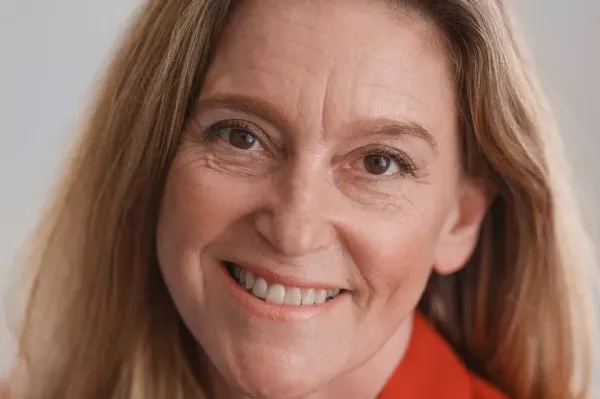 Genevieve Edwards, Chief Executive of Bowel Cancer UK says:
 "Today’s news on bowel cancer screening in England is cause for celebration. Early diagnosis literally saves lives. Around nine in ten people survive when bowel cancer is diagnosed at the earliest stages. Screening helps make that possible, by spotting cancer earlier and giving people the best chance of effective treatment.
"Increasing the sensitivity of bowel cancer screening is great news. The more sensitive the test, the more likely we are to find cases of bowel cancer earlier, and the higher the chance of a successful outcome for more people.
"While the test itself doesn’t tell you if you have cancer, it can trigger further investigations. Scotland and Wales already screen for bowel cancer at this sensitivity, so it’s welcome news that England is now doing the same.
"Changes like this make a real difference to people’s lives and show what’s possible when we keep early diagnosis as a priority. It’s exactly the approach we want to see in the forthcoming National Cancer Plan.
"But we need to do more to improve screening for everyone. Despite clear evidence that it works, there are still some people not accessing the screening they’re eligible for. We also know that not enough people know the symptoms of bowel cancer or know what to do if they are worried, meaning diagnosis can be delayed.
"This must change. Currently one in four people diagnosed with bowel cancer are being diagnosed in emergency settings like A&E when it’s more likely to be advanced, and harder to treat. That’s why the National Cancer Plan for England matters so much. It must build on today’s screening progress, while also meeting the gaps that screening alone cannot fill. We welcome progress on bowel cancer screening, but progress must deliver for everyone.
• 'Smart and stylish' five-star Dunelm shoe storage solution reduced to £28 in sale
Contact to : xlf550402@gmail.com
Copyright © boyuanhulian 2020 - 2023. All Right Reserved.