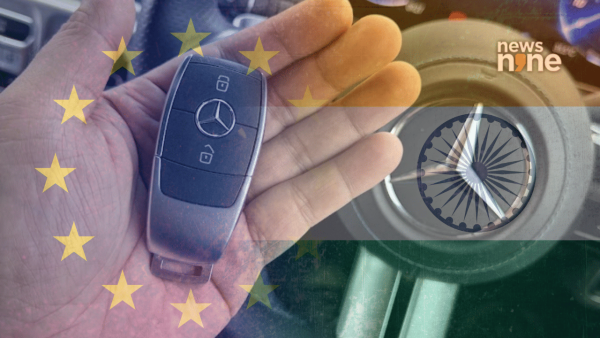
New Delhi: The India–European Union Free Trade Agreement (FTA), concluded on January 27, 2026, is already being seen as one of the most closely watched trade pacts for the Indian automobile sector in recent years. After years of negotiations, the deal brings a carefully staged opening of India’s car import regime while offering Indian manufacturers fresh access to one of the world’s largest automotive markets.
From an Indian auto industry lens, the agreement walks a tightrope. It opens doors for premium European brands in a controlled manner, protects mass-market and emerging EV segments, and gives Indian carmakers a clearer runway to push exports into Europe. For enthusiasts, this could slowly reshape what models arrive in India, where they are built, and how competitively they are priced.
Europe and India are making history today.
We have concluded the mother of all deals.
We have created a free trade zone of two billion people, with both sides set to benefit.
This is only the beginning.
We will grow our strategic relationship to be even stronger. pic.twitter.com/C7L1kQQEtr
— Ursula von der Leyen (@vonderleyen) January 27, 2026
What India has agreed to on EU car imports
India has accepted a quota-based approach instead of an open floodgate.
- Up to 250,000 EU-made vehicles per year can enter India at preferential duties.
- Around 160,000 units will be internal combustion engine (ICE) cars and about 90,000 will be electric vehicles.
- An additional 75,000 completely knocked down (CKD) kits per year will be allowed for assembly in India for cars priced above €15,000 (about ₹14.5 – 25 lakh ex-showroom).
For in-quota vehicles:
- ICE car duties will start at roughly 30 percent and fall to 10 percent over five years.
- Reduction in EV duties will begin only from the 10th year, giving India’s EV ecosystem breathing space.
For cars outside the quota, duties on fossil-fuel vehicles will gradually reduce to around 30–35 percent over ten years, down from today’s peaks that can go beyond 110 percent.
Duties on many car parts will also move to zero over five to ten years. This is likely to help local manufacturers source high-end European components more cheaply.
Today is a day that will be remembered forever, marked indelibly in our shared history.
European Council President António Costa and European Commission President Ursula von der Leyen and I are delighted to announce the conclusion of the historic India-EU Free Trade Agreement.… pic.twitter.com/yaSlPm2b2L
— Narendra Modi (@narendramodi) January 27, 2026
What this means for luxury car buyers
Brands such as Mercedes-Benz, BMW and Audi sit right in the zone where this FTA matters.
Mercedes-Benz India MD and CEO Santosh Iyer said the pact should strongly drive technological innovation and sustainable growth, with focus on future mobility. At the same time, he ruled out any near-term price cut, pointing out that over 90 percent of Mercedes-Benz India’s sales come from locally made models and only around 5 percent from CBU imports.
He also flagged a practical challenge. The rupee depreciated by 19 percent in 2025 against the euro, which could erase gains from lower import duties in the next couple of years.
BMW Group India President and CEO Hardeep Singh Brar said the industry hopes for balanced, win-win provisions that help stimulate demand in the luxury segment while strengthening supply chain integration. He added that if CBU duties come down, it would help expand the luxury car market, and since luxury cars make up only about 1 percent of India’s passenger vehicle market, mass-market players remain insulated.
Audi India’s Balbir Singh Dhillon said the brand welcomes the proposed agreement and its potential to deepen economic ties. He added that implications on pricing and strategy can only be assessed once the final terms and timelines are clear.
Big export opening for Indian carmakers
India gains a larger door into Europe than it is opening at home.
- Up to 625,000 Indian-made vehicles per year can be exported to the EU.
- EU tariffs on Indian vehicles will gradually go to zero over ten years.
- Smaller and lower-cost EVs get a longer, 14-year glide path.
This could benefit Tata Motors, Mahindra and Maruti Suzuki as they scale EV and compact SUV exports.
Conclusion of the India-EU Free Trade Agreement today marks a significant milestone in our relations. I thank all the leaders of Europe over the years for their constructive spirit and commitment in making this possible. This agreement will deepen economic ties, create…
— Narendra Modi (@narendramodi) January 27, 2026
Why buyers should care
Over time, buyers could see:
- More European performance and luxury models assembled locally.
- Faster arrival of advanced safety and EV tech.
- Indian-built cars wearing EU plates in larger numbers.
Gulzar Didwania, Partner at Deloitte India, said the FTA comes at a moment of geoeconomic realignment and could become one of India’s most progressive FTAs, with strong commitments on digital trade, sustainability and climate rules.
For now, the impact will be gradual. No overnight price cuts. No sudden surge of imports. But the roadmap is set, and for India’s auto industry, this deal quietly redraws the future.
Contact to : xlf550402@gmail.com
Copyright © boyuanhulian 2020 - 2023. All Right Reserved.