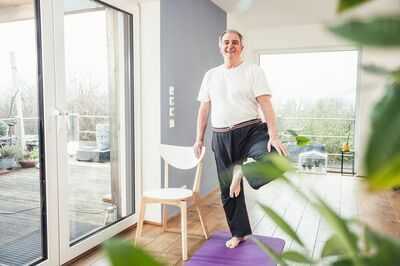
Brits are being urged to try a quick 10-second balance test at home, after experts warned that struggling to stay steady can be linked to a higher risk of falls. The test is simple and takes less time than boiling the kettle. However, experts say some people may find it 'surprisingly challenging'.
Not being able to hold for 10 seconds is connected to about an 84% higher chance of dying from any cause in the next 10 years. Health professionals stress it is not a diagnosis, but a prompt to take balance seriously, especially in midlife and older age, when wobbliness is often brushed off as 'just one of those things'.
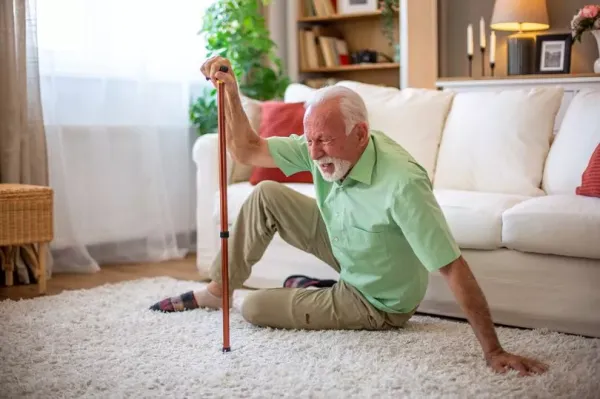
Falls are a major issue for older adults. Official guidance says around a third of people aged 65 and over, and around half of people aged 80 and over, fall at least once a year. It also notes there were around 234,800 emergency hospital admissions in England related to falls among people aged 65 and over between 2019 and 2020.
- UK's 'saddest place' revealed where locals have already had enough of everyone by January
- 'I leave my toddler and partner at home and take therapy trips abroad'
The 10-second balance test and what it means
The test is commonly called the single-leg stance. To do it safely, stand near a kitchen counter or sturdy chair, in case you need support. Look straight ahead and lift one foot off the floor. Try to hold the position for 10 seconds without grabbing on. Swap legs and repeat. This test is most relevant for middle-aged and older adults.
Experts say not being able to pass a 10-second one-legged balance test is linked to a much higher chance of dying in the next ten years. Studies reveal that people who can't do this test are about 84% to 118% more likely to die from any cause within a decade, which could indicate weakness and bad health.
Geriatric medicine clinical nurse specialist Anne Vanderbilt at Cleveland Clinic said: "It sounds easy, but many people are surprised at how challenging it can be." Balance relies on several systems working together, including muscle strength, joint control, vision, and inner ear function.
When one area is affected, people can become unsteady, particularly when tired, stressed, dehydrated, or rushing around the house. Research has also linked poor balance with wider health risks.
Winter often brings a rise in slip-and-fall concerns, as wet pavements, icy patches, and slushy car parks make everyday journeys more hazardous. At this time of year, people are rushing to work, doing the school run, or carrying shopping, and it only takes one misstep for a fall to happen.
No matter if you reach the 10-second goal or not, it would be beneficial to practice this drill daily and aim to hold it for longer. It’s a way to improve your balance, which helps lower your chances of falling, getting fractures, and facing other issues, no matter how it might affect your lifespan.
What does research show?
A study published in the British Journal of Sports Medicine found that adults who could not complete a 10-second one-legged stance had almost double the chance of dying early compared to those who could stand for that long. The study was observational, meaning it cannot prove cause and effect, but it added to concerns that poor balance can sit alongside other health issues.
According to Harvard Health, study participants who took the balance test were 1,700 men and women, ages 51–75, without walking issues. It said: "Over a seven-year follow-up period, 123 participants died of various causes. After taking participants’ age, health conditions, weight, and other factors into account, the researchers determined that failing the balance test was associated with an 84% higher risk of dying, compared with passing the balance test."
Unlike aerobic fitness, balance usually remains good until around age 60. This means that if someone starts to lose their balance, it can be a clear sign of ageing or weakness. Falling down does not guarantee death, but it is a strong sign that you need to work on your health, especially your balance.
It's important to lower the chances of falling. You can improve your balance by practising regularly, such as yoga or specific exercises that improve stability. Incorporating balance exercises into your routine can help reduce your risk of falls and injuries that could impact your independence and longevity.
Important considerations
The 10-second balance test has gone viral on social media. It is often shared online by users as a simple at-home check, and has become part of wider winter safety chatter. Oliver Weston, SEO expert at Four Pillar SEO, reminds people that anyone with concerns should speak to a professional rather than relying on social media comments.
He said: "It can be a useful prompt for people to think about their stability, especially if they have felt unsteady on slippery ground. But it is not a diagnosis. If someone feels suddenly dizzy, has repeated falls, or is worried by new symptoms, they should follow trusted health advice and speak to a professional rather than relying on social media comments."
Experts say failing the test once is not cause for panic. Many people wobble if they are tired, recovering from illness, or not used to balancing work.
However, it is sensible to seek advice if unsteadiness is new or getting worse. You should also seek medical attention if you experience frequent stumbles or falls, persistent dizziness, fainting, severe headaches and if symptoms appear suddenly.
Online content should not replace clinical advice. If you notice something is not right, the best next step is to speak to a professional, especially if it is new, sudden, or affecting daily life.
Contact to : xlf550402@gmail.com
Copyright © boyuanhulian 2020 - 2023. All Right Reserved.