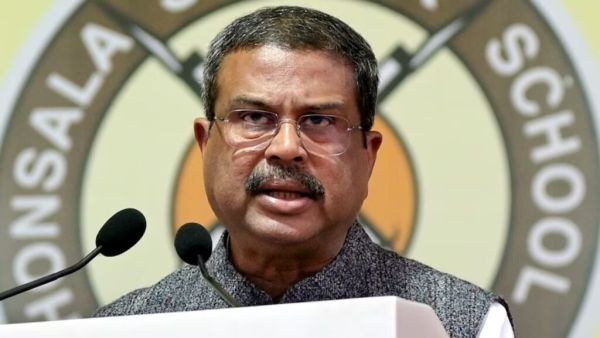
UGC Bill Row News in Marathi: The debate has intensified in the academic circles of the country regarding the new anti-discrimination rules issued by the University Grants Commission (UGC). from various colleges in Delhi of students Amid protests and allegations of reverse discrimination, Union Education Minister Dharmendra Pradhan clarified the government’s stance. He assured that the new rules are meant to ensure justice and not persecution.
Speaking to a news agency, the Education Minister politely explained his position while responding to questions raised on social media and the media. “I would like to humbly assure that no one will be allowed to be harassed. No one will have the right to abuse the law in the name of discrimination,” he said. The Minister emphasized that it is the collective responsibility of all, be it the University Grants Commission, the Government of India or the State Governments, to ensure that the law is followed fairly. He explained that whatever arrangements have been made are fully within the purview of the Indian Constitution.
Protests in Delhi over new UGC rules; BJP leaders resign, demand President’s rule in Uttar Pradesh
Supreme Court monitoring and protection claims
Speaking on the controversial issue of the possibility of imprisoning innocent students, Dharmendra Pradhan said that the entire process is under the purview of the judiciary. “This is a system under the supervision of the Supreme Court. I want to assure everyone that no one will be harassed or discriminated against,” he said.
Know about new UGC norms
University Grants Commission (UGC) promulgated the Promotion of Equality in Higher Education Institutions Rules 2026 on 13 January. The purpose of this rule is to eliminate discrimination against students, teachers and staff from Scheduled Castes (SC), Scheduled Tribes (ST), Other Backward Classes (OBC), Economically Weaker Sections (EWS), women and disabled students in higher educational institutions.
These rules provide for the establishment of an Equality Committee of nine members in every university and college. The committee will consist of the head of the institution, three professors, one staff member, two general citizens, two specially invited students and one coordinator. As per the rules, at least five seats on this committee will be mandatorily reserved for Scheduled Castes, Tribes, OBCs, Persons with Disabilities and women. This is where the argument started.
What is the objection of upper caste community?
Opponents of the new rules say there is no mandatory representation for the general category on the equality committee. They argue that when the committee investigates complaints of discrimination, general category students and teachers may face unilateral action without adequate representation. Critics also say that the rule appears to be based on the assumption that one class is always exploited and another is always exploited. This can create an atmosphere of mistrust in educational institutions. Several upper caste organizations have expressed concern that students and teachers from the general category may be harassed through false or malicious complaints.
Rahul Gandhi Patka : Insult of President by Rahul Gandhi? In spite of being told many times, Assam refused to set firecrackers
Contact to : xlf550402@gmail.com
Copyright © boyuanhulian 2020 - 2023. All Right Reserved.