Trump : US President Donald Trump has indicated that tariffs will remain a central pillar of his economic and foreign policy approach, even if the Supreme Court were to restrict his authority to impose them. Speaking in a televised interview, Trump described tariffs as essential to his administration’s efforts to reshape trade relationships and stimulate domestic production, suggesting that alternative mechanisms would be pursued if legal obstacles emerge.
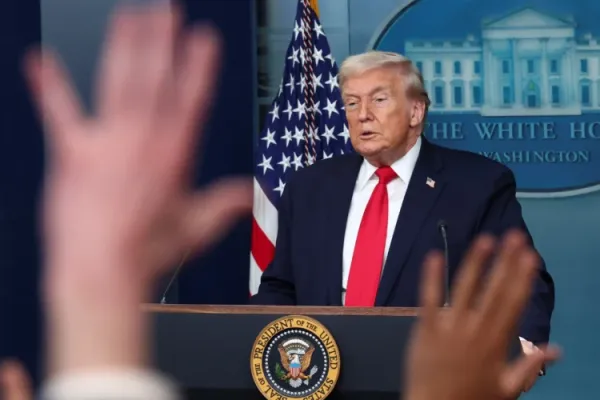
Tariffs framed as a cornerstone of economic policy
In an interview with Fox News host Will Cain, Trump defended tariffs as a key driver of investment and manufacturing growth in the United States. He argued that higher import duties have changed corporate behavior by encouraging companies to manufacture domestically rather than relying on overseas production and shipping goods into the US market. According to Trump, this shift has supported job creation and strengthened the country’s industrial base.
Claims of substantial revenue generation
Trump said the tariff program has generated significant revenue for the federal government, claiming that approximately $600 billion has been collected through import duties. He presented this figure as evidence that the policy has delivered tangible financial returns while also influencing global trade practices. The president portrayed the revenue as a resource that can be redirected toward domestic priorities.
Response to potential Supreme Court action
When asked about the possibility of the Supreme Court limiting presidential authority over tariffs, Trump acknowledged the risk but played down its impact on his broader strategy. He said that while such a ruling could make the process more complicated, it would not change the underlying objective. According to Trump, his administration would seek alternative tools to achieve similar outcomes, even if those methods proved less direct or more cumbersome.
Manufacturing investment and relocation claims
Trump maintained that tariffs have persuaded foreign manufacturers to shift production to the United States. He cited companies from countries such as Germany, Mexico, and Canada as examples, saying that investment has increased across sectors including automotive manufacturing and artificial intelligence. He argued that tariffs leave companies with little choice but to build facilities in the US if they want to maintain access to the American market.
Construction and long-term investment outlook
The president also claimed that the policy has contributed to a surge in construction activity nationwide. He said thousands of businesses are currently being built and that hundreds of large factories are under development. In addition, Trump repeated a broader assertion that the US has secured commitments totaling $18 trillion in future investment, though he did not provide detailed documentation or timelines to support the figure.
Support for farmers and domestic programs
Trump linked tariff revenue to financial assistance for American farmers, a group that has been affected by trade disruptions. He said his administration recently distributed $12 billion in farm aid funded by income from tariffs. While acknowledging that farmers have faced short-term challenges, Trump argued that the long-term benefits of the trade strategy would outweigh the initial difficulties.
Addressing trade fairness and global competition
The president said tariffs were designed to counter what he described as longstanding unfair trade practices. He argued that foreign governments had historically imposed barriers on US exports while enjoying relatively open access to the American market. Trump said his policies have reversed that dynamic by placing greater pressure on trading partners to adjust their practices.
Tariffs as a broader strategic tool
Beyond economics, Trump suggested that tariffs could play a role in international relations. When asked whether they could be used as a geopolitical instrument, he said they could contribute to global stability, though he did not elaborate on how trade measures would translate into diplomatic outcomes.
Contact to : xlf550402@gmail.com
Copyright © boyuanhulian 2020 - 2023. All Right Reserved.