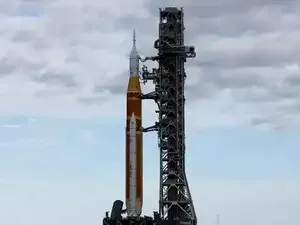
NASA’s Artemis II mission signifies a historic comeback to crewed spaceflight beyond Earth’s orbit, four decades following the Challenger disaster claimed seven lives. The flight will send astronauts Reid Wiseman, Victor Glover, Christina Koch, and Jeremy Hansen on a lunar flyby in the Orion capsule atop the Space Launch System.
Forty years ago, NASA’s human spaceflight program was shaken when the Space Shuttle Challenger exploded 73 seconds following the liftoff, claiming the lives of all seven astronauts onboard. The disaster almost concluded the shuttle program prematurely, leaving a lasting imprint on NASA’s approach to crew safety and risk management. Today, the lessons of Challenger, along with those from the 2003 Columbia tragedy, loom large as NASA gets ready for Artemis II, the initial crewed lunar mission in over 50 years.
Artemis II: A Historic Return Beyond Earth
Artemis II will include four astronauts on a ten-day flyby of the Moon, utilizing the Space Launch System (SLS) rocket and the Orion capsule. This program will signify the first time humans have left Earth orbit since the Apollo project concluded in 1972. NASA has experienced scrutiny over the Orion heat shield, significant for safe reentry, following uncrewed tests in 2022 disclosed pieces had unexpectedly detached. Adjustments to the spacecraft’s path aim to mitigate challenges without redesigning the shield.“Challenger ... brought out aspects of the agency which hopefully no longer exist and which we are always working toward addressing,” states Tracy Dillinger, NASA’s safety culture program manager. “Space is risky. We know that, and our astronauts know that. We just want to be smart about the risks that we accept.”
Remembering Challenger
The Challenger disaster happened during the STS‑51L mission, NASA’s 25th shuttle flight. Among the crew was Christa McAuliffe, a New Hampshire teacher chosen via a national “Teacher in Space” competition. McAuliffe was to teach lessons from orbit, reflecting NASA’s attempt to present shuttle missions as routine and low-risk. “It’s sort of an all-purpose carryall vehicle often referred to by the astronauts themselves as a space truck,” describes Jennifer Levasseur, space historian at the Smithsonian’s National Air and Space Museum.Tragically, O-ring seals in the shuttle’s solid rocket boosters failed in abnormally cold weather, resulting in the external fuel tank exploding. Investigations later disclosed a culture of “launch fever” management pressure and schedule importance that overlooked engineers’ cautions, illustrating that human elements were as significant as hardware failures.
Lessons Informing Artemis II
NASA has incorporated decades of lessons into Artemis II planning, focusing on safeguarding astronauts Reid Wiseman, Victor Glover, Christina Koch, and Jeremy Hansen. Engineers remain to refine flight paths, test systems, and scrutinize possible hazards to avoid previous mistakes. As Sandra Magnus, former NASA astronaut,cites, “Whenever there’s a mishap, whether it’s something huge like Challenger or something a little bit less life-threatening, NASA has a process of going through, trying to understand what happened and why it happened.”Space Governance and Global Risk
Beyond technical challenges, the crowded and contested nature of Earth orbit creates regulatory and safety concerns. With more than 10,000 active satellites and millions of smaller debris fragments, collision challenges are increasing. The UN Office for Outer Space Affairs (UNOOSA), through frameworks such as COPUOS, helps establish legal and technical standards for responsible space activities. Aarti Holla-Maini, UNOOSA director, states, “Our orbits are congested. Collision risk is increasing,” emphasizing why international cooperation is significant for sustainable space activity.FAQs:
Q1. What is Artemis II?Artemis II is NASA’s first crewed lunar mission since Apollo. It will include four astronauts on a ten-day flyby of the Moon.
Q2. Who are the astronauts on Artemis II?
The crew are Reid Wiseman, Victor Glover, Christina Koch, and Jeremy Hansen. They will fly in the Orion spacecraft atop the SLS rocket.