
People can test for early signs of certain dementia strains by checking if they can do one thing with their hands. It might sound strange, but the exam takes less than a few minutes to do and could reveal something important about your brain health.
Studies have found that poor grip strength was associated with a greater risk of cognitive decline and developing conditions such as dementia. Whilst this at-home test cannot definitely lead to a diagnosis for dementia or another neurological condition, it offers a unique "window" for doctors to know that something isn't quite right.
Going by Dr Bing online, Dr Baibing Chen is a double board-certified neurologist and epileptologist. Speaking in an Instagram video, he claimed that this test for your hands shows an "inseparable" bond between your brain health and overall strength.
- Ex-Coronation Street star gutted after audition for 'biggest role of his career' goes wrong
- Vernon Kay issues apology live on air after sparking complaint with grim admission
He said: "One of the simplest and strongest physical markers that you have for brain ageing and your future risk of dementia is your grip strength. Now, this doesn't mean that your grip strength is diagnostic of dementia, and it doesn't mean that weak hands cause dementia, but it means that grip strength is a window into how well the brain and the body are talking to each other.
"Your brain has to coordinate nerves, muscles, sensations, timing and blood flow just to squeeze your hand, and when that system isn't as strong, it often reflects a lower overall brain resilience.
"What is interesting is that changes in changes in strength can show up quietly over time. In some types of dementia, especially vascular dementia or Lewy Body Disease, motor changes like strength or slowing can appear early. But, in Alzheimer's, memory [issues] usually show up first.
"Different disease, different patterns - but grip strength still tracks overall brain health across populations. In my clinic, patients don't come in saying 'my grip is weak'. They say things like 'I drop things more', 'my hands get tired faster' or 'I feel slower doing everyday stuff'."
Dr Bing claims that the important thing is "not to panic or obsess" if any of the above patterns sounds like something you are experiencing. He added: "Many people with weak grip never develop dementia."
How to test your own grip strength at home
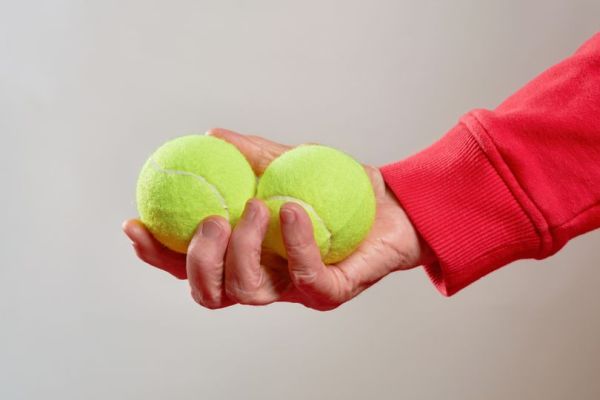
People can invest in gadgets and tools to directly measure their grip strength with precision. However, people don't have to spend a fortune to carry out a homemade version of this test - a simple tennis or stress ball will work just as well to give people an idea of their abilities.
Sit comfortably with good posture (feet flat, back straight) and your arm extended forward. Squeeze a ball in your hand as hard as possible. Attempt to hold your maximum squeeze for between 15 and 30 seconds. Repeat this three times with each hand, recording how long you can squeeze. This can help you track your grip strength over time.
Grip strength is checked with a hand dynamometer. Although the exact limits differ based on age and gender, some research indicates that important thresholds for higher risks of death and cognitive issues are around 22 kg for men and 14 kg for women.
Key evidence and findings
Large studies, like the one with over 190,000 adults from the UK Biobank, have found that if grip strength decreases by five kilograms, the risk of developing dementia increases by 12% to 20%. Having a weak grip in midlife (ages 40–70) is often linked to cognitive decline ten years later, which means it might show early signs of changes before memory loss is noticeable.
This connection is especially strong for vascular dementia, where lower muscle strength is often related to signs of small vessel disease in the brain, like white matter hyperintensities. People in the lowest 20% of grip strength have been found to have up to a 72% higher risk of developing dementia compared to those in the strongest group.
What are the signs of dementia?
According to the NHS, typical early signs of dementia include:
- Memory loss
- Difficulty concentrating
- Finding it hard to carry out familiar daily tasks, such as getting confused over the correct change when shopping
- Struggling to follow a conversation or find the right word
- Being confused about time and place
- Mood changes
Contact to : xlf550402@gmail.com
Copyright © boyuanhulian 2020 - 2023. All Right Reserved.