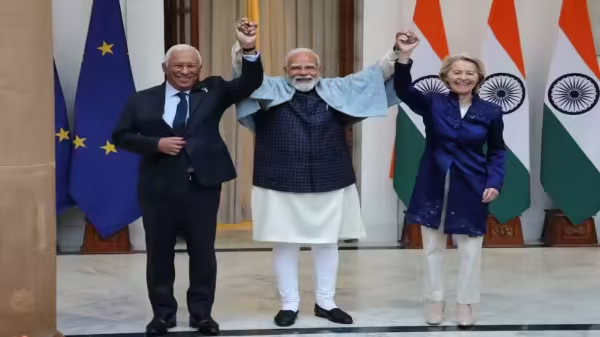
New Delhi: The prospect of a Free Trade Agreement (FTA) between India and the European Union (EU) had stirred controversy in India when the Congress-led United Progressive Alliance (UPA) was in power. In 2013, senior Bharatiya Janata Party (BJP) leader Dr. Murli Manohar Joshi had strongly opposed the deal, arguing it could hurt India’s economy, farmers, small businesses and the government’s freedom to make its own decisions.
“Irrespective of ideological considerations, the conditions which, according to reports, the UPA government is willing to concede to EU will seriously jeopardize the interests of the Indian people with no obvious gains in trade or economic expansion,” he had said in an official statement of his party on April 10, 2013.
Dr. Joshi had raised concerns about Indian farmers and agro-industries. He pointed out that European subsidies could undermine India’s agricultural competitiveness, while an FTA that only addressed tariffs would leave agriculture exposed. “An FTA which talks only about tariffs, and not about trade-distorting tricks such as subsidies and other incentives is detrimental to our agriculture,” he said.
Add Zee News as a Preferred Source
He had also cautioned that opening government procurement to EU companies could make it difficult for small and medium enterprises (SMEs) to compete. This included businesses run by women and disadvantaged communities. “Imagine a situation where our small vendors have to compete with the EU for contracts in Railways or other public sector undertakings… Small town India vendors competing with a high-tech vendor in Japan or Germany for government contracts doesn’t sound like a level playing field,” he had stated.
Dr. Joshi had further warned that the intellectual property rights provisions and pre-establishment investment rights in the proposed FTA could limit India’s control over foreign investment. This, he said, might affect access to affordable medicines and other essential sectors. He had demanded that all treaties affecting national sovereignty, food security and the federal structure should be thoroughly examined in Parliament before approval.
Fast forward to 2026, the same BJP-led National Democratic Alliance (NDA) government signed the FTA with the EU, which Prime Minister Narendra Modi hailed as “historic” and European Commission President Ursula von der Leyen described as the “mother of all deals.”
So, what has changed now in the new agreement?
The agreement incorporates lessons learned from the past, including clear safeguards for India’s policy space, phased implementation schedules, and mechanisms to support domestic industries in adjusting to new competitive pressures. Unlike the 2013 draft, the new pact addresses tariff reductions, regulatory cooperation, and services trade while providing flexibility for domestic priorities.
Important differences include the coverage of sectors, phased liberalisation, and protections for sensitive industries. Indian exporters are set to gain improved market access in textiles, engineering goods, marine products, and leather, while safeguards allow Indian SMEs and agriculture to gradually adapt to increased competition.
The deal also includes a framework for investment, digital services, sustainability, and alignment on standards. It shows India’s position as a major trading partner and its growing role in global supply chains. The agreement is designed to make trade smoother, ensure fair rules, and help Indian businesses compete internationally.
The global context has also changed. Trade between India and the EU is now over $130 billion. New Delhi plays a stronger role in international supply chains, giving it more room to negotiate than 10 years ago. Both sides have addressed difficult issues like car tariffs, alcohol trade, and other trade rules, creating a deal that gives better market access while allowing India to maintain its regulatory freedom.
While the new FTA still requires ratification by EU member states and India’s domestic procedures, it represents a departure from the risks the BJP had highlighted in 2013.
The pact demonstrates how India can open up its economy while still protecting its own priorities, using careful negotiations and gradual reforms. It also provides a guide for future trade deals.
This agreement shows a mature phase of economic diplomacy, where India can engage international partners while maintaining strategic flexibility – a contrast to the concerns expressed during the UPA era.
Contact to : xlf550402@gmail.com
Copyright © boyuanhulian 2020 - 2023. All Right Reserved.