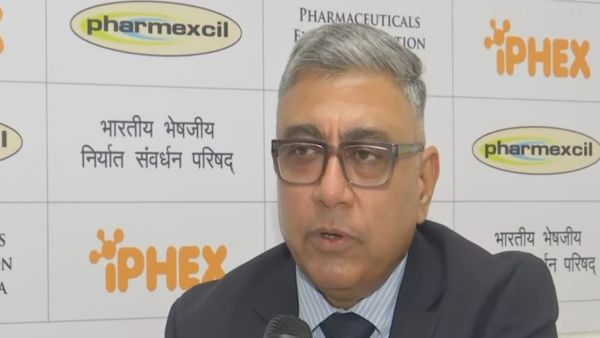
Pharmexcil's Namit Joshi lauded India's health progress, including sharp drops in maternal and child mortality. He also warned of emerging threats like obesity, digital addiction, and mental health, urging immediate policy action.
India has made significant progress in improving public health outcomes, particularly in maternal and child health, but emerging challenges such as obesity, digital addiction, and mental health issues require immediate policy attention, said Namit Joshi, Chairman, Pharmexcil. While speaking with ANI on the Economic Survey, Joshi said the survey has accurately captured key developments in India's health and digital ecosystems. He highlighted several "bright spots" that demonstrate the effectiveness of government interventions over the past decade.

Public Health Achievements
Sharp Decline in Mortality Rates
"One of the most notable achievements is the sharp decline in the Maternal Mortality Rate (MMR). While the global average reduction stands at around 41%, India has achieved an 86% reduction, marking a landmark public health accomplishment," Joshi said.
"This requires special recognition of the efforts of the Government of India and the Ministry of Health. India's performance in reducing maternal mortality is far better than the global average," he added.
Obesity as a Major Threat
Joshi cautioned that the Economic Survey has also identified obesity as a major emerging concern, especially given India's status as the world's most populous country.
"If obesity continues to rise and we fail to act now, the cost of managing obesity-related diseases will be extremely damaging for the economy," he warned. He pointed out that consumption of ultra-processed foods has increased by nearly 150%, which is a major contributor to obesity.
Obesity, in turn, leads to several serious complications including cardiovascular diseases, diabetes, nephropathy, neuropathy, and retinopathy. "Government initiatives such as the Fit India Movement, Khelo India, and nutrition-focused programs aim to address these risks, but Joshi stressed that public participation is equally important," he said.
Further, citing Economic Survey, he said India has also made strong progress in reducing the Infant Mortality Rate (IMR), which has fallen by 37% over the last decade. In addition, the Under-Five Mortality Rate has declined significantly, outperforming global averages. "These reductions clearly reflect the government's sustained focus on improving healthcare access and outcomes, ensuring healthier lives from birth onward," Joshi noted.
Rapid Digital Health Adoption
Joshi also praised India's rapid adoption of digital health platforms such as the Ayushman Bharat Digital Mission and eSanjeevani.
"These digital initiatives are transforming healthcare delivery, particularly in rural India. The strong network of ASHA workers has played a crucial role in executing digital health services at the grassroots level," he said. According to him, India's digital health infrastructure is a major positive highlighted in the survey and positions the country well for future healthcare delivery models.
Emerging Concerns Require Attention
Digital Addiction and Mental Health
Another key concern highlighted in the survey is digital addiction, particularly among children and young adults. Joshi noted that countries like France have already restricted social media usage for children below 15 years, and India is also considering policy interventions.
"Digital addiction directly impacts mental health and physical activity. Reduced movement leads to obesity, while excessive screen time affects psychological well-being," he said.
According to Joshi, obesity, digital addiction, and mental health issues are deeply interconnected, forming a cycle that needs to be addressed through integrated policies and public awareness.
Pharmaceutical Sector: Challenges and Opportunities
Reducing API Import Dependence
Joshi also flagged concerns around India's dependence on imported raw materials, particularly in the Active Pharmaceutical Ingredients (API) sector. He stressed the need for incentives to encourage domestic manufacturing. "The industry and government must work together to make India self-reliant," he said.
Growth Through Free Trade Agreements
He further noted that Free Trade Agreements (FTAs), especially with the European Union, present significant growth opportunities for the Indian pharmaceutical sector.
"With tariff barriers being reduced and India's strong cost and quality advantage, pharma exports are likely to receive a major boost, although some regulatory challenges still need resolution," he said. (ANI)
(Except for the headline, this story has not been edited by Asianet Newsable English staff and is published from a syndicated feed.)
Contact to : xlf550402@gmail.com
Copyright © boyuanhulian 2020 - 2023. All Right Reserved.