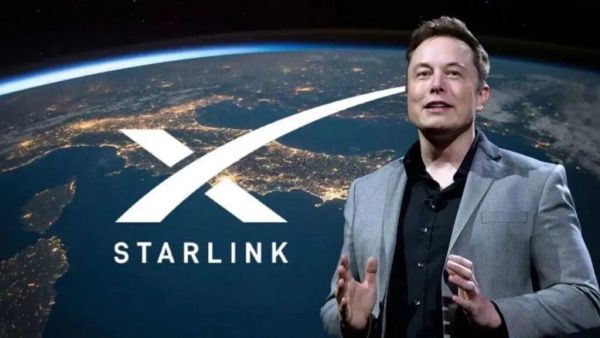
New Delhi. India has rejected an application by Elon Musk’s satellite internet company Starlink for a next-generation satellite system, dealing a blow to plans for direct-to-device connectivity in the country. Starlink’s Gen 2 satellites are designed to send signals directly to mobile phones without the need for a ground-based terminal.
India’s space regulator, the Indian National Space Promotion and Authorization Center (IN-SPACe), did not approve the Gen 2 application. Only Starlink’s Gen 1 system was approved, which supports traditional satellite broadband services that operate through user terminals and ground infrastructure.
Officials said any new technology introduced by Starlink in India would require fresh approval. Direct-to-device services fall under a separate regulatory process, and are not covered under existing permissions for space-based broadband. As a result, the earlier Gen 2 application is no longer valid.
Starlink had sought authorization for both its Gen 1 and Gen 2 satellite systems when it applied for operations in India. IN-SPACe approved only the Gen 1 proposal, under which the company can provide broadband services using 4,408 low-Earth-orbit satellites. The purpose of these satellites is to provide standard Internet connectivity rather than direct mobile phone access.
IN-SPACe Chairman Pawan Kumar Goyal confirmed that the Gen 2 proposal did not meet regulatory requirements. When the application was submitted several years ago, direct-to-device technology was still in its early stages and lacked clear technical and policy definitions, officials said. This technology has evolved more recently, necessitating a different and updated evaluation.
Gen 2 satellites include advanced features, including direct-to-device capability and the use of new frequency bands. Regulators pointed out that some of these frequency bands are not approved for use in India, and this appeared to be a key factor in the decision to reject the application.
India currently does not allow direct-to-device satellite services. A national framework for such technology has not yet been finalized. The government is still considering its approach, while the DoT is examining policy options. Regulators will also have to decide which spectrum bands can be allocated for these services.
Starlink is expanding its satellite network at the international level. The company recently received approval from the US Federal Communications Commission to deploy 7,500 Gen 2 satellites, taking its total global constellation to approximately 15,000 satellites.
Follow the LALLURAM.COM MP channel on WhatsApp
Contact to : xlf550402@gmail.com
Copyright © boyuanhulian 2020 - 2023. All Right Reserved.