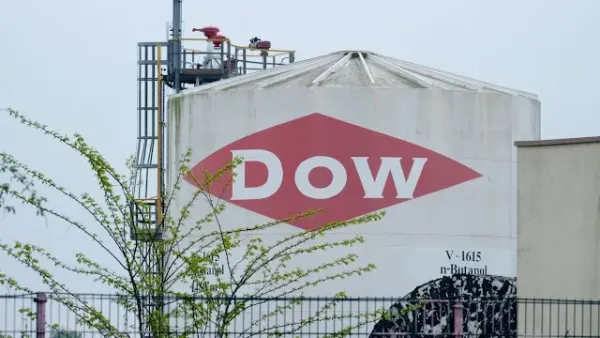
Dow Inc., one of the world’s largest chemical manufacturers, announced a significant workforce reduction on January 29, 2026, planning to eliminate roughly 4,500 jobs globally as part of a sweeping restructuring effort. This move, representing about 13% of its total workforce of approximately 34,600 employees, is part of a broader strategy to streamline operations, boost profitability, and shift the company’s emphasis toward automation and artificial intelligence (AI).
The cuts arrive amid sustained pressures across the chemical industry, sluggish demand in key markets, and persistent economic uncertainties. Dow’s leadership says the changes are necessary to strengthen the company’s competitive position for the future even though the plan will incur substantial upfront costs.
At the heart of Dow’s announcement is a new initiative called “Transform to Outperform,” a comprehensive overhaul aimed at reshaping how the company operates and competes. This program is designed to simplify the company’s operating model, generate at least $2 billion in near-term earnings improvements before interest, taxes, depreciation, and amortization and unlock productivity gains through automation and digital transformation.
According to Dow executives, the transformation builds on earlier cost-cutting measures. In 2025 the company implemented a $1 billion cost-savings program that included 1,500 job cuts and the closure of three European plants eliminating 800 positions. These prior steps were intended to address structural challenges in Dow’s core markets, but the latest downturn has prompted a more aggressive response.
AI, Automation, and Operational Shifts
A central pillar of Dow’s restructuring is its commitment to AI and automation technologies. Leadership says that leveraging these tools will help streamline processes, reduce operational complexity, and improve long-term productivity. While the exact nature of how AI will be deployed across chemical manufacturing, supply chain, and administrative functions has not been fully detailed, company officials emphasize the strategic role of digital tools in future growth.
This emphasis on AI and automation mirrors broader trends in the corporate world, where firms across sectors are increasingly adopting technology to reduce costs and enhance efficiency, sometimes at the expense of human labor. Recent job cuts at other companies including major announcements from Amazon, UPS, and Pinterest have similarly cited digital transformation as a factor.
Financial Impacts and One-Time Costs
The restructuring is not without significant financial cost. Dow expects to incur between $1.1 billion and $1.5 billion in one-time expenses to the job cuts and other elements of the transformation. Of that total, $600 million to $800 million is earmarked for severance and benefits for affected employees.
Despite these near-term expenses, management believes the long-term gains will outweigh the costs. Projections included in internal planning suggest an initial earnings benefit of around $500 million in 2026, growing to an incremental $1.2 billion in 2027, and another $300 million in 2028. These improvements stem from a combination of lower operating costs, productivity enhancements, and streamlined organizational processes.
Dow’s decision to restructure and cut jobs reflects challenging market conditions facing the chemical industry. In the company’s latest earnings period, net sales fell by approximately 9%, contributing to a $1.5 billion net loss for the quarter and a wider annual loss for 2025. These results weigh heavily on investor confidence, with sales declines observed across packaging, coatings, and industrial materials segments areas historically central to Dow’s revenue base.
Weak demand in sectors tied to construction and manufacturing, coupled with volatile global economic conditions, have pushed Dow and its peers to rethink cost structures and capital allocation. Structural headwinds and lenient pricing power in key commodities have compounded these challenges, making transformations like Dow’s appear more urgent.
Following the announcement of the job cuts and restructuring plan, Dow’s stock experienced downward pressure in pre-market and early trading sessions. Shares fell as investors reacted to both the scale of the layoffs and the broader implications of Dow’s shifting strategy. The stock’s performance has been subdued over the past year, with significant declines from multi-year highs.
Analysts note that while the company’s earnings beat some expectations—thanks in part to self-help cost measures, the broader context of declining volumes and continued losses suggests a prolonged period of adjustment. Some investors are cautious about the pace and depth of structural changes, even as they acknowledge the necessity of adapting to market realities.
The human impact of Dow’s decision is palpable in communities where the company operates, especially in regions with a high concentration of Dow facilities. In areas like Houston and Midland, Michigan, thousands of workers and contractors face uncertainty as the cuts take effect. Local economies tied to the chemical industry could feel ripple effects, from reduced consumer spending to broader employment shifts in associated sectors.
For those remaining with Dow, the company emphasizes a future shaped by technological integration, streamlined workflows, and a leaner organizational structure. However, the transition is likely to present challenges for employees displaced by the cuts as well as those adapting to new systems and expectations.
Dow’s workforce reduction and transformation initiative marks one of the most significant shifts in the company’s recent history. While the short-term outlook remains difficult characterized by losses, weak demand, and economic uncertainty, the company’s leadership argues that these changes will position Dow for more resilient long-term performance.
As markets and industries continue to evolve under technological and economic pressures, Dow’s experience may serve as a bellwether for how legacy industrial firms reconcile traditional manufacturing models with the imperatives of digital transformation and automation.
Contact to : xlf550402@gmail.com
Copyright © boyuanhulian 2020 - 2023. All Right Reserved.